MIS40650 – ICT and Emerging Global Networks – Prospects and Challenges?

The session started with a review of Friedman’s lecture at MIT
Thomas Friedman – The World is Flat (VIDEO)

The World is Flat (May 2005) – http://video.mit.edu/watch/the-world-is-flat-9145/

The review concluded that Friedman’s analysis has merit but there is perhaps over emphasis on technology as a causal agent. The fact that world is becoming flatter cannot simply be defined by the advent of technology& internet but sociological, legal, cultural & political changes are also equally important.

Friedman is rather trying to dramatize the situation by invoking fear of kids losing jobs to Indian & Chinese kids while you were sleeping… This rhetoric of fear is perhaps the biggest fault in his analysis. The target audience for him is Western and particularly American public but then he is guilty of narrow outlook and that too for concept which needs a global perspective.

The session then took up the critique of Friedman’s theory from Aronico Ramdoo. The critique is pretty damning in nature and even accuses Friedman of misinformation which I don’t think is correct.

Critique of Friedman

One interesting critique of Friedman’s thesis:

http://www.mkpress.com/AronicaRamdooInterview.html

Next the readings for the session were discussed

Lepore – Disruption

Lepore theory of disruption has the same tone as Friedman for its rhetorical nature and invocation of fear as the basis for the argument. “The idea of innovation is the idea of progress stripped of the aspirations of the Enlightenment, scrubbed clean of the horrors of the twentieth century, and relieved of its critics. Disruptive innovation goes further, holding out the hope of salvation against the very damnation it describes: disrupt, and you will be saved.”

Lepore – The disruption machine.pdf (486.516 KB)

Lepore, J. (2014). The disruption machine: what the gospel of innovation gets wrong. The New Yorker.

(http://www.newyorker.com/magazine/2014/06/23/the-disruption-machine)

Blog Article: Lepore – The disruption machine

Winter & Taylor

The Winter and Taylor’s analysis of industrial & post-industrial society was discussed. It was accepted as a thorough analysis with a historical perspective. The concept of technological determinism was discussed from both the angles i.e. arguments in favour &  against.

Winter and Taylor – Role of IT in transformation of work.pdf (1.518 MB)

Winter, S. J. and S. L. Taylor (1996). “The role of IT in the transformation of work: a comparison of post-industrial, industrial, and proto-industrial organization.” Information Systems Research 7(1): 5-21

Blog Article: Winter and Taylor – Role of IT in transformation of work

Shalizi

Next Shalizi blog was discussed which revolved around the points raised in Beniger’s book on The Control Revolution. Shalize’s contention was that information age started not with the advent of machines but with the introduction of information processes and procedures.

Shalizi, C. R. (1997). “The Information Society and the Information Economy.” from http://bactra.org/notebooks/information-society.html

Introna & Tiow

Then lastly Introna’s paper of Virtual organisation was discussed. The definition of virtual organisation appeared to be contentious. The notion that virtual organisation is temporary was unpalatable but it was decided not to hang up on definition per se.

The ‘virtual’ has almost become now a metaphor for technology. The concept of virtual memory, virtual computer, virtual reality connotes IT with capability to provide more with less and giving an illusion to exist at any time & place.

The elements of virtual organisation was discussed like Strategic Alliance, Core Comptence, Trust & Organisational restructuring.

The critique was discussed in particular detail, three three areas critiqued in the article were discussed

  1. Trust & Conflict
  2. Wholes & Parts
  3. Knowledge & Language

This module is focussed on the 3rd point and concept of knowledge & language will be reviewed in detail in this course. Wittgenstein’s notion that language is always situated was discussed in detail. The concept of codification of knowledge appears to be related to indexation of language as postulated by Wittgenstein.

Introna_and_Tiow__Virtual_Org.pdf (1.244 MB)

Introna, L. D. and Tiow, B. L. (1997), “Thinking about virtual organisations and the future”, in 5th European Conference on Information Systems, Vol. 2 (Eds, Galliers, R., Murphy, C., Hansen, H. R., O’Callaghan, R., Carlsson, S. and Loebbecke, C.) Cork Publishing, Cork.

Blog Article: Introna_and_Tiow__Virtual_Org

Posted in iBusiness | Tagged , , , | Leave a comment

Behold Ireland’s Majesty

Posted in Travel | Tagged | Leave a comment

Tribute to Choctaw Tribe

New sculpture in Cork, Ireland to thank the Choctaw Tribe for sending donations during Ireland’s potato famine in the mid 19th century.

Choctaw-Honored-Irish

Posted in Art & Beauty | Tagged , , , | Leave a comment

Three Contemporary Spinozas – The Los Angeles Review of Books

Three Contemporary Spinozas – The Los Angeles Review of Books.

Posted in Literature, Philosophy | Leave a comment

MIS40650 – Knowledge, ICT & Organisation Syllabus

UCD School of Business
MSc (iBusiness) Programme

MIS40650 – Knowledge, ICT & Organisation

Summer Semester, 2014/20015

Module Lecturer:

Dr Séamas Kelly
Centre for Innovation, Technology & Organisation (CITO)

Q226, Quinn Building

UCD School of Business

Belfield

Tel: 716-4728
email: Seamas.Kelly@UCD.ie

Office Hours:

After class and by arrangement via email.

Module Objectives and Description

The increasing ubiquity of collaborative, social networking, and mobile computing technologies is playing a key role in transforming work practices and organisations. Our understanding of these changes, however, and their implications for management, is still poorly developed. This module will provide managers with a mature and actionable understanding of this emerging landscape, with a view to shaping organisational innovation in creative ways. Particular emphasis will be placed on the role of such technologies in processes of communication, knowledge creation/sharing, and learning; processes of surveillance and organisational control; and, in the emergence of new, distributed modes of organising work and collaborative production.

This in intended to be a seminar rather than a lecture course. As such, the primary responsibility for learning will rest with you. The philosophy behind the course is that the combination of reading, thinking, writing, discussing, and listening is highly effective for learning. The best way to appreciate the critical issues involved is through well-prepared and thoughtful discussions. Consequently, the main class activity will be discussion. You are expected to come to class having read the assigned reading materials, be prepared to discuss the major issues within the readings, and to debate their management implications. The quality of your learning experience will depend on the extent of your motivation, your initiative, your preparation for class, and your participation during class. My role will be to support your learning experience by providing a course structure, course materials and facilitating the discussions (though at times I may give mini-lectures).

Learning outcomes

On completing this module students should be able to:

· Critically assess the role of information, technology and knowledge in contemporary organisations.

· Demonstrate a sophisticated understanding of the different ways in which new collaborative and mobile computing technologies are implicated in transforming work and organising practices. In particular, practices associated with: communication, knowledge creation/sharing, and learning; surveillance and organisational control; the coordination of distributed work and the emergence of new modes of collaborative production.

· Demonstrate a sound and actionable understanding of the management implications of these emergent forms of work and ICT-enabled organisational innovation.

Module Dynamics and Requirements

1. The module will centre around two, three-day block seminars. It is expected that all students attend and actively contribute to these seminars. Moreover, all prescribed readings should be carefully studied beforehand. There will be an individual class participation grade, worth 10% of the overall module grade.

2. Each student should submit a one page critical reflection on the prescribed readings for the second block seminar, one week before the seminar is scheduled to commence (by Monday 6 July). These reflections should attempt to identify some of the key themes in the readings and your thoughts on them (e.g. the extent to which the readings challenge some of your pre-conceived views, the extent to which you agree with some of the key points made, the possible implications for the organisation and management of work, your reaction to the readings and your experience of engaging with them, questions and difficulties etc.) This reflection will be worth 5% of the overall module grade.

3. Each student will be assigned to a group for the purposes of completing a project on a topic related to the module content (see the following section for more details about the project). The main deliverables will consist of a presentation to the class (10% of the overall module grade) to be delivered during the second seminar in July, and a project report (25% of the overall module grade).

Group Project

The group project will involve an in-depth critical analysis of an important aspect of ICT-enabled change in the contemporary social/organisational world. Groups should identify an area of interest as early as possible and have it approved by the module lecturer. It is not expected that the project would involve any primary empirical research work, but you will be expected to read extensively beyond the assigned reading list for block seminars.

Possible topics might include:

– The implications of mobile technologies (e.g. smartphones, tablets etc.) for altering important aspects of social/organisational life?

– The future of universities and education?

– The future of news organisations?

– Wikileaks and the future of political accountability?

– Open innovation and mass collaboration?

– Web 2.0 and the large scale mobilisation of collective action?

– The social and organisational implications of business analytics and Big Data?

– The evidence fore evidence-based management?

Groups will be required to deliver a 10 minute interim presentation of their project (10% of overall module marks) during Seminar 2 in July, at which point they will receive feedback. Final reports (no more than 4000 words and worth 25% of overall module marks) must be submitted no later than Monday 31 August 2015. The project will be discussed further at the first Block Seminar in May.

Grading

Grades will be assigned on the following basis:

Continuous Assessment 50%

Class Participation (individual) 10%

Pre-session critical reflections (Session 2) 5%

Project presentation (group) 10%
Project report (group) 25%

Final examination (individual grade) 50%

MIS40650 – Knowledge, ICT & Organisation

Block Seminar 1 – ICT, Change & Knowledge Work

1. ICT and Emerging Global Networks – prospects and challenges?

Friedman, Thomas – “The World is Flat” (VIDEO)

http://video.mit.edu/watch/the-world-is-flat-9145/

Aronica and Ramdoo – A critique of Friedman’s thesis.

http://www.mkpress.com/AronicaRamdooInterview.html

Lepore, J. (2014). The disruption machine: what the gospel of innovation gets wrong. The New Yorker.

(http://www.newyorker.com/magazine/2014/06/23/the-disruption-machine)

Winter, S. J. and S. L. Taylor (1996). “The role of IT in the transformation of work: a comparison of post-industrial, industrial, and proto-industrial organization.” Information Systems Research 7(1): 5-21.

Shalizi, C. R. (1997). “The Information Society and the Information Economy.” from http://www.cscs.umich.edu/~crshalizi/notabene/information-society.html

Introna, L. D. and Tiow, B. L. (1997), “Thinking about virtual organisations and the future”, in 5th European Conference on Information Systems, Vol. 2 (Eds, Galliers, R., Murphy, C., Hansen, H. R., O’Callaghan, R., Carlsson, S. and Loebbecke, C.) Cork Publishing, Cork.

2. Rethinking Knowledge and its ‘Management’

Dreyfus, Hubert L. and Dreyfus, Stuart E. (2005), ‘Expertise in real world contexts’, Organization Studies, 26 (5), 779-92.

McDermott, R. (1999), “Why information technology inspired but cannot deliver Knowledge Management”, California Management Review, Vol. 41, No. 4, pp. 103-117.

Walsham, Geoff (2001) “Knowledge management: The benefits and limitations of computer systems”, European Management Journal, 19(6): 599-608.

Hansen, M. T., N. Nohria, et al. (1999). “What’s your strategy for managing knowledge?” Harvard Business Review 77(2): 106-116.

3. ICT and Knowledge Working in Practice

Kirkpatrick, D. (1993), “Groupware goes boom”, in Fortune, Vol. 128

Orlikowski, W. J. (1993). “Learning from Notes: organizational issues in groupware implementation.” The Information Society 9: 237-250.

Kelly, S. and Jones, M. (2001), “Groupware and the social infrastructure of communication”, Communications of the ACM, Vol. 44, No. 12, pp. 77-79.

Hayes, N. and G. Walsham (2001). “Participation in groupware-mediated communities of practice: a socio-political analysis of knowledge working.” Information and Organization 11(4): 263-288.

Orlikowski, W. J. and J. D. Hofman (1997). “An improvisational model for change management: The case of groupware technologies.” Sloan Management Review (Winter): 11-21.

Malhotra, A., Majchrzak, A., Carman, R. and Lott, V. (2001), “Radical innovation without collocation: a case study at Boeing-Rocketdyne”, MIS Quarterly, Vol. 25, No. 2, pp. 229-249.

Block Seminar 2 – Emerging Modes of Organising Work and their Implications

1. Trust in Global Networks of Innovation

Introna, L. D. and Tiow, B. L. (1997), “Thinking about virtual organisations and the future”, in 5th European Conference on Information Systems, Vol. 2 (Eds, Galliers, R., Murphy, C., Hansen, H. R., O’Callaghan, R., Carlsson, S. and Loebbecke, C.) Cork Publishing, Cork.

*** Note: This reading was also assigned for Block Seminar 1 ***

Kelly, S. and C. Noonan (2008). “Anxiety and psychological security in offshoring relationships: the role and development of trust as emotional commitment.” Journal of Information Technology 23(4): 232-248.

2. Big Data, Analytics, and Evidence-based Management

McAfee, A. and E. Brynjolfsson (2012). “Big Data: The management revolution.” Harvard Business Review: 60-68.

Morozov, E. (2014). The planning machine: Project Cybersyn and the origins of the Big Data nation. The New Yorker.

(http://www.newyorker.com/magazine/2014/10/13/planning-machine)

Marcus, G. (2013). Steamrolled by Big Data. The New Yorker.

(http://www.newyorker.com/tech/elements/steamrolled-by-big-data)

Harford, T. (2014). Big Data: Are we making a big mistake? The Financial Times.

(http://www.ft.com/intl/cms/s/2/21a6e7d8-b479-11e3-a09a-00144feabdc0.html#axzz3VCAz0yo4)

Goldenberg, M. J. (2006). “On evidence and evidence-based medicine: Lessons from the philosophy of science.” Social Science & Medicine: 2621-2632.

3. Privacy and Personal Development in the ‘Information Society’

Solove, D. J. (2008). “The end of privacy?” Scientific American 299(3): 100-106.

Introna, L. (1997). “Privacy and the computer: why we need privacy in the information society.” Metaphilosophy 28(3): 259-275.

Pentland, A. (2014). “With Big Data comes big responsibility.” Harvard Business Review: 100-104.

PODCAST: Sherry Turkle – “Alone Together” – London School of Economics Public Lecture Series – http://www2.lse.ac.uk/newsAndMedia/videoAndAudio/channels/publicLecturesAndEvents/player.aspx?id=1027

(96 mins)

Orlikowski, W. J. (1991). “Integrated information environment or matrix of control? The contradictory implications of information technology.” Accounting, Management and Information Technology 1(1): 9-42.

4. Projects – interim presentations
Posted in iBusiness | Tagged , , , | Leave a comment

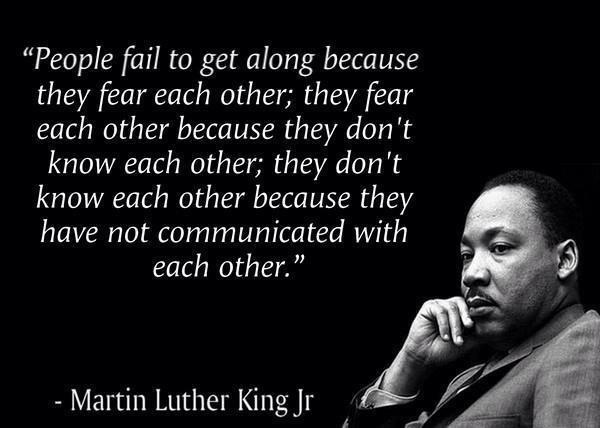
People fail to get along because…

24266_617002654983328_849386851_n

Posted in Quotations | Tagged , | Leave a comment

MIS40680 – Managing Strategy & Innovation – Assignments

Group Project:

Report on the assessment of the strategic value of ICT at Guinness and recommendations to maximise it in medium term based on resource-based and contingency perspectives.

MIS40680 Group 5 Project Paper – Guinness

MIS40680 – Group 5 Presentation – Assessment of the strategic value in ICT at Guinness

Individual Project:

Project Paper – ICT challenges faced by CT Bank, analysis of the challenges & recommendations.

MIS40680 Individual Project Paper – Tarun Rattan – 13200609

Posted in iBusiness | Tagged , , , | Leave a comment

MIS40680 – Managing Strategy & Innovation – The Fall and Rise of Data and Business Analytics

MIS40680 Lecture Slides DER:

MIS 40680-2015 Class 9 Final

Simon Wardley OSCON Keynote 2014 13 Minutes:

Simon Wardley OSCON 2014 Keynote_Introduction to Value Chain Mapping

MIS40680 – Week 9 Readings:

Lee et al MISQe 2014 Rise of the CDO

Parmar et al 2014 HBR

Case Study:

MIS40680 CASES (1): Case Study – Analytics – R0705A

Posted in iBusiness | Tagged , , , | Leave a comment

MIS40740 – Module Review & Assignments

Module Review covered following topics

  • Scope….what are we going to implement
  • Time….when and how long will it take
  • Cost….how much will it cost
  • HR….who is going to be involved
  • Risk……addressing potential project risks
  • Procurement….any 3rd party expertise needed?
  • Quality….defining acceptable standards
  • Communication….who to keep in the loop
  • Integration….other, such as closure 

MIS40740 Review

Out group project was based on mobile app targeting Academic Researchers…

The process of researching academic journals can be improved through out mobile application ReSearch App. Today the processes is complicated, dispersed, and massively time intensive. Academic Journals are not readily available through Mobile Apps. Researchers should be interested in apps that will allow them to continue their research where they left off, wherever they are ­ using technology to reduce the high admin associated time requirement today. 

ReSearch App Proposition:

  • Mobile platform for academic journals
  • Become a single source for managing academic research
  • Search academic journals from various sources, across disciplines
  • Download, buy, prioritise journals
  • Adding notes and linking with other articles, emails, blogs, etc.
  • Collaboration with fellow researchers, shared notes, tags, linkage with email & blogs, sync with Google doc.
  • Profiles for users and authors available to browse

The project paper and presentation are below

ReSearch – Academic Journal Research App – Project Paper

ReSearch – Academic Journal Research App – Presentation

Another module assignment was to share the work experience on a globally distributed project. The project paper for it is below 

Global PDT Project – CT Bank Payment Solution implemented as Global PDT project

Posted in iBusiness | Tagged , , , | Leave a comment

MIS40740 – Digital Project Closure & Review Methods

Lecture Slides:

MIS40740_Project_Closure

Important Links:

Final Checklist

Posted in iBusiness | Tagged , , , | Leave a comment