
Book Review – How Intelligence Happens by John Duncan


How Intelligence HappensHow Intelligence Happens by John Duncan
5 of 5 stars

The word “intelligence” comes from Latin terms intelligentia and intellligere meaning “to comprehend” or “to perceive”. In the Middle Ages, the word intellectus was used to translate the Greek philosophical term nous and was linked with metaphysical theories in scholasticism, such as the immortality of the soul. But early modern philosophers like Bacon, Hobbes, Locke, and Hume rejected these views, preferring “understanding” over “intellectus” or “intelligence“. The term intelligence is now more used in the field of psychology than in philosophy. Conceptually, intelligence is often identified with the effective and practical application of knowledge, drawing on a combination of cognitive skills that enable individuals (and, by extension, animals and machines) to navigate and make sense of the complexities of their worlds. It is generally understood as the capacity that enables learning from experience, applying reasoning, solving problems, thinking in abstract terms, and adapting effectively to new and changing situations. This capacity is naturally endowed in a living being or can be imparted to an automaton by some mechanistic process.

Intelligence is not a “hard” problem like consciousness, but its mystery lies in the fact that it can be extended beyond human mind and can be artificial induced like in an AI. It is still a difficult concept to understand as it has many sides to it. First is differences in intelligence from one human to another. We tend to call anyone who is successful, effective and resourceful as intelligent and anyone we dislike is generally given an antonym of intelligent like stupid, dull etc. Many psychologists have spent their lifetime explaining the essence of intelligence, foremost among them was Charles Spearman who in the early part of twentieth century used correlation to try to explain intelligence.

Spearman’s theory suggests that any mental ability or achievement is influenced by two types of factors: a general intelligence factor, known as “g” which affects overall performance in various tasks, and specific factors, called “s” which impact specific skills or talents like music, painting etc. Each person’s success in an activity depends on their level of both “g” and “s”. While people with high “g” tend to perform well broadly, those with strong “s” excel in specific areas and become great painters or musicians. Spearman ran many experiments correlating performance in different kinds of activity, thousands of similar tests have been performed by later psychologists using every possible variety of tasks like vocabulary, logical skills, route finding etc. and the results have always been the same. The theory explains why people generally do well across different tests due to “g” but also show distinct strengths and weaknesses because of “s”. In recent years Spearman’s theory has been refined by later psychologists who now believe that specific “s” factor can be used for a group of activities related to many different aspects of cognition so “s” is now accepted as a group factor that might include a broad ability to do well on verbal tasks, another for spatial tasks and yet another for memory tasks etc.

While Spearman was researching intelligence, practical measurement methods were also developing in schools, notably after Alfred Binet’s work. Various intelligence tests emerged, measuring children’s performance on different tasks, which led to the concept of Intelligent Quotient or IQ. These tests lacked a solid theoretical foundation, and psychologists debated which abilities—such as memory, reasoning, or speed—should be included and in what proportions for an accurate measure of intelligence but are still popular to measure intelligence.

Our common understanding of intelligence is vague—it’s broad, flexible, and not tied to a single definition. Spearman’s idea of “g” comes closest to defining intelligence, as he offered exact methods to measure it. When these methods are used, intelligence can be measured with a certain degree of accuracy. In his seminal book “The Abilities of Man”, Spearman suggested that the mind consists of multiple specialized “engines,” each such module serving a distinct function, mirroring known brain region specializations. He proposed that each module within own brains represents a different “s,” while “g” acts as a shared source of power—possibly akin to the amount of attention a person can distribute across various mental tasks.

There was a slightly different explanation suggested by another great psychologist Sir Godfrey Thomson which is transparently consistent with a modular mind but refutes the idea of “g” as a shared ability. On this model, there is still an overall or average ability to do things well, but it reflects just the average efficiency of all of mind’s modules. There is no true “g” factor but only a statistical abstraction of just an average of many independent “s” factors.

Spearman argued that individuals possess innate general as well as specific intelligence and Thomson provided a different if not a contrarian view of distributed intelligence across many mind modules. However, it remains a question whether education and personal effort can further enhance this intelligence. In 1960’s, Raymond Cattell introduced a distinction between “fluid” and “crystallized” intelligence. Cattell suggested that individuals with higher fluid intelligence are likely to gain more from their education. After the knowledge is acquired, it becomes crystallized intelligence, which tends to stay consistent and accessible throughout a person’s lifetime. Fluid intelligence, which reflects current ability, declines from the mid-teens onward, with older adults solving fewer problems on tasks like Raven’s Matrices than younger people. In contrast, vocabulary remains stable with age, even if recall slows. Thus, tests of fluid and crystallized intelligence show little correlation across age groups, as their trajectories diverge over time.

The latest advances in medical sciences have allowed neuroscientists to map the brain functions and numerous experimental tests have been executed primarily on partial brain damaged patients to understand if the brain contains an actual “g” factor, an innate intelligence or “g” is simply an average efficiency of all the brains separate functions. Neuroscientists have now evidenced that a specific set of frontal lobe regions in human brain are responsible for behavioural control functions and with extension connect to Spearman’s “g” factor. Using MRI scans we can see that there are three distinct regions in frontal lobe of the brain that seem to form a brain circuit that come online for almost any kind of demanding cognitive activity in conjunction with other brain areas specific for the task. For example, if task is visual object recognition, this general brain circuit will be joined by regions in brain responsible for visual activity. The general circuit, however, is a constant across demands. We call it the multiple-demand circuit.

At the heart of “g”, there is the multiple-demand system and its role in assembly of a mental program. In any task, no matter what its content, there is a sequence of cognitive enclosures, corresponding to the different steps of task performance. For any task, the sequence can be composed well or poorly. In a good program, important steps are cleanly defined and separated, false moves avoided. If the program is poor, the successive steps may blur, become confused or mixed… we see that the brain needs constant vigilance to keep thought and behaviour on track. A system organizing behaviour in this way will certainly contribute to all kinds of tasks, and if its efficiency varies across people, it will produce universal positive correlations. By systematic solution of focused subproblems, we achieve effective, goal-directed thought and behaviour.

But how do we explain the differences in intelligence between different individuals. The roots of the general intelligence factor, or “g”, have long been the subject of debate, with researchers questioning whether it arises predominantly from genetic inheritance or environmental factors. It is now widely accepted that both genes and environment play significant roles in shaping intelligence. Evidence supporting the environmental contribution to “g” comes from studies showing that performance on cognitive tasks such as Raven’s Matrices can be enhanced through targeted training. For example, individuals may experience improvements in their scores after engaging in intensive short-term memory exercises, such as practising the backwards recall of telephone numbers. Parallel to environmental research, genetic investigations are ongoing to determine the hereditary aspects of intelligence. Although this line of inquiry is still in its early stages, initial findings suggest that “g” is likely influenced by a multitude of genes, each exerting a small effect, rather than by one or a few genes with major impacts. It appears improbable that these genes act solely on specific neural systems, such as the multiple-demand system. Instead, the genetic impact on intelligence seems to extend broadly, affecting various regions within the nervous system and possibly having general effects throughout the body.

Despite the advances in the study of neuropsychology, human thought remained mysterious, unanalysable and unique. But then towards the end of 1950s there was a grand moment for scientific understanding of the human mind with the invention of General Problem Solver or GPS by Allen Newell, Cliff Shaw, and Herbert Simon to solve problems in symbolic logic. They quoted in their influential paper on GPS in 1958

It shows specifically and in detail how the processes that occur in human problem solving can be compounded out of elementary information processes, and hence how they can be carried out by mechanisms…. It shows that a program incorporating such processes, with appropriate organization, can in fact solve problems. This aspect of problem solving has been thought to be “mysterious” and unexplained because it was not understood how sequences of simple processes could account for the successful solution of complex problems. The theory dissolves the mystery by showing that nothing more need be added to the constitution of a successful problem solver.

In the decades following the development of the General Problem Solver (GPS), scientists used this line of thinking to create AI systems designed to simulate the processes underlying human reasoning and problem-solving, offering coherent frameworks that could account for a wide range of cognitive activities. But there was a shift towards the end of last century amidst a growing recognition of the fundamental differences between how brains and conventional digital computers operate. Brains address problems using vast networks of millions of interconnected neurons, all functioning in parallel. These neurons simultaneously influence and are influenced by one another, creating a highly dynamic and interconnected system. The remarkable success of the brain in handling tasks such as visual perception and language comprehension highlights the power of this massively parallel mode of operation—a capability that remains beyond the reach of current AI systems. In contrast, traditional digital computers tackle problems by executing a sequence of simple computational steps, one at a time. This ordered series of actions is what constitutes a “program.” As scientific research delved deeper into understanding the parallel mechanisms of the brain, the limitations of serial programs became increasingly apparent. Serial processing, while effective for certain types of logical reasoning, appeared inadequate as a model for the mind’s complex and simultaneous operations. Consequently, conventional computer programs were increasingly regarded as insufficient representations of human cognition, and the focus shifted towards understanding and modelling the brain’s parallel processing capabilities.

GPS was designed for symbolic logic challenges that are quite abstract and involve a limited, predetermined set of moves within a narrow field of symbols. In contrast, real-world problems tend to be far more unpredictable, presenting countless choices and requiring the achievement of specific goals. Successfully tackling such issues hinges on breaking down the overall challenge—the gap between the present situation and the desired outcome—into manageable steps or components. By solving each part individually, you ultimately resolve the entire problem once all segments are addressed.

In each part of a problem’s solution, a small amount of knowledge is assembled for solution of just a restricted subproblem. We might call this assembly a cognitive enclosure—a mental epoch in which, for as long as it takes, just a small subproblem is addressed, and just those facts bearing on this subproblem are allowed into consideration. Effective thought and action require that problems be broken down into useful cognitive enclosures, discovered and executed in turn. As each enclosure is completed, it must deliver important results to the next stage, then relinquish its control of the system and disappear. Equipped with this general view of thought, we can address a range of intriguing questions. In each case, apparently mysterious issues are illuminated by the idea of decomposing problems and assembling successive cognitive enclosures toward a final complete solution.

If we attempt to summarize this general view of thought, then it emphasises the significance of breaking down complex challenges into manageable components. Rather than approaching a problem as a single, overwhelming whole, this perspective advocates for its decomposition into smaller, focused subproblems. Each subproblem is addressed within a distinct cognitive enclosure—a mental space where only the relevant knowledge and strategies for solving that aspect is considered. Once a subproblem is resolved, the solution contributes to the next stage, and a new cognitive enclosure is formed to tackle subsequent subproblems. By systematically assembling these successive cognitive enclosures, the mind can navigate step by step toward a comprehensive solution. This approach sheds light on the mechanics of effective thought and action: the clarity and organisation of the mental programmes that direct behaviour. When cognitive enclosures are well-defined and executed in sequence, they enable goal-directed reasoning and facilitate the resolution of even the most intricate tasks. Thus, this general view of intelligence reveals that the mysterious aspects of problem-solving can be understood through the process of decomposing problems and methodically assembling solutions, with each cognitive enclosure playing a critical role in the path to a final, complete resolution.

Now here is where it starts getting interesting as we start dealing with a range of intriguing questions.

First is the question of insight, sudden flash of understanding, the eureka moment. What do such moments of insight mean for human brain? And if we extrapolate this question then how we can understand insights in terms of AI.

Most of us struggle to solve new problems until we get an insight that helps us to solve it. The knowledge to solve that problem is always in principle available to us, and we’ve brain power at our disposal capable of checking all possible knowledge, all possible routes to solution and should be able to find the solution immediately, yet we struggle. Looks like almost all the knowledge we have lies dormant until it enters the current path, the current series of cognitive enclosures. The trick of problem solving is to find the right knowledge—to divide the problem into just the right subproblems and in this way to navigate the right path to solution.

Karl Dunker in his 1945 book “On Problem Solving” attributed this part of our human intelligence to the power of abstraction. We see abstract ideas, abstract reasoning as fundamental in all arenas of human thought like mathematics, philosophy etc. Dunker saw problem solving as the discovery of a path linking the given situation to the goal situation. He grasped the essential importance of shaping the solution by discovery of useful subgoals, each establishing its own, separate subproblem for solution. He proposed that the full solution was shaped by a realization of what he called its “functional value” – the abstract principle by which it worked. Once the principle was derived, different attempts could be made to achieve the same general end, till the abstract principle guides reasoning to the ultimate solution.

So, what is an abstract idea, a functional value, an invariant? An abstraction is something that applies over many individual cases—a property of these cases that remains true even as other things vary. In problem solving, it is a property of the solution that can be fixed while many other parts of the solution are still unknown. It is a part that can be worked on independently of others… The essence of abstraction is again the power of cognitive focus—of admitting into consideration just one feature of the problem, one aspect of relevant world knowledge, and using the implications of this one feature to direct useful thought and conclusions.

Now if we extrapolate this understanding in terms of AI, the insights are simulated using a chain of inference. At each step new features can be added to working memory. The new feature can be a conclusion implied by the current state: “given that X it true, Y must also be true”; or it can be a subgoal that would aid achievement of the goal: “if we do X, we would be a step closure to Y.” Knowledge of the world is used to extract implications: If X therefore Y. Of course, this chain of inference carries risks in terms of AI. If AI mistakenly makes a wrong inference, then chaining makes it especially dangerous because of the way probabilities of inference multiply.

Next tweak of human intelligence is spontaneity; we elect one weekend not to stay at home but decide to go watch cricket as it is more desirable to us. Can AI ever be spontaneous? Can it decide, as we can, to break off from its current line of thought and pursue some different goal?

At first instance it appears that AI can never do more than solve the problem but in recent years AI architecture has been equipped with methods to evaluate the relative merits of many possible lines of action in the restricted context it has been given. Subgoals are chosen, and new cognitive enclosures are created, not just at random, but because the program’s knowledge suggests that they are desirable. In the focused world of proving a theorem in formal logic, “desirability” may be defined simply in terms of approach to the proof, but in the real world the program must weigh many aspects of desirability.

Another intriguing feature of human thought is emotions, we might ask can AI ever be emotional. The extent to which AI exhibits “emotional” characteristics is determined entirely by the design choices made by its programmer. In principle, there are no inherent constraints that make it particularly straightforward or prohibitively difficult to infuse a programme with emotional variability. A straightforward implementation might ensure that the programme responds in a consistent manner every time, always drawing the same conclusions from identical facts, regardless of circumstance. Alternatively, it is equally feasible to introduce elements of variability into the programme’s behaviour. For example, the programmer could design the system so that on certain days it appears bad-tempered, more prone to challenge or oppose suggestions from other agents, while on other days it adopts a more placid disposition, favouring the very choices it previously resisted. This variability could be systematically incorporated without altering the underlying architecture of the programme itself. Similarly, a programme could be configured to make only highly specific inferences, relying solely on knowledge that is certain, or it could be designed to act on broader, more generalised hunches. Regardless of which approach is chosen, these differences affect only the particular ways in which the general architecture is employed, rather than requiring any fundamental change to the architecture itself.

Another great force in realm of intelligence is the force of habit, routinely doing things day by day. Intelligent people develop habits that are goal directed helping them to achieve success. How do we build these habits? The process of building these habits does not hinge solely on making the best possible choice at the outset. For humans, it is less about selecting the best choice or an optimal path, it’s more about choosing a direction and then committing to it. This commitment becomes the foundation upon which habits are constructed. A choice, in this perspective, is not merely a programmed instruction; rather, it is a commitment—a decisive act that compels us to develop supporting habits around it. Our choices do not yield success simply because they were made wisely. Their effectiveness emerges from our willingness to persist and invest effort in making them work. In this way, the act of commitment transforms an initial choice into a sustained pattern of action, ensuring that our goals are not just intentions, but realities shaped by consistent, intelligent habits.

Artificial Intelligence possesses the capability to collect and analyse enormous quantities of user data. By leveraging this information, AI is being used extensively to discern intricate behavioural patterns and individual preferences. The utilisation of machine learning algorithms further enables AI systems to identify opportunities for introducing and reinforcing habits in a targeted and effective manner. AI is already customising experiences according to each person’s preferences, behaviours, and objectives. By developing an understanding of an individual’s unique traits, AI is delivering tailored interventions. These personalised approaches increase the likelihood of successful habit formation, making the process more relevant and engaging for each participant. Receiving timely feedback is a crucial component in establishing new habits. AI is equipped to provide immediate feedback and reinforcement, keeping users motivated and involved in their chosen behaviours. This real-time support helps individuals track their progress and remain committed to their goals. AI can use subtle “nudges” or prompts, grounded in behavioural science principles, to guide individuals towards preferred actions. These nudges are designed to encourage the adoption and maintenance of new habits, helping users stay on course and reinforcing positive behaviour. The process of forming habits extends beyond initiating behaviour change; it requires continued effort to ensure sustainability. AI can constantly adapt and refine its strategies, supporting users so that newly developed habits become ingrained within their daily routines and are maintained over time. This ability can be leveraged to build a Habit-Forming AI that can learn from past outcomes, use feedback and reinforcement to build goal directed habits to become more intelligent and effective in the long run.

Then there is this fascinating question of the relationship between intelligence and wisdom. What role does experience plays in converting the intelligence of youth into the wisdom of old age?

An intriguing idea is that, as life is lived and knowledge is accumulated, the structure of that knowledge may itself depend on the intelligence that produced it—on the cognitive enclosures that were formed as problems were originally encountered and solved. Evidently, we do not store unstructured experience; we store the products of our own thoughts, our own interactions with our world. An abstract idea is something that applies across many individual cases. In other words, it expresses something constant across other, irrelevant variations. Justice is justice whether it holds in court or in a negotiation on the playground. Newton’s laws hold whether the moving object is a train or a snowflake. In the cognitive enclosure that expresses an abstraction, essential features are retained, all else excluded. With this reasoning we can see how the wisdom of age may indeed evolve, rather immediately and directly, from the intelligence of youth. A lifetime lived with clean, well-defined cognitive enclosures is a lifetime of learning, not just facts, but cleanly defined, useful facts. In domains in which we are expert, we do not just know a lot … the things that we know are apt fragments, apt abstractions, things that were useful many times before and that, when younger colleagues bring us new problems, are useful again.

Artificial Intelligence, as we have explored, has demonstrated the remarkable ability to replicate some of the most sophisticated and seemingly enigmatic features of human cognition. What initially appears to be the exclusive domain of human minds—such as abstract reasoning, insight, and spontaneity—can, in fact, be simulated by AI systems provided they are equipped with relevant knowledge. The key lies in how this knowledge is processed: if AI is programmed to reason in a methodical, incremental fashion, breaking down challenges into manageable subcomponents and addressing each in turn, it can mirror the sequential, humanlike approach that characterises effective problem-solving in people.

Human intelligence, while representing some of our greatest strengths, is also inherently limited by the concept of enclosed thinking. When we are confronted with a problem, various ideas and perspectives vie for our attention. However, despite the availability of crucial knowledge, we often fail to consider all relevant information; important insights may remain unexamined and neglected. This phenomenon can escalate, resulting in reason devolving into mere rationalisation, where a narrow, seemingly coherent set of ideas dominates our thinking. In this state, alternative viewpoints that might lead to different and potentially more accurate conclusions are actively suppressed. This tendency is a fundamental human weakness, as it blinds us to the truth and inhibits our capacity for objective understanding. Although the power of reason has enabled humanity to achieve remarkable intellectual advances and construct the foundations of civilisation, its vulnerability is also profound. The fragility of reason has contributed to some of history’s most severe challenges—including destructive wars, environmental crises, and the suffering inflicted upon animals. Thus, while intelligence is our greatest asset, its limitations have also led to significant and enduring problems.

Also, our minds are likely limited in their capacity for understanding, much as animals can only grasp what their nervous systems allow—caterpillars perceive simple things living their whole lives on a blade of leaf, dogs can’t understand calculus. Humans have broader reasoning, but our thoughts are shaped by our biology; we may never know if we’re fundamentally different or human intelligence is simply restricted by our own neural boundaries like a caterpillar or a dog.

That is what makes Artificial Intelligence different from us humans, it has no such boundaries. The thoughts in AI can flow freely on its own plane of immanence and reach those areas that are restricted to human mind. But will we ever own or even understand those AI generated thoughts? or like a caterpillar or a dog we can conceive only so far as own mind allows? We do not know yet, and perhaps, we can never know.

View all my reviews

Posted in Book Reviews, Science | Tagged , , , , , , , , | Leave a comment

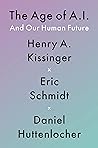
Book Review – Age of AI by, Henry A. Kissinger, Eric Schmidt & Daniel Huttenlocher


The Age of A.I. and Our Human FutureThe Age of A.I. and Our Human Future by Henry Kissinger
5 of 5 stars


I’ve been long searching for a book which could explain the philosophical foundations upon which the edifice of today’s AI frameworks has been built and finally got few answers in this book.

The book starts with human mind’s relationship to reality. Human perception and lived experience, augmented by a reasoning mind, has long defined our understanding of reality. This human conception of reality has been exclusive to our species since natural evolution endowed us with consciousness and made us the dominant species on the Earth, but according to the authors, that is about to change. With the latest advances in the field of artificial intelligence, our species is at the cusp of bringing a new alien form of intelligence into this world. And that might have unintended consequences.

Humans have responded to, and reconciled with, the environment by identifying phenomena we can study and eventually explain it either scientifically, theologically, or both. Each historical epoch has been characterized by a set of interlocking explanations of reality and social, political, and economic arrangements based on either faith or reason. The Classical world, Middle Ages, Renaissance, and Modern world all cultivated their concepts of the individual and society, theorizing about where and how each fit into the enduring order of things. When prevailing understanding no longer sufficed to explain perceptions of reality — events experienced, discoveries made, other cultures encountered — revolutions in thought (and sometimes in politics) occurred, and a new epoch was born.

The emerging AI age is increasingly posing that kind of epochal challenges to today’s concept of reality.

Are humans and AI approaching the same reality from different standpoints, with complementary strengths? Or do we perceive two different, partially overlapping realities: one that humans can elaborate through reason and another that AI can elaborate through algorithms?

When the digital world began to expand decades ago, there was no expectation that creators would or should develop a philosophical framework or define their fundamental relationship to national or global interests… there was little demand for predictions about how these virtual solutions might affect the values and behaviour of entire societies…In order for individual, national, and international actors to reach informed conclusions about their relationship to AI – and to one another – we must seek a common frame of reference.

In any case an AI moral code is a necessity now. AGI will soon become pervasive and three options available to humans will be to constrain, partner or defer to AGI in our decision-making process. And in some cases, it is likely to go further, and this choice will be dictated by AGI itself. If humanity needs a viable future, then it needs to agree on a set of moral principles that will guide AGI to make these choices.

The book covers the famed allegory of the Plato’s cave that spoke to the centrality of the Human mind’s quest for Reality. Styled as a dialogue between Socrates and Glaucon, the allegory likens humanity to a group of prisoners chained to the wall of a cave. Seeing shadows cast on the wall of the cave from the sunlit mouth, the prisoners believe them to be reality.

The humanity, Socrates held, is akin to the prisoner who can break free of the shackles, ascends to level ground, and perceives reality in the full light of day. Similarly, the Platonic quest to glimpse the true form of things supposed the existence of an ideal — reality toward which humanity has the capacity to journey even if never quite reach. The conviction that what we see reflects reality — and that we can fully comprehend at least aspects of this reality using discipline and reason is at the centre of understanding our own consciousness and for birthing AGI.

The authors then attempt to cover the philosophical journey of AI evolution. It started with how Spinoza in his Ethics in 1677 sought to arrive at the underlying system of truths through the application of reason alone. At the pinnacle of human knowledge, Spinoza held, was the mind’s ability to reason its way toward contemplating the eternal — to know “the idea of the mind itself” and to recognize, through the mind, the infinite and ever-present “God as cause.” This knowledge, Spinoza held, was eternal — the ultimate and indeed perfect form of knowledge.

Then Berkeley in his Treatise Concerning the Principles of Human Knowledge in 1710 propositioned that reality consisted not of material objects but in mind whose perception of seemingly substantive reality, was indeed reality.

Later it was Kant who in his Critique of Pure Reason in 1781 suggested that human reason had the capacity to know reality deeply, albeit through an inevitably imperfect lens. Human cognition and experience filters, structures, and distorts all that we know, even when we attempt to reason “purely” by logic alone. Objective reality in the strictest sense — what Kant called the thing in itself — is ever-present but inherently beyond our direct knowledge. Kant posited a realm of noumena, or “things as they are understood by pure thought,” existing independent of experience or filtration through human concepts.

For the following two hundred years, Kant’s essential distinction between the thing in itself and the unavoidably filtered world we experience hardly seemed to matter. While the human mind might present an imperfect picture of reality, it was the only picture available. What the structures of the human mind barred from view would, presumably, be barred forever — or would inspire faith and consciousness of the infinite. Without any alternative mechanism for accessing reality, it seemed that humanity’s blind spots would remain hidden. Whether human perception and reason ought to be the definitive measure of things, lacking an alternative, for a time, they became so.

For generations after Kant, the quest to know the thing in itself took two forms: ever more precise observation of reality and ever more extensive cataloging of knowledge. Vast new fields of phenomena seemed knowable, capable of being discovered and cataloged through the application of reason. In turn, it was believed, such comprehensive catalogs could unveil lessons and principles that could be applied to the most pressing scientific, economic, social, and political questions of the day.

The scientists tried to build AI frameworks based on these conceptual frameworks governed by reason alone by introducing ever more precise observation mechanisms and ever more extensive cataloguing of knowledge but failed miserably as it was a hard problem to mimic AI as a reasoning entity in human likeness.

In the meantime, reason — in the form of advanced theoretical physics — began to progress further toward Kant’s thing in itself, with disorienting scientific and philosophical consequences. In the late nineteenth and early twentieth centuries, progress at the frontiers of physics began to reveal unexpected aspects of reality. The classical model of physics, whose foundations dated to the early Enlightenment, had posited a world explicable in terms of space, time, matter, and energy, whose properties were in each case absolute and consistent. As scientists sought a clearer explanation for the properties of light, however, they encountered results that this traditional understanding could not explain. The brilliant and iconoclastic theoretical physicist Albert Einstein solved many of these riddles through his pioneering work on quantum physics and his theories of special and general relativity. Yet in doing so, he revealed a picture of physical reality that appeared newly mysterious. Space and time were united as a single phenomenon in which individual perceptions were apparently not bound by the laws of classical physics. Developing a quantum mechanics to describe this substratum of physical reality, Werner Heisenberg and Niels Bohr challenged long-standing assumptions about the nature of knowledge. Heisenberg emphasized the impossibility of assessing both the position and momentum of a particle accurately and simultaneously. This “uncertainty principle” (as it came to be known) implied that a completely accurate picture of reality might not be available at any given time. Further, Heisenberg argued that physical reality did not have independent inherent form but was created by the process of observation: “I believe that one can formulate the emergence of the classical ‘path’ of a particle succinctly . . . the ‘path’ comes into being only because we observe it.”

The human mind was forced to choose, among multiple complementary aspects of reality, which one it wanted to know accurately at a given moment. A full picture of objective reality, if it were available, could come only by combining impressions of complementary aspects of a phenomenon and accounting for the distortions inherent in each.

The book concludes that it was finally in 1921 that Ludwig Wittgenstein’s in his Logical-Philosophical Treatise was able to comprehend the elusive nature of reality in terms of similarities in detail.

Knowledge was to be found in generalizations about similarities across phenomena i.e. “family resemblances”: “And the result of this examination is: we see a complicated network of similarities overlapping and criss-crossing: sometimes overall similarities, sometimes similarities of detail.” The quest to define and catalogue all things, each with its own sharply delineated boundaries, was mistaken. Instead, one should seek to define “This and similar things” and achieve familiarity with the resulting concepts.

This laid the groundwork for the AI acceleration. Even if AI would never know something in the way a human mind could, an accumulation of matches with the patterns of reality could approximate and sometimes exceed the performance of human perception and reason. This led to the acceptance of using machine learning algorithms that can match the patterns to get us to a close approximation of reality.

The last chapter of the book covers the future of AI. Traditional reason and faith will persist in the age of AI, but their nature and scope are bound to be profoundly affected by the introduction of a new, powerful, machine-operated form of logic. Human identity may continue to rest on the pinnacle of animate intelligence, but human reason will cease to describe the full sweep of the intelligence that works to comprehend reality. To make sense of our place in this world, our emphasis may need to shift from the centrality of human reason to the centrality of human dignity and autonomy.

AGI driven world will produce unpredictable results and possibly series of dilemmas with imperfect answers but is surely going to advance a shared human culture and quest for answers beyond any national culture or value system.

We need to find ways to make AGI an effective partner in exploration and managing the existential reality. AGI could become an effective partner for humans by offering complementary perspectives on reality. In scientific discovery or any other creative work AGI with a non-human perception can act as a second mirror while reflecting the reality and helping us understand it better. This partnership means humans must adapt to a world where our reasoning is no longer the sole—or even primary—way of understanding or interacting with reality. Future of humanity is increasingly dependent on it defining its role in an AI age.

AI may take a leading role in exploring and managing both the physical and digital worlds. In specific domains, humans may defer to AI, preferring its processes to the limitations of the human mind. This deference could prompt many or even most humans to retreat into individual, filtered, customized worlds. In this scenario, AI’s power – combined with its prevalence, invisibility, and opacity – will raise questions about the prospects for free societies and even for free will.

Even the definition of pure knowledge may need to be revisited. Pure knowledge was supposed to be derived through pure reason, logic, or the inherent structures of the mind. But with the advent of AGI, we may be closer to the concept of purest form of knowledge not limited by the structures of our minds and the patterns of the conventional human thought.

Overall, a great book to understand the philosophical evolution of AI till date and how it is going to impact our future in the coming years.


Tarun Rattan


View all my reviews

Posted in Book Reviews, Science, Technology | Tagged , , , , , , , | 1 Comment

Alcohol


Posted in Jokes | Tagged | 1 Comment

हिन्दू सनातन धर्म – तिलक (Tilak) या तिलक-चिह्न

हिन्दू सनातन धर्म में तिलक (Tilak) या तिलक-चिह्न का विशेष महत्व है। तिलक केवल सजावट नहीं बल्कि यह आध्यात्मिक, धार्मिक और दार्शनिक पहचान भी दर्शाता है। अलग-अलग सम्प्रदाय, परम्पराएँ और देवताओं की उपासना पद्धति के अनुसार तिलक के कई प्रकार होते हैं।

प्रमुख तिलक के प्रकार :

1. ऊर्ध्वपुण्ड्र तिलक (Urdhva Pundra) इसे वैष्णव तिलक कहा जाता है।माथे पर दो ऊर्ध्व रेखाएँ (U आकार) होती हैं और बीच में श्रीचरण या राम-शालिग्राम की रेखा होती है।यह विष्णु और उनके अवतारों के उपासकों का चिह्न है।
2. त्रिपुण्ड्र तिलक (Tripundra) यह तीन क्षैतिज रेखाओं वाला तिलक है, जिसे भस्म या राख से बनाया जाता है।यह भगवान शिव के उपासकों का तिलक है।बीच में लाल बिन्दु (कुमकुम/चंदन) लगाने की भी परंपरा है।
3. ऊर्ध्वपुण्ड्र-त्रिपुण्ड्र मिश्रित तिलककुछ संप्रदाय दोनों का सम्मिश्रण करते हैं।
4. शैव तिलक (Vibhuti Tilak) शिवभक्त भस्म से माथे पर क्षैतिज रेखा या बिन्दु लगाते हैं।
5. वैष्णव तिलक (Urdhva Rekha) श्रीवैष्णव सम्प्रदाय में चंदन से ‘U’ आकार और बीच में लाल/पीला चिन्ह बनाया जाता है।
6. शाक्त तिलकशक्ति उपासक प्रायः लाल रंग (कुमकुम/सिन्दूर) का बिन्दु या तिलक लगाते हैं। कभी-कभी त्रिकोण अथवा लाल बिन्दु भी प्रयोग करते हैं।
7. रामानुज सम्प्रदाय तिलक ‘U’ आकार के चंदन तिलक के बीच में लाल रेखा होती है।
8. मध्व सम्प्रदाय तिलकचंदन से सीधी रेखा, बीच में काले (गंध/काजल) का चिन्ह।
9. गौड़ीय वैष्णव तिलकनाक की जड़ से ऊपर तक जाती दो रेखाएँ, नीचे तुलसी पत्र या बिन्दु का चिन्ह।
10. श्रीचक्र/त्रिपुण्ड्र-बिन्दु तिलक (शाक्त परंपरा में) शक्ति साधना में माथे पर लाल बिन्दु और त्रिपुण्ड्र का मेल भी देखा जाता है।

संक्षेप में मुख्यतः 3 आधार प्रकार माने जाते हैं –1. ऊर्ध्वपुण्ड्र (वैष्णव तिलक) 2. त्रिपुण्ड्र (शैव तिलक) 3. बिन्दु तिलक (शाक्त तिलक) बाकी सारे तिलक इन्हीं के भेद या संप्रदाय विशेष के अनुसार रूप होते हैं।

Posted in Religion | Tagged , , , , , , , | Leave a comment

Book Review – The Ministry for the Future by Kim Stanley Robinson


The Ministry for the FutureThe Ministry for the Future by Kim Stanley Robinson
5 of 5 stars

The book exposes the dangers of climate change and shows how bleak our future looks. Just as we are all subject to some perceptual errors due to the nature of our senses and physical reality, we are also subject to some cognitive errors, built into our brains through the period of human evolution, and unavoidable even when known to us. The first chapter is apocalyptical and depicts the aftermath of a deadly heat wave that hits Indian state of Uttarpradesh, where I was born incidentally and resonate the folly of human growth even more strongly. The first chaper stays with you and you will be tempted to lap up the rest of this book. It is not a small book, with multiple complex characters and additionally, the book attempts to explain the jargon of climate science in plain simple terms. If you are already steeped in knowledge about the climate crisis, you might find yourself skimming some of the explanatory technical aspects; though if you are a newcomer to the science and policy aspects of climate crisis you will find them well-explained without being ‘dumbed down.’ It is a novel but also, through and through, a hard science-fiction novel. 

I live in Ireland and the novel switches between different perspectives, with main character—Mary Murphy, in charge of the Ministry in question, an organisation set up under the Paris Agreement to solve the climate crisis in future. Murphy’s character is based upon diplomat Mary Robinson from Ireland and captures the intent of some good humans working to address this most important issue facing humanity today.

The book does not provide any hope or solutions but lays bare the consequences of climate change that are staring us all a few years dow the road. No country will be spared but will they come together to delay or limit the effects of human interference in the natural phenomenon is still to be seen.


View all my reviews

Posted in Book Reviews, Science | Tagged , , | Leave a comment

Book Review – Snow by Orhan Pamuk

A great story of an elusive love and heartbreak against a political backdrop in modern day Turkey by the great story teller. An exiled poet Ka returns back to his hometown of Kars to investigate the suicide by young girls forbidden to wear head scrafs. He accepted the assignment drawn by a misplaced hope of winning over Ipek his long lost love who is now recently dovorced.

The backdrop of the story is constant snowfall which prompts the poet to write poems tagging to the different corners of a snowflake. When poems come to him, he would find a lonely corner to write it into a blue book which was eventually lost after he was murdered back in Germany. The story shows the dillemma the dogmatic rules of religion causes in the society which longs for freedom. In the story poet crosses his path with number of interesting characters including charismatic Blue, an Islamic terrorist wanted to crush any retort to religious dogmas, Ipek and her sister, Ipek’s ex-husband, a modernist turned Islamist. Overall book shows how religion would ultimately uproot the secular credentials of any society and turn it into a burning hell where radicals would always be at loggerheads with moderates.

In particular the book highlights the challenge Islam in particular has where it’s rigid dogma causes a constant anxiety among its followers always questioning their belief to the core tenets of religion. The whole society is ultimately driven to madness to prove that they are true to Islam and not hypocrites which are destined to rot in the worst of hell. That madness is metaphorically depicted by the author in the massacre at the theater which killed his only hope to secure his happiness.

Ka is driven by a lingering hope to get Ipek back with him to Germany which was an elusive happy paradise he has been searching all his life. Ipek gave hope but retraced her steps at the last moment breaking Ka and ultimately led to his murder.

In Snow, Orhan tries to unravel the conflict in modern Turkey between modernity and fundamentalist Islam which is reflective of the struggle in every Islamic society at present. It’s an important book to understand the challenges Islamic societies face today and readers will get more insights into that inner struggle in these societies than they would ever get by reading history books or any other non-fiction commentary.

View all my reviews

Posted in Book Reviews, Literature, Love, Religion | Tagged , , , , | Leave a comment

“She Walks in Beauty” by Lord Byron

She walks in beauty, like the night
Of cloudless climes and starry skies;
And all that’s best of dark and bright
Meet in her aspect and her eyes;
Thus mellowed to that tender light
Which heaven to gaudy day denies.

One shade the more, one ray the less,
Had half impaired the nameless grace
Which waves in every raven tress,
Or softly lightens o’er her face;
Where thoughts serenely sweet express,
How pure, how dear their dwelling-place.

And on that cheek, and o’er that brow,
So soft, so calm, yet eloquent,
The smiles that win, the tints that glow,
But tell of days in goodness spent,
A mind at peace with all below,
A heart whose love is innocent!

Posted in Literature | Tagged , , , | Leave a comment

Book Review – India That is Bharat by J. Sai Deepak

India that is Bharat: Coloniality, Civilisation, ConstitutionIndia that is Bharat: Coloniality, Civilisation, Constitution by J. Sai Deepak
5 of 5 stars


The colonial studies with Indian perspective are strangely almost non-existent. In spite of sub-continent going through tragic colonial experiences first with Muslim invaders and then with British Colonialism, the colonial studies in India have lagged behind other regions like Latin America where many scholars have researched and debunked the prevalent colonial notions. J. Sai Deepak has successfully filled that huge vacuum with this corpus of decolonial scholarship from Indian perspective. In this book Sai Deepak has tried to understand the global history of colonialism, it’s terrible impact on India’s culture, politics and justice system. He delved into colonial consciousness that lingers post-independence from British and outlines pathways to reverse it and decolonize Indian mind. J Sai Deepak used his exacting judicial knowledge, his devotion to Sanatana tradition to present us with a vision of civilisational liberation for Bharatavarsha. It is a well-researched book and the wealth of evidence the author marshals in support of his arguments is truly impressive making a strong case to fully decolonise India.

The book cover the birth of colonial framework during the Age of Discovery marked by Colombus expeditions and how it landed on Indian shores reshaping Bhartiya consciousness through a British made constitution – the Government of Indian Act 1919. It goes on tracing the universal constructs of ‘secularism’ and phony ‘toleration’ to Christian political theology and how these constructs subverted indigenous Indic consciousness and unfortunately made their way into Indian constitution. Though major emphasis is on British colonialism, the book also briefly covers Middle Eastern Coloniality and its shared antipathy towards Indic worldview. Sai Deepak provides succinct examples of how this coloniality regularly manifests itself in judicial pronouncements on Indic faith based matters, the State’s continued stranglehold and perverse intervention in the majority’s places of worship, or the causal, axiomatic pronouncements of the elite, who debunk the very idea of our existence as a nation ever, pathetically attributing this as well to the Raj like other misguided attempts on economic milestones like schools, railways etc. The book does bring to light the comprehensive extent of the success of the European colonial project. It also highlights that attempts at Indian decolonization were not lacking for want of effort but were at the core of modern Indian Renaissance started in the second half of nineteenth century. The luminaries of Indian Renaissance made numerous attempts to produce a comparative history and analyses of the world from Sanatana perspective but colonial constitution adopted at Independence tragically halted those initiatives in 1947.

In the later chapter Sai Deepak outlines the steps needed in the spheres of nature, religion, culture, history, education, language and constitutional justice system to liberate Bhart’s distinctive indigeneity. Sai Deepak convincingly busts each of the colonial myths and their idiotic symptoms through fact based arguments demolishing the foundations of lingering colonial consciousness in the Bhartiya mind. The book will be seminal in starting movements of reclamation and reparatory justice and will help reimagine and reconstruct Indic world, our notions of modernity and rationality from Indian viewpoint.

View all my reviews

Posted in Book Reviews | Tagged , , , , , , | Leave a comment

For Batter Or For Verse


Posted in Jokes | Leave a comment

Book Review – August 1914 by Aleksandr Solzhenitsyn

August 1914 (The Red Wheel, #1)August 1914 by
Aleksandr Solzhenitsyn
My rating: 5 of 5 starsRussia’s disastrous performance in World War I was one of the primary causes of the Russian October Revolution of 1917, which swept aside the Romanov dynasty and installed a Bolshevik government following events that unfolded from the autumn of 1916 through the autumn of 1917 bending the arc of history in unfathomable ways and continues to influence world politics till today. This book by Aleksandr Solzhenitsyn covers that panoramic saga, its heroism and its tragic bearing on the destiny of Russia.

The book details the most spectacular and complete German victory of the First World War, the encirclement and destruction of the Russian Second Army in late August 1914 that virtually ended Russia’s invasion of East Prussia before it had really started. Allied with France and Britain, Grand Duke Nicholas, the Russian commander, agreed to help relieve the French, under attack from Germany, with an offensive in East Prussia. This required mobility and nimbleness; unfortunately the Russians had neither.

Two Russian armies invaded German East Prussia in August 1914. Rennenkampf’s First Army was to converge with the Samsonov’s Second Army to give a two-to-one numerical superiority over the German 8th Army, which they would attack from the east and south respectively, some 80km apart.

The plan began well at Gumbinnen on 20 August 1914, when Rennenkampf’s First Army secured scrappy victory on eight divisions of the German 8th Army on its eastern front. By this time Samsonov’s forces had crossed the southern frontier of East Prussia to threaten the German rear, defended by only three divisions.

On 22 August the bulk of Samsonov’s forces reached the extremities of the German line, fighting (and winning) small actions as it continued to advance into the German trap of encirclement.

German General Prittwitz, shaken by the action at Gumbinnen and fearful of encirclement, ordered a retreat to the River Vistula. Upon receipt of this news Helmuth von Moltke, the German Army Chief of Staff, recalled Prittwitz and his deputy von Waldersee to Berlin – an effective dismissal and installed as their replacement the markedly more aggressive combination of Paul von Hindenburg – brought out of retirement at the age of 66 – and Erich Ludendorff as his Chief of Staff (having earlier distinguished himself at Liege).

Upon his arrival in East Prussia on 23 August Hindenburg immediately reversed Prittwitz’s decision to withdraw, choosing instead to authorise a plan of action prepared by Colonel Maximilian Hoffmann, Prittwitz’s deputy chief of operations. While Hindenburg and Ludendorff received much credit for the subsequent action at Tannenberg, the actual plan of attack was devised in detail by Hoffmann.

Hoffmann proposed a ploy whereby cavalry troops would be employed as a screen at Vistula, the intention being to confuse Rennenkampf who, he knew, held a deep personal vendetta with Samsonov (who had complained of Rennenkampf’s conduct at the Battle of Mukden in 1905) and so would be disinclined to come to his aid if he had justifiable cause not to.

The Germans then got lucky when they intercepted an uncoded Russian message indicating that Rennenkampf was in no hurry to advance. Developing Hoffman’s original plan, Ludendorff concentrated six divisions against Samsonov’s left flank and took a calculated risk to withdraw the rest of the German troops from Gumbinnen and move them to face Samsonov’s right flank, leaving only a cavalry screen against Rennenkampf. This move was helped by the lack of communication between the two Russian commanders, who disliked each other.

Meanwhile, General Hermann von Francois’s I Corps were transported by rail to the far southwest to meet the left wing of Samsonov’s Second Army. Hindenburg’s remaining two corps, under Mackensen and Below, were to await orders to move south by foot so as to confront Samsonov’s opposite right wing. Finally, a fourth corps was ordered to remain at Vistula to meet Samsonov as his army moved north. The trap was being set.

Samsonov meanwhile, bedevilled by supply and communication problems, was entirely unaware that Rennenkampf had chosen to pause and lick his wounds at Gumbinnen, instead assuming that his forces were continuing their movement south-west.

Samsonov was similarly unaware of Hoffmann’s plan or of its execution. Assured that his Second Army was en route to pursue and destroy the supposedly retreating Eighth Army (and supported in doing so by overall commander General Yakov Zhilinski, who was subsequently dismissed for his part in the following debacle), he continued to direct his army of twelve divisions – three corps – in a north-westerly direction towards the Vistula. The remaining VI Corps he directed north towards his original objective, Seeburg-Rastenburg.

Having engaged – unsuccessfully – the heavily entrenched German XX Corps the previous day, 24 August, at the Battle of Orlau-Frankenau, Samsonov had noted what he took to be a general German withdrawal to Tannenberg and beyond. Consequently, his message provided detailed plans for his intended route of pursuit of the German forces.

Samsonov’s forces were spread out along a 60 mile front and advancing gradually against the Germans when, Ludendorff issued an order to General Francois to initiate the attack on Samsonov’s left wing at Usdau on 25 August. Remarkably, Francois rejected what was clearly a direct order, choosing instead to wait until his artillery support was in readiness on 27 August. Ludendorff – along with Hoffmann – travelled to see Francois and to repeat the order. Reluctantly, Francois agreed to commence the attack, but complained of a lack of shells.

Ignoring warnings of a massed German advance moving south, Zhilinksi directed Rennenkampf’s First Army to the west to Konigsberg on 26 August, a considerable distance from Samsonov’s plight. Given the degree of personal enmity between Rennenkampf and Samsonov – they had physically come to blows on at least one occasion – the former had no particular inclination to come to Samsonov’s assistance. Disastrously for Samsonov, Hoffmann and Ludendorff intercepted Zhilinksi’s unciphered order to Rennenkampf. He promptly dispatched Below from Bischofsburg to rejoin the German centre, and sent Mackensen south to meet up with General Francois, where they joined in Willenberg, south of Bischofsburg, on 29 August. Samsonov was by now surrounded.

At last, on 28 August, Samsonov finally became aware of the peril he faced. Critically short of supplies and with his communications system in tatters, his forces were dispersed, and VI corps had already been defeated. Consequently he ordered a general withdrawal on the evening of 28 August. It was a crushing defeat for the Russians. In total, they lost around 250,000 men – an entire army – as well as vast amounts of military equipment. 95,000 Russians troops were captured in the action; an estimated 30,000 were killed or wounded, and of his original 150,000 total, only around 10,000 of Samsonov’s men escaped. The Germans suffered fewer than 20,000 casualties and, in addition to prisoners captured over 500 guns. Sixty trains were required to transport captured equipment to Germany.

Samsonov, lost in the surrounding forests with his aides, shot himself, unable to face reporting the scale of the disaster to the Tsar, Nicholas II. His body was subsequently found by German search parties and accorded a military burial. Hindenburg and Ludendorff were feted as heroes at home in Germany. Such was the lustre of the victory – combined with later albeit lesser successes at the First and Second Battles of the Masurian Lakes, that Hindenburg later replaced Erich von Falkenhayn as German Chief of Staff, bringing with him to Berlin Ludendorff as his quartermaster general.

Russian counter-attack from Soldau enabled two Russian army corps to escape south east before the German pursuit continued. By nightfall on 29 August the Russian centre, amounting to three army corps, was surrounded by Germans and stuck in a forest with no means of escape. The Russians disintegrated and were taken prisoner by the thousands. Faced with total defeat, Samsonov shot himself. By the end of the month, the Germans had taken 92,000 prisoners and annihilated half of the Russian 2nd Army. Rennenkampf’s army had not moved at all during this battle, vindicating Ludendorff’s calculated risk.

After being reinforced, the Germans turned on Rennenkampf’s slowly advancing Army, attacking it in the first half of September and driving it from East Prussia.

The climax of the book covers the postmartem conference that was conducted by Commander In Chief of Russian Forces Grand Duke Nikolai Nikolaevich in which Colonel Vorotyntsev who was there at the front during the debacle castigated the role of General Head Quarters particularly General Zhilinsky & General Danilov at great expense on his career. But it showed the strength of his character and how incompetence of few can cause loss of life for so many young soldiers at the front.

The book stops at the military debate but these staggering losses played a definite role in the mutinies and revolts that began to occur. Soldiers went hungry, lacked shoes, munitions, and even weapons. Rampant discontent lowered morale, which was further undermined by a series of military defeats. Casualty rates were the most vivid sign of this disaster. By the end of 1914, only five months into the war, around 390,000 Russian men had lost their lives and nearly 1,000,000 were injured. Far sooner than expected, inadequately trained recruits were called for active duty, a process repeated throughout the war as staggering losses continued to mount. The officer class also saw remarkable changes, especially within the lower echelons, which were quickly filled with soldiers rising up through the ranks.

The war did not only devastate soldiers. By the end of 1915, there were manifold signs that the economy was breaking down under the heightened strain of wartime demand. The main problems were food shortages and rising prices. Inflation dragged incomes down at an alarmingly rapid rate, and shortages made it difficult for an individual to sustain oneself. These shortages were a problem especially in the capital, St. Petersburg, where distance from supplies and poor transportation networks made matters particularly worse. Shops closed early or entirely for lack of bread, sugar, meat, and other provisions, and lines lengthened massively for what remained. Conditions became increasingly difficult to afford food and physically obtain it.

Tsar Nicholas was blamed for all of these crises, and what little support he had left began to crumble. As discontent grew, the State Duma issued a warning to Nicholas in November 1916, stating that, inevitably, a terrible disaster would grip the country unless a constitutional form of government was put in place. Nicholas ignored these warnings and Russia’s Tsarist regime collapsed a few months later during the February Revolution of 1917. One year later, the Tsar and his entire family were executed.

A series of political crises in the relationship between population and government and between the Provisional Government and the Soviets (which developed into a nationwide movement with a national leadership). The All-Russian Central Executive Committee of Soviets (VTsIK) undermined the authority of the Provisional Government but also of the moderate socialist leaders of the Soviets. Although the Soviet leadership initially refused to participate in the “bourgeois” Provisional Government, Alexander Kerensky, a young, popular lawyer and a member of the Socialist Revolutionary Party (SRP), agreed to join the new cabinet, and became an increasingly central figure in the government, eventually taking leadership of the Provisional Government. As minister of war and later Prime Minister, Kerensky promoted freedom of speech, released thousands of political prisoners, continued the war effort, even organising another offensive (which, however, was no more successful than its predecessors). Nevertheless, Kerensky still faced several great challenges, highlighted by the soldiers, urban workers, and peasants, who claimed that they had gained nothing by the revolution.

The political group that proved most troublesome for Kerensky, and would eventually overthrow him, was the Bolshevik Party, led by Vladimir Lenin. Lenin had been living in exile in neutral Switzerland and, due to democratization of politics after the February Revolution, which legalized formerly banned political parties, he perceived the opportunity for his Marxist revolution. Although return to Russia had become a possibility, the war made it logistically difficult. Eventually, German officials arranged for Lenin to pass through their territory, hoping that his activities would weaken Russia or even – if the Bolsheviks came to power – lead to Russia’s withdrawal from the war. Lenin and his associates, however, had to agree to travel to Russia in a sealed train: Germany would not take the chance that he would foment revolution in Germany. After passing through the front, he arrived in Petrograd in April 1917.

On the way to Russia, Lenin prepared the April Theses, which outlined central Bolshevik policies. These included that the Soviets take power (as seen in the slogan “all power to the Soviets”) and denouncing the liberals and social revolutionaries in the Provisional Government, forbidding co-operation with it. Many Bolsheviks, however, had supported the Provisional Government, including Lev Kamenev.

With Lenin’s arrival, the popularity of the Bolsheviks increased steadily. Over the course of the spring, public dissatisfaction with the Provisional Government and the war, in particular among workers, soldiers and peasants, pushed these groups to radical parties.

The October Revolution, which unfolded on Wednesday 25 October according to the Julian calendar in use under tsarist Russia, was organised by the Bolshevik party. Lenin did not have any direct role in the revolution and he was hiding for his personal safety. However, in late October, Lenin secretly and at great personal risk entered Petrograd and attended a private gathering of the Bolshevik Central Committee on the evening of October 23. The Revolutionary Military Committee established by the Bolshevik party was organising the insurrection and Leon Trotsky was the chairman. 50,000 workers had passed a resolution in favour of Bolshevik demand for transfer of power to the soviets. However, Lenin played a crucial role in the debate in the leadership of the Bolshevik party for a revolutionary insurrection as the party in the autumn of 1917 received a majority in the soviets. An ally in the left fraction of the Revolutionary-Socialist Party, with huge support among the peasants who opposed Russia’s participation in the war, supported the slogan ‘All power to the Soviets’. The initial stage of the October Revolution which involved the assault on Petrograd occurred largely without any human casualties.

Liberal and monarchist forces, loosely organized into the White Army, immediately went to war against the Bolsheviks’ Red Army, in a series of battles that would become known as the Russian Civil War. The Civil War began in early 1918 with domestic anti-Bolshevik forces confronting the nascent Red Army. In autumn of 1918 Allied countries needed to block German access to Russian supplies. They sent troops to support the “Whites” with supplies of weapons, ammunition and logistic equipment being sent from the main Western countries but this was not at all coordinated. Germany did not participate in the civil war as it surrendered to the Allied. The result of Red Army winning that civil war had consequences in the rise of communism across the world and in leading to WW2 and Cold War.

The book shows that incompetence at top can have disastrous consequences on the future destiny of a nation. The fact that mistakes made by few caused suffering for millions on Russians for almost a century shows that a nation’s future can only be safeguarded by system where merit takes precedence over everything else. A system that breeds incompetence will ultimately lead to a disaster with untold suffering for the populace.

View all my reviews

Posted in Book Reviews, History, Literature | Tagged , , , , | Leave a comment