लालकुर्ती: मेरठ

मेरठ : ऐतिहासिक नगरी मेरठ मुसलसल उतार-चढ़ाव की गवाह है। दरख्त जवान हुए, हरियाली बिखेरी और एक उम्र के बाद जमींदोज हो गए। खूबसूरत इमारतों और बागान ने इस शहर के हुस्न में चार चांद लगाए, लेकिन वक्त के थपेड़े में ये सब बदरंग हो गए या कंकरीट के जंगल में तब्दील। कुदरत और दुनिया की इस उठापटक में लालकुर्ती की शान और पहचान आज भी बरकरार है। घनी आबादी व तंग गलियों का यह इलाका बुलंदी के उस दौर की ताबीर को आज भी जिंदा रखे है साथ ही गुजरे जमाने की सुनहरी यादों से सराबोर है।

मुगल और अंग्रेजी शासनकाल की निशानियों को लालकुर्ती आज भी अपने दामन में संजोए हुए है। शेख इलाही बख्श की मिल्कियत पर कायम लालकुर्ती ने हर दौर देखा। बताते हैं अंग्रेजी शासनकाल में व्यापारिक और व्यावसायिक गतिविधियों का यह प्रमुख केंद्र था। तब फ्रिज नहीं थे, लिहाजा घड़े, मटके और सुराही से प्यास बुझती थी। हंडिया मोहल्ले में हंडिया यानि घड़े बनते थे। खपरैल के मकानों पर इन्हें फेंककर मजबूती परखी जाती थी।

बकरी मोहल्ला मांस आपूर्ति के लिए जाना जाता था। 1901 में हाफिज अब्दुल करीम ने अंग्रेजों से यह जमीन खरीदकर मदरसा इस्लामिया बनवाया, जो आज भी तालीम की रोशनी बिखेर रहा है। मैदा मोहल्ला उस दौर की रसोई थी। यहां खान-पान का हर सामान मिलता था। घोसी मोहल्ला में पशु पाले जाते थे, यहां से दूध आपूर्ति होती थी। कैंट से सटे इस क्षेत्र से न केवल फौज को आपूर्ति होती थी बल्कि दिल्ली तक लालकुर्ती की धूम थी।

हाथी बघेला और हाथी खाना की झोली भी किस्सों से भरी है। फारसी में बघेला का मतलब पशु गृह अथवा जानवर बांधने की जगह से है। हाथियों के शौकीन शेख के हाथी यहीं पाले जाते थे। जामुन के पेड़ों का विशाल बाग जामुन मोहल्ला के नाम से जाना गया। मैदा मोहल्ले में सुल्तान अल्तमाश की बनवाई मस्जिद आज शान से खड़ी है।

वक्त के साथ लालकुर्ती में बेतहाशा रिहाइश हो गयी। अब नई नस्लें भले ही बहुमंजिला इमारतों में आंखें खोल रही हों, लेकिन झुर्रियों से पटे चेहरे, गड्ढों में धंसी आंखें और जर्जर काया लिए बुजुर्ग बड़े फº से लालकुर्ती की बादशाहत बयां कर वक्त की धूल पोंछते चले आ रहे हैं।

प्रस्तुति- संकल्प रघुवंशी

www.jagran.com Mon, 09 Apr 2012

Posted in History | Tagged | Leave a comment

2001: A Space Odyssey (1964)

Posted in Art & Beauty | Tagged | Leave a comment

The Truth About Semen by Jamie Condliffe

A gentleman’s relish is the true water of life. A nice shot of semen allows a man to pass on a genetic code through the ages, offering the closest thing to eternal life humans are ever likely to achieve. But such wonders aren’t straightforward. In fact, semen is a wonderfully complex secretion, rich in evolutionary history and packed full of healthy chemicals. And actually, there’s far more to it than sperm alone.

In the deep, dark past, physicians of the 18th century thought semen was concentrated from blood. In fact, one famed doctor, Samuel-Auguste Tissot, went as far as suggesting that “losing one ounce of sperm is more debilitating than losing forty ounces of blood.” Yikes.

Fortunately, he was wrong. In fact, semen is a particularly complex excretion. It might shock you to find out that only 1 to 5 percent of the average man’s ejaculate is actually sperm. The rest is rather delightfully referred to as “seminal plasma”, which is made up of over 50 different chemical compounds including, but not limited to, neurotransmitters, endorphins, hormones and immunosuppressant’s. Taken as a whole it is, without doubt, the seminal plasma which is both most interesting and most useful. In essence, the sperm is just a passenger.

But the jiz we all know and love isn’t held in the testicles. No, the delightful mixture is in fact concocted from a series of sources at the point of ejaculation, and not a moment earlier. First, the sperm—and just the sperm—passes from the testes, through a roller coaster of tubes: first the ejaculatory ducts, and on through the seminal vesicles. This is where the bulk of the seminal plasma joins the ride, shortly before the trusty prostate adds a few key enzymes, acids and lipids. Finally, the bulbourethral glands—what a mouthful—inject a little clear fluid into the urethra, which acts as a lubricant so the semen can spurt out with ease. Glorious, orgasmic ease.

The big wide world

Once released, of course, the semen is left to fend for itself—and the first thing it does is coagulate. In fact, studies have shown that the first fraction of the ejaculate doesn’t coagulate as efficiently as the rest of the semen—probably because it’s poorly mixed—but that the rest of it forms a thick, gloopy consistency as soon as it leaves the body. Given anywhere from five to thirty minutes, though, antigens present in the semen cause it liquefy again.

The initial coagulation isn’t just for fun, of course—it’s tied up with the intended evolutionary purpose of the fluid. Most scientists agree that the reason it coagulates is so the semen can remain in place inside the vagina, enabling the sperm to have an easier trip to the cervix. Not just that, though: because it’s so thick, it also blocks the path for any previously deposited swimmers that happen to be lingering. In fact, the more often a man ejaculates, the stronger and longer the coagulation—an evolutionary trick which keeps the most prolific lovers on top of the pile. The subsequent liquefaction, in case you were wondering, then allows the sperm to swim more easily in their arduous race to the finish line.

That’s no easy journey, either. The female reproductive tract is a harsh environment, mainly because it’s rather acidic. Fortunately, semen itself is full of amines—alkali compounds—which prevent the sperm from dying in the vaginal acid bath. There’s also rather a lot of fructose within the seminal plasma, which helps give the little swimmers enough energy to reach their final destination.

Taste test

But we’re not here to discuss the joys of conception—we’re here to get the lowdown on semen. And the female reproductive tract isn’t the only place it ends up. Let’s be brutally honest: Semen has made it into the mouths of many an individual, with mixed opinions over its taste and texture. Anecdotally, semen has been described as tasting “salty”, “bitter”, “sweet”, “like thick Clorox” or of “whatever the ejaculator ate twelve hours before.” But which one’s true? I mean, really, really true?

The wonderful scientific fact is: nearly all of them. All those chemical compounds that make it one of the body’s most complex excretions also serve to give it a unique flavor profile unlike anything else on earth—and the exact taste is dictated by the subtlest differences, which vary man-to-man, day-to-day. Super-sweet? That’ll be the fructose. Salty? Excess sodium. Sharp-tasting? That’s the citric acid. Metallic? Ugh, zinc. Kinda detergenty? Blame the amines.

It is worth noting that the idea of eating particular foods to improve the taste of one’s semen, often peddled in glossy magazine, has no scientific backing whatsoever. Dr. Debby Herbenick, sexual health educator at The Kinsey Institute and friend of Gizmodo, explains that she is “not aware of any scientific research that has been published in peer-reviewed journals that suggest… [ingestion of any food stuff makes] semen or vaginal fluids taste sweeter or generally more pleasant.”

Arguing for ingestion

Taste alone is no reason to go near semen, then. But there is another reason why its ingestion might prove appealing. Amongst its 50 constituent chemicals are some that really can make you happy: cortisol (which increases affection), estrone (which elevates mood), oxytocin (ditto), and even serotonin (an antidepressant neurotransmitter). While that may sound good in theory, experiments also suggest that it has a real, measurable effect in practice.

A study published in the Archives of Sexual Behavior, for instance, showed that—even after adjusting for frequency and quantity of sex—women who have unprotected sex have fewer depressive symptoms than women that have protected sex, or no sex at all. Another, less rigorous, study hinted at similar effects in gay men who don’t use condoms.

Sadly, there’s been no scientific research conducted into whether oral ingestion of semen has an anti-depressive effect, though it seems likely that it may have at least some small positive effect. There is, however, genuine scientific evidence that suggests swallowing semen may make a woman’s pregnancy safer and more successful because she is absorbing her partner’s antigens. Good luck with that one.

A note of caution

Before getting too excited about the possible health benefits of semen though, there is one problem that must be bought to your attention: HIV. You see, some of the protein factors within semen—principally prostatic acid phosphatase—make HIV far, far more potent than when the virus travels by any other means.

In fact, when HIV is carried in sperm it is a staggering 100,000-fold more potent than when it is not carried within seminal plasma. If that number scares you, it should: contact with semen is the single most effective way to transmit HIV. So while there seem to be some strong health benefits associated with direct contact with male ejaculate, caution is encouraged if get it from a stranger.

When you’re dealing with semen—a liquid so essential to human life and the endurance of the species—show some respect.

Gizmodo 13 Jul 2012

Posted in Science | Tagged , | Leave a comment

Hitchens’ Razor

Posted in Quotations | Tagged | Leave a comment

Onyx

Onyx is the birthstone for Leos and the anniversary gemstone for the 7th year of marriage. Black Onyx is the anniversary gemstone for the 10th year of marriage. Onyx is a variety of the microcrystalline quartz, called chalcedony. The name “chalcedony” comes from Calcedon or Calchedon, an ancient port on the Sea of Marmara in Asia Minor.

Ornamental materials were once mined in that area and it was an active center for trading various stones. Onyx were used widely in the past as bases and handles for gold items, as well as for stone inlay work. Onyx seals were very popular with the Romans, who carved the pattern of the seal in negative relief to give a raised point. They often used stones with several layers, each of a different color, which were then individually carved to produce a different pattern each year. They originally used the onyx name for a variety of marble having white and yellow veins. Onyx is the Greek word for “claw” or “fingernail” because these veins resemble the colors of a fingernail. The marble is still called “onyx marble,” being less valuable and softer than onyx which has a hardness rating of 7. Onyx was also traditionally used for carving cameo brooches.

The myth of the origin of onyx says that the goddess Venus was resting on the banks of the Indus River. As she slept, Cupid used the point of one of his enchanted arrows to give her a manicure. The parings of her nails then fell into the waters of the sacred river. Since the nails were of heavenly origin, they sank to the river bottom and were metamorphosed into onyx.

Onyx is a protective stone worn when facing adversaries in battles of conflicts of all kinds, or while hurrying down a dark street late at night. In classical ceremonial magic, the image of the head of the god Mars or a figure of the hero Hercules was engraved on onyx and carried for courage. Indians and Persians believed that wearing onyx protected them from the evil eye, and that placing onyx on the stomach of a pregnant woman in labor would reduce the labor pain and bring on earlier delivery.

Onyx is not only used for protection, but also as defense against negativity consciously directed towards you. It has also been used to reduce uncontrollable sexual impulses. The close union and yet strong contrast between the layers of black and white in some varieties of onyx may suggest its connection with romance. In India, Gemologists recommend Onyx as a protective measure for harmonious relationships, thus keeping away any probability of disturbances or differences between the couple. Onyx as a birthstone provides the structure and authority you crave. It can help you be the master of your destiny and strengthen your confidence. It provides support in difficult times and centers your energy in times of mental or physical stress. It also offers the gift of wise decisions.

Posted in History | Tagged | Leave a comment

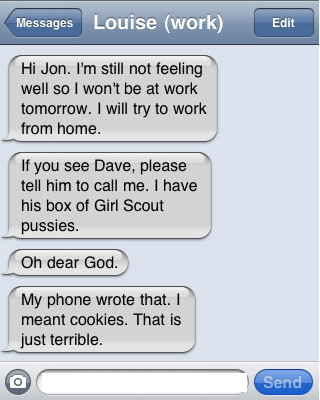
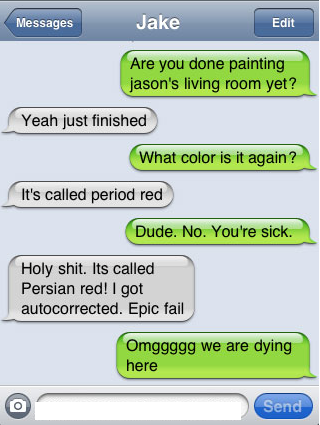
Auto Corrects

image image
Posted in Jokes | Leave a comment

Ten years of bliss…

Ten years of bliss, two little bundles of joy and a lot to look forward to… that’s how I can sum up my marriage of the last 10 years. Amazingly it does not even feel like ten years… I still fondly remember the early days of my union with Shubhra; both of us were bit anxious about each other and furthermore were mere apprentices in the ways of the world. But now that I look back, I realize that over these ten years both of us worked hard enough on our mutual compatibility and learned from our own experiences as well as from those we crossed our paths with and finally have now settled in perfect harmony with each other. Every day I marvel at our little cosmos, implanted and nurtured with love and seeped in hopes and aspirations for future. I feel blessed to have what I have and wonder at the workings and designs of that Higher Being who has made all this possible.

I was wild and disconcerted before marriage but I always knew that I was fundamentally right and despite my antics, I was in control of myself. I also knew that I needed to get anchored in life to do anything worthwhile and my vain wanderings and nomadic mind won’t last me for long. My marriage was timely and Shubhra brought that much needed calmness with her stubborn composure and warm love. She finally tamed me not into a lamb exactly but rather into a gentle acquiescent being who was capable of reciprocating love and tenderness, and also be responsible. In her presence I feel that I am at peace with myself, I love her, long for her and try to rush back to her company from the daily rumblings and roars of the outside world to seek comfort and warmth. And she has always been there for me…

She has been my rock for these last ten years and whenever I feel distressed or perturbed she would nudge me gently into that placid slumber from which I would always wake up regenerated and brawny enough to face the turmoil’s of the world again. I have been loved before but her selfless and boundless love leaves me disarmed and longing for more. Her love is noble but comes with a tinge of perseverance that leaves me scared of her retort if ever I dare to cross her path. I love her tenacity because that’s the trait that keeps me in check and restrains me from turning into my caustic self. Our marriage has been a revelation I would say, for both of us, she has become a lot gentler over these last years and I also have transformed into a compliant and quieter person. This change for better in both of us has led us into a melodious existence which we cherish and bathe in everyday. I can only hope that this mutual respect and affable assistance for each other continues for many years to come for our shared growth and improvement.

Over these ten years we have seen us metamorphosing from a couple into a family of four. Our first one, Palakshi was born in my absence and I have always felt sorry about the fact that I could not make it on time to see her coming to life. But first time I saw and held my daughter in my arms, it filled up my heart with humility at the wonders of Sentient Being who can bestow power upon one living soul to bring another to life. It is pure joy to watch her grow and it feels propitious to be able to parent her. She is a lovely little package full of life, laughter and tantrums and keeps us perplexed with her childish parleys and sheer innocence and as well with her utter maturity. The younger one Urvaksh is still growing up and is vastly different to his sibling but still a pack full. I was there at his birth and was the first one to hold him when he came into this world. The whole sensation of holding a nascent life in hands was so exhilarating and wondrous. Now I feel both my offspring are just extension of my little self and watching their lives transposed upon mine excite me and sometimes makes me anxious about the huge responsibility it poses. But I am convinced that the plan Almighty has devised for us is the best we can get and every day I look forward to the next page that unfolds in our saga of life.

The last ten years have been fruitful and gratifying and I humbly bow down on my knees to thank my Creator to have let me experience such treasures… And I pray to the same Ultimate Being to allow me in future to persist as an involved spectator through out the lives of my spouse and children and also as a solo actor to play my scripted part through the play of my life as well.

Feeling contended and thankful for the last ten years and looking forward to a future life of bountiful riches and profound knowledge… with Shubhra, Palakshi and Urvaksh!

Tarun Rattan

(Written on the 10th Wedding Anniversary at Royal Marine Hotel, Dun Laoghaire, Ireland)

Photo Album

Posted in Love | Tagged , , | Leave a comment

Delhi’s Century by Pavan K. Varma

Delhi’s Century : Delhi mirrors the inchoate transition of the country it leads

1911-2011: Hundred years of transition

Perhaps the most evocative symbol of what Delhi is, and what it is not, can be seen in the nerve centre of the city, at India Gate. The splendid sandstone canopy, built by the British to commemorate the Indians who gave their lives for Britain in the World Wars, housed a statue of King George V. That, thought our erstwhile rulers, was the best use of the space. A few years after they left in 1947, the rulers of independent India rightly decided to remove the replica of an alien king. Except that they have not been able to decide till now what to replace it with! The canopy remains empty even today.

This ‘emptiness’ is a metaphor of sorts for Delhi itself. It is not what it once was. It does not know what it wants to become. It has changed beyond recognition . But it does not know how, why or to what purpose. It exists, but is not sure what it means to those who live in it. It has the certainty of space, but the ambivalence of uncertain content. It is a city in undefined transition.

This was not so a hundred years ago.Then Delhi — now called Purani Dilli — did not extend beyond the protecting walls of Shahjahanabad, the city Shahjahan built as his capital in 1638. Outside the Ajmeri and Delhi Gates were green fields. The population of Delhi in 1911 — about one lakh — was less than that of a provincial city like Lucknow.

But even so, the city meant something to its denizens. Zauq, the great poet of 19th century Delhi and the literary mentor of the last Mughal king, Bahadur Shah Zafar, was offered a rather lucrative job in the Deccan. He was tempted, but finally declined the offer with the wry comment: Kaun jaaye par ab Zauq, Dilli ki galiyan chhod kar (Who, after all, O Zauq, can leave the alleyways of Delhi). His great contemporaries, Mirza Ghalib and Momin, would have probably reacted in similar fashion. The city then had a delightfully homogenous seduction , expressed through its culinary tastes, its sartorial choices, the all-encompassing Urdu tehzibiyat, and even its own brand of humour. Has Delhi lost some of this definitive identity in the journey of the last hundred years? Has it merely become a vast utilitarian space, where its citizens live, work, struggle, eat and sleep, without a true sense of belonging? If this is so, part of the reason must lie in the unprecedented growth of the city.

In my view, no other city in the world would have expanded from a population of less than a hundred thousand to 22 million in a hundred years.

It was a spontaneous explosion, beyond the imagination of the most imaginative municipal planner. Lutyens’ New Delhi was conceived as a babu-neta city. Its boundaries were defined by the Yamuna in the east, the Ridge in the west, Lodi Garden in the south and Tilak Marg in the north. When the first traffic lights were installed in the 1950s, people laughed because there were such few cars.

Today, Delhi extends for miles beyond the Yamuna and the Ridge, includes all of Gurgaon, and considers Sonepat to be a suburb. It has more cars and scooters than all the other metropolises of India put together. Like some giant boa constrictor it has ingested entire villages in its appetite for space. It is no longer a city. It has morphed into the National Capital Region.

In spite of this amorphous urban sprawl, some characteristics have not changed. As the capital of the republic, New Delhi was, and remains, the seat of political power. For the same reason it was, and continues to be, the babu capital . The same political wheeling-dealing that defined it in 1947 defines it today , except that the scale has changed.
The unsustainable size of the city is also responsible for a change in the notion of its loyalties. Everybody who lives here claims to be a Delhiwallah, but actually professes loyalty mostly to that portion of the city which anchors his or her world. Like a balloon inflated beyond its capacity, the city has exploded into hundreds of habitats. Each is selfcontained . The parts are meant to constitute a whole, but the whole is not defined by them. Delhi has ceased to be one undifferentiated space. It is a chaotic collation of several sub-cities congealed together as one space only for postal or municipal reasons.

This city of permanently malleable space has acquired other new features. The monopoly of one elite, defined by old money and inherited status, has ceased to exist. New money has an inyour-face assertion in all kinds of improbable places, including east and west Delhi.The consequences of our PM’s financial alchemy two decades ago can be seen in the mushrooming malls, the exotic eateries, the foreign brands from cars to condoms, and the pride of the city, the Metro.

In many ways, Delhi mirrors the inchoate transition of the country it leads. From a Punjabi-dominated city after the advent of the refugees following Partition , it has acquired the cosmopolitan pan-Indianism of the nation. A bit of every part of India can be found here. In the manner in which it is structured, the institutional inequalities of our country also find reflection. Lutyens’ New Delhi is an over-pampered oasis; the rest of Delhi must largely fend for itself, coping daily with municipal inadequacies , while the disconsolate old city has become a commercial cesspool.

In this city, where the basics of water and power cannot be assured to the bulk of its citizens, there is the same resilience of survivability which defines the rest of India. It is an irrepressible energy, where people endure the travails of today in the hope that tomorrow will be better. For all the avalanche of municipal concerns, the hope and aspirational energy concentrated in the capital echoes that of an entire nation in transition.
In the business of getting ahead, against the greatest odds, some things have fallen off the radar screen.

Culturally , the capital is sorely lacking in basic infrastructure. Its most prestigious auditorium — the Siri Fort — lacks even proper green rooms, and the home of its most famous poet, Ghalib, was until recently occupied by a coal vendor and a kabariwallah. The democratization of culture, where a great deal seems to be happening, has not led to a cultural renaissance , where quality and focus replace quantitative mediocrity.
As Delhi celebrates the centenary of its return as the political fulcrum of India , the city displays a new sense of power and assertion. But has it as yet, like not so long ago, acquired a soul of its own? Or is its profile, a bit like that empty space under the canopy of India Gate, present in its absence?

Pavan K. Varma has written several books on Delhi. He is currently India’s ambassador in Bhutan

Posted in History | Tagged | Leave a comment

Kummerspeck

The German word “Kummerspeck” means excess weight one gains from emotion-related overeating. It means “grief bacon.”

Another translation would be more along the lines of “boredom cookie”, but its all the same in the end (well, OK; hips).

Posted in Literature | Leave a comment

How New Words Are Created

http://www.thehistoryofenglish.com/issues_new.html

By Creating from Scratch

image

Many of the new words added to the ever-growing lexicon of the English language are just created from scratch, and often have little or no etymological pedigree. A good example is the word dog, etymologically unrelated to any other known word, which, in the late Middle Ages, suddenly and mysteriously displaced the Old English word hound (or hund) which had served for centuries. Some of the commonest words in the language arrived in a similarly inexplicable way (e.g. jaw, askance, tantrum, conundrum, bad, big, donkey, kick, slum, log, dodge,fuss, prod, hunch, freak, bludgeon, slang, puzzle, surf, pour, slouch, bash, etc.).

Words like gadget, blimp, raunchy, scam, nifty, zit, clobber, gimmick, jazz and googol have all appeared in the last century or two with no apparent etymology, and are more recent examples of this kind of novel creation of words. Additionally, some words that have existed for centuries in regional dialects or as rarely used terms, suddenly enter into popular use for little or no apparent reason (e.g. scrounge and seep, both old but obscure English words, suddenly came into general use in the early 20th Century).

Sometimes, if infrequently, a “nonce word” (created “for the nonce”, and not expected to be re-used or generalized) does become incorporated into the language. One example is James Joyce’s invention quark, which was later adopted by the physicist Murray Gell-Mann to name a new class of sub-atomic particle, and another isblurb, which dates back to 1907.

By Adoption or Borrowing

image

Loanwords, or borrowings, are words which are adopted into a native language from a different source language. Such borrowings have shaped the English language almost from its beginnings, as words were adopted from the classical languages as well as from successive wave of invasions (e.g. Vikings, Normans). Even by the 16th Century, long before the British Empire extended its capacious reach around the world, English had already adopted words from an estimated 50 other languages, and the vast majority of English words today are actually foreign borrowings of one sort or another.

Sometimes these adoptions have come by a circuitous route (e.g. the word orange originated with the Sanskrit naranj or naranga or narangaphalam or naragga, which became the Arabic naranjah and the Spanish naranja, entered English as a naranj, changed to a narange, then to an arange and finally an orange; the word garbage came to English originally from Latin, but only arrived via Old Italian, an Italian dialect and then Norman French). Sometimes the tortuous route and degrees of filtering through other languages can modify words so much that their original derivations are all but indiscernible (e.g. both coy and quiet come from the Latin word quietus;sordid and swarthy both come from the Latin sordere; entirety and integrity both derive from the Latin integritas; salary and sausage both originate with the Latin word sal; grammar and glamour are both descended from the same Greek word gramma; and gentle, gentile, genteel and jaunty all come from the Latin gentilis; etc).

Since the expansion of global trade, and particularly since British colonialism opened up rich new sources a huge number of words have been adopted into English from a great diversity of different languages. In a reverse process, many English words have also been adopted by other countries.

By Adding Prefixes and Suffixes

image

The ability to add affixes, whether prefixes (e.g. com-, con-, de-, ex-, inter-, pre-, pro-, re-, sub-, un-, etc) and suffixes (e.g. -al, -ence, -er, -ment, -ness, -ship, -tion, -ate, -ed, -ize, -able, -ful, -ous, -ive, -ly, -y, etc) makes English extremely flexible. This process, referred to as agglutination, is a simple way to completely alter or subtly revise the meanings of existing words, to create other parts of speech out of words (e.g. verbs from nouns, adverbs form adjectives, etc.), or to create completely new words from new roots. There are very few rules in the addition of affixes in English, and Anglo-Saxon affixes can be attached to Latin or Greek roots, or vice versa. An extreme example is the word incomprehensibility, which is based on the simple root -hen- (original from Indo-European root word ghend- meaning to grasp or seize) with no less than 5 affixes: in- (not), com- (with), pre- (before), -ible(capable) and -ity (being).

However, the sheer variety and number of possible affixes in English can lead to some confusion. For instance, there is no single standard method for something as basic as making a noun into an adjective (-able, -al, -ous and-y are just some of the possibilities). There are at least nine different negation prefixes (a-, anti-, dis-, il-, im-, in-,ir-, non- and un-), and it is almost impossible for a non-native speaker to predict which is to be used with which root word. To make matters worse, some apparently negative forms do not even negate the meanings of their roots (e.g. flammable and inflammable, habitable and inhabitable, ravel and unravel).

Some affix additions are surprisingly recent. Officialdom and boredom joined the ancient word kingdom as recently as the 20th Century, and apolitical as the negation of political did not appear until 1952. Adding affixes remains the simplest and perhaps the commonest method of creating new words.

By Truncation or Clipping

image

Some words arise simply as shortened forms of longer words (exam, gym, lab, bus, vet, fridge, bra, pram, phoneand burger are some obvious and well-used examples). Perhaps less obvious is the derivation of words like mob(from the Latin phrase mobile vulgus, meaning a fickle crowd), goodbye (a shortening of God-be-with-you) andhello (a shortened form of the Old English for “whole be thou”).

Leaving aside the common English practice of contracting multiple words like do not, you are, there will and that would into the single words don’t, you’re, there’ll and that’d, there are many other examples where multiple words or phrases have been contracted into single words (e.g. daisy was once a flower called day’s eye; shepherd was sheep herd; lord was originally loaf-ward; fortnight was fourteen-night; etc.).

Acronyms are another example of this technique. While most acronyms (e.g. USA, IMF, OPEC, etc.) remain as just a series of initial letters, some have been formed into words (e.g. laser from light amplification by stimulated emission of radiation, radar from radio detection and ranging); quasar from quasi-stellar radio source; scuba from self-contained underwater breathing apparatus; etc).

By Fusing or Compounding Existing Words

image

Like many languages, English allows the formation of compound words by fusing together shorter words (e.g.airport, seashore, fireplace, footwear, wristwatch, landmark, flowerpot, etc), although it is not taken to the extremes of German or Dutch where extremely long and unwieldy word chains are commonplace. The concatenation of words in English may even allow for different meanings depending on the order of combination (e.g. houseboat/boathouse, basketwork/workbasket, casebook/bookcase, etc.).

The root words may be run together with no separation (as in the examples above), or they may be hyphenated (e.g. self-discipline, part-time, mother-in-law) or even left as separate words (e.g. fire hydrant, commander in chief), although the rules for such constructions are unclear at best.

During the English Renaissance and the Industrial Revolution, compounding classical elements of Greek and Latin (e.g. photograph, telephone, etc.) was a very common method of English word formation, and the process continues even today. A large part of the scientific and technical lexicon of English consists of such classical compounds.

Sometimes words or phonemes are blended rather than combined whole, forming a “portmanteau word” with two meanings packed into one word, or with a meaning intermediate between the two constituent words (e.g. brunch, which blends breakfast and lunch; motel, which blends motor and hotel; electrocute, which blends electric and execute; smog, which blends smoke and fog; guesstimate, which blends guess and estimate; telethon, which blends telephone and marathon; chocoholic, which blends chocolate and alcoholic; etc.). Lewis Carroll was perhaps the first to deliberately use this technique for literary effect, when he introduced new words like slithy, frumious, galumph, etc., in his poetry in the 19th Century.

By Changing the Meaning of Existing Words

image

The drift of word meanings over time often arises, often but not always due to catachresis (the misuse, either deliberate or accidental, of words). By some estimates, over half of all words adopted into English from Latin have changed their meaning in some way over time, often drastically. For example, smart originally meant sharp, cutting or painful; handsome merely meant easily-handled (and was generally derogatory); bully originally meant darling or sweetheart; sad meant full, satiated or satisfied; and insult meant to boast, brag or triumph in an insolent way. A more modern example is the changing meaning of gay from merry to homosexual (and, in some circles in more recent years, to stupid or bad).

Some words have changed their meanings many times. Nice originally meant stupid or foolish; then, for a time, it came to mean lascivious or wanton; it then went through a whole host of alternative meanings (including extravagant, elegant, strange, slothful, unmanly, luxurious, modest, slight, precise, thin, shy, discriminating and dainty), before settling down into its modern meaning of pleasant and agreeable in the late 18th Century. Conversely, silly originally meant blessed or happy, and then passed through intermediate meanings of pious, innocent, harmless, pitiable, feeble and feeble-minded, before finally ending up as foolish or stupid. Buxom originally meant obedient to God in Middle English, but it passed through phases of meaning humble and submissive, obliging and courteous, ready and willing, bright and lively, and healthy and vigorous, before settling on its current very specific meaning relating to a plump and well-endowed woman.

Some words have become much more specific than their original meanings. For instance, starve originally just mean to die, but is now much more specific; a forest was originally any land used for hunting, regardless of whether it was covered in trees; deer once referred to any animal, not just the specific animal we now associate with the word; girl was once a young person of either sex; and meat originally covered all kinds of food (as in the phrase “meat and drink”).

Some words came to mean almost the complete opposite of their original meanings. For instance, counterfeit used to mean a legitimate copy; brave once implied cowardice; crafty was originally a term of praise; cute used to mean bow-legged; enthusiasm and zeal were both once disparaging words;manufacture originally meant to make by hand; awful meant deserving of awe; egregious originally connoted eminent or admirable; artificial was a positive description meaning full of skillful artifice; etc.

A related category is where an existing word comes to be used with another grammatical function, often a different part of speech, a process known as functional shift. Examples include: the creation of the nouns a commute, a bore and a swim from the original verbs to commute, to bore and to swim; the creation of the verbs to bottle, to catalogue and to text from the original nouns bottle, catalogue and text; the creation of the verbs to dirty, to empty and to dry from the original adjectives dirty, empty and dry, etc. Modern language purists often condemn such developments, although they have occurred throughout the history of English, and in some cases may even reclaim the original sense of a word (e.g. impact was originally introduced as a verb, then established itself predominantly as a noun, and has only recently begun to be used a verb once more).

By Errors

image

According to the “Oxford English Dictionary”, there are at least 350 words in English dictionaries (most of them thankfully quite obscure) that owe their existence purely to typographical errors or other misrenderings.

There are many more words, often in quite common use, that have arisen over time due to mishearings (e.g.shamefaced from the original shamefast, penthouse from pentice, sweetheart from sweetard, buttonhole frombutton-hold, etc.).

Mrs. Mapalprop, a character in Richard Brinsley Sheridan’s 1775 play “The Rivals”, was famous for her “malapropisms” like illiterate, reprehend, etc, but these never gained common currency. Likewise, it seems unlikely that “Bushisms” (named for US President Bush’s unfortunate tendency to mangle the language) like misunderestimate, or Sarah Palin’s refudiate will ever become part of the everyday language, although there are many who would argue that they deserve to.

Many misused words (as opposed to newly-coined words) have, for better or worse, become so widely used in their new context that they may be considered to be generally accepted, particularly in the USA, although many strict grammarians insist on their distinctness (e.g. alternate to mean alternative, momentarily to mean presently, disinterested to mean uninterested,i.e. to mean e.g., flaunt to mean flout, historic to mean historical, imply to mean infer, etc.).

By Back-Formation

image

Some words are “back-formed”, where a new word is formed by removing an actual, or often just a supposed or incorrectly identified, affix. A good example of back-formation is the old word pease, which was mistakenly assumed to be a plural, and thus led to the creation of a new “singular” word, pea. Similarly, asset was back-formed from the singular noun assets (originally from the Anglo-Norman asetz).

More often, though, a new word for a different part of speech is derived form an older form (e.g. laze from lazy, beg from beggar, greed from greedy, rove from rover, burgle from burglar, edit from editor, difficult from difficulty,resurrect from resurrection, insert from insertion, project from projection, grovel from groveling, sidle from sidelingor sidelong, etc).

By Imitation of Sounds

image

Words may be formed by the deliberate imitation of sounds they describe (onomatopoeia). Often this kind of onomatopoeic formation is surprisingly ancient, and Old English literature is usually described as highly onomatopoeic, alliterative and percussive. Sometimes, the imitation may have originally occurred in a source language, and only later borrowed into English, and by its very nature sound imitation tends to result in similar cognates in several languages. Some philologists have suggested that the first human languages developed as imitations of natural sounds (so-called “bow-wow theories”), and imitative abilities certainly seem to have played some role in the evolution of language.

Examples include boo, bow-wow, tweet, boom, tinkle, rattle, buzz, click, hiss, bang, plop, cuckoo, quack, beep, etc., but there are many many more. Some words, like squirm for example, are not strictly onomatopoeic but are nevertheless imitative to some extent (e.g like a worm)

By Transfer of Proper Nouns

image

A surprising number of words have been created by the transfer of the proper names of people, places and things into words which then become part of the generalized vocabulary of the language, also known as eponyms. Examples include maverick (after the American cattleman, Samuel Augustus Maverick); saxophone (after the Belgian musical-instrument maker, Adolphe Sax); quisling (after the pro-Nazi Norwegian leader, Vidkun Quisling);sandwich (after the fourth Earl of Sandwich); silhouette (after the French finance minister, Etienne de Silhouette);kafkaesque (after the Czech novelist, Franz Kafka); quixotic (after the romantic, impractical hero of a Cervantes novel); boycott (after Charles Boycott, the shunned Irish land agent for an absentee landlord); etc. Other common eponyms include biro, bloomers, boffin, chauvinism, diesel, galvanize, guillotine, leotard, lesbian, lynch,marathon, mesmerize, odyssey, sadism, shrapnel, spartan, teddy, wellington, etc.

Many terms for political, philosophical or religious doctrines are based on the names of their founders or chief exponents (e.g. Marxism, Aristotelianism, Platonic, stoic, Christianity, etc.). Similarly, many scientific terms and units of measurement are named after their inventors (e.g. ampere, angstrom, joule, watt, etc). Increasingly, in the 20th Century, specific brand names have become generalized descriptions (e.g. hoover, kleenex, xerox, aspirin, google, etc.).

Sometimes, portmanteau words may be produced by joining together proper nouns with common nouns, such as in the case of gerrymandering, a word combining the politically-contrived re-districting practices of Massachusetts Governor Elbridge Gerry with the salamander-shaped outline one of the districts he created.

Posted in Literature | Tagged , | Leave a comment