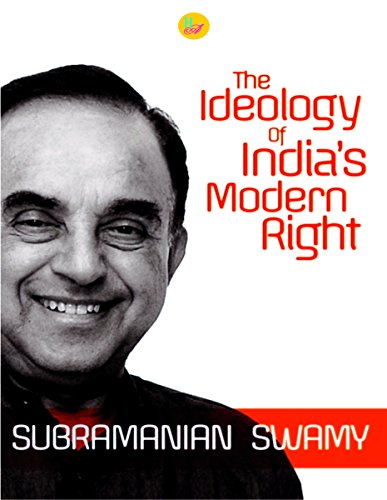
Book Review – The Ideology of India’s Modern Right

Subramanian Swamy is like a Rasputin of Indian politics, nobody is more courageous or bolder than him in contemporary India. In this book he strives to articulate the ideology of the India’s modern right and summarises it as Virat Hindutva.


He has defined this ideology on five dimensions

1) The Correct Identity of an Indian: Anybody who is a Hindu or acknowledges that their ancestors are Hindus is in Indian. Modern genetic research has proven that all Indians whether they’re Brahmin, Kshatriya, Vaishya, Shudra or other tribals, they all share the same DNA. Thus Indians are India-born leaving no scientific genetic support for recent British imperialist sponsored Aryan invasion theory.

2) De-falsified History of India: A truthful factual history record that we Indians are one ethnic people from North to South, and East to West of India and not a product of any mass immigration from other parts of the world. Indians accepted wholeheartedly any people who came in good faith or who were running from persecution in their lands like Parsees, Jews etc but they fought and resisted courageously any hordes who wanted to destroy the core fabric of India. India never capitulated to either Islamic Hordes or European assaults thus explaining why India is still 85% Hindu even after 800 years of Islamic rule unlike Persia, Iraq or Egypt which were islamised within 25 years.

3) Economic Theory of Integral Humanism: This is an integral view of material progress harmonised with spiritual values as propounded by Pd. Deen Dayal Upadhyay with focus on innovation and technology. Universities should act as green houses for Indian youth to find their roots and develop their intelligence for pursuit of their chosen careers to live a good family life in a vibrant democracy.

4) Sanskrit as the national link language: Sanskrit should be the only sensible link language for us Indians. There are two reasons for it. The first is that all Indian languages have a high proportion of words taken from Sanskrit e.g. for Bengali & Malayalam it is 85%, for Tamil it is almost 35%. Second the exact grammar of Sanskrit makes it the ideal language to store knowledge for future.

5) Virat Hindutva Mindset and Governance: This is the mindset in which Indians should prefer to lose everything they possess rather than submit to any treachery, tyranny or terrorism.

Subramaniam Swamy has rested the new ideology of Indian right on these five pillars, these are strong foundations to build an ideology on for modern Indian right but need further refinement to make it more convincing to ordinary Indians. It is a good start nonetheless to build a brighter future roadmap for a stronger and confident India.

Posted in Book Reviews, News & Politics | Tagged , , | Leave a comment

We.trade blockchain platform goes into live production

The we.trade blockchain for trade finance platform established by a coalition of nine banks is gaining momentum, conducting seven live trade transactions by ten companies via four partner banks.

Powered by Hyperledger Fabric, we.trade makes use of smart contracts to improve transparency for open account trade transactions. Deutsche Bank, HSBC, KBC, Natixis, Nordea, Rabobank, Santander, Societe Generale and UniCredit are all members of the we-trade consortium.

https://www.finextra.com/newsarticle/32342/wetrade-blockchain-platform-goes-into-live-production

https://we-trade.com/article/we-trade-blockchain-platform-completes-multiple-real-time-customer-transactions

Posted in Technology | Tagged | Leave a comment

Problem With People


Posted in Quotations | Leave a comment

कर्म फल

ओ३म्

किमपि कर्म फलविहीनं न भवति।
= कोई भी कर्म फल बिना का नहीं होता है।

यद् किमपि वयं कुर्मः तस्य फलं तु मिलति एव।
= जो भी हम करते हैं उसका फल तो मिलता ही है।

कर्म विना कोsपि न जीवति।
= कर्म के बिना कोई नहीं जीता है।

कर्म विना कोsपि जीवितुं न शक्नोति।
= कर्म के बिना कोई जी नहीं सकता है।

अनुचितस्य कर्मणः फलम् अनुचितमेव भवति।
= अनुचित कर्म का फल अनुचित ही होता है।

उचितस्य कर्मणः फलम् उचितमेव भवति।
= उचित कर्म का फल उचित ही होता है।

उचितम् अनुचितं विचिन्त्य एव कर्म करणीयम् ।
= उचित अनुचित का विचार कर के ही कर्म करना चाहिये।

अस्माकं कर्मणा अन्ये अपि लाभं प्राप्नुवन्ति ।
= हमारे कर्म से अन्यों को भी लाभ होता है।

संस्कृतप्रचारकः अन्येषां लाभाय एव संस्कृतं पाठयति।
= संस्कृत प्रचारक दूसरों के लाभ के लिये ही संस्कृत पढ़ाता है।

योगप्रचारकः योगं कारयति जनाः लाभान्विताः भवन्ति।
= योगप्रचारक योग कराता है लोग लाभान्वित होते हैं।

चिकित्सकः चिकित्सां करोति , रुग्णः स्वस्थः भवति।
= चिकित्सक चिकित्सा करता है रोगी स्वस्थ होता है।

पुण्यकर्मणि ये रताः प्राप्स्यन्ति पुण्यं फलम् ।
= पुण्य कर्म में जो रत हैं वे पुण्य फल ही पाएँगे।

Posted in Quotations | Tagged | Leave a comment

Book Review – A Thousand Splendid Suns by Khaled Hosseini

A Thousand Splendid SunsA Thousand Splendid Suns by Khaled Hosseini
4 of 5 stars

Khaled Hosseini has certainly made Afghanistan proud by capturing the contemporary life in his beautifully crafted second novel. I’d read Kite Runner when it came out and was spellbound by his storytelling prowess and this novel just cements his position as the leading storyteller of his time. He beautifully captures the travails and disasters that communism and Islamic terrorism has brought to his unfortunate country. This book would always be cherished as an indispensable guide to understand contemporary Afghanistan and as a journal of its struggle against evil.

Afghanistan was once a cradle for civilisation and a leader in Buddhist thought, the advent of Islam reduced it to penury and shackeled it with illiteracy & extremism. The worse came when it ended up as a playground for powerful forces on both sides of the cold war. This is a story of the indomitable spirit of battered nation whose women though most oppressed in the world still refused to bow down. They’ve risen again and again over the last few centuries striving to get parity with men or at least
be allowed to have tolerable partnership.

When I was studying at Delhi in late 90s, I used to see so many of these Afgani families living a pitiable existence in the lanes of Lajpat Nagar and this rendering by the author has brought back those images of beautiful people forced to live in exile in the dead heat of New Delhi, looks of those sorrowful eyes longing for the cold & splendid valleys they’d left behind. I sincerely hope that Afghanistan finally is able to pull off the yoke of Islamic terrorism, mostly sponsored by Pakistan and find their rightful place in the comity of nations. It heartens to see the slow progress being made in that regard, the heroics of Afganistan Cricket team and in particular the splendid effort of Rashid Khan in IPL 2018 won the hearts of millions of Indians. India’s own history has always been entangled with Afghanistan’s and in recent times India has housed the Afgani exiles and has been helping with its development effort. I really wish for a time when Afghanistan and India can have the same relationship as we currently have with Nepal so that Indians can go and visit the beautiful landscapes and Afghanis cam visit India and see with their own eyes how their nation can also be transformed into a forward looking modern country like India.

View all my reviews

Posted in Book Reviews | Tagged , , , , , , , , | Leave a comment

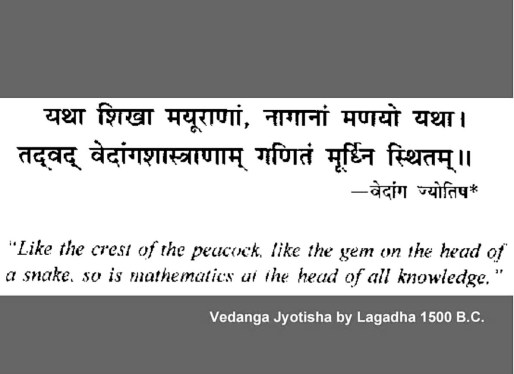
Mathematics – Head of All Knowledge


Posted in Quotations | Tagged | Leave a comment

‘Kindly adjust’ to our English – Shashi Tharoor

I have long immodestly considered myself the inventor of the term ‘prepone’. I came up with it at St Stephen’s in 1972, used it extensively in conversation and employed it in an article in JS magazine soon after. Prepone, as a back-construction from postpone, seemed so much simpler, to a teenage collegian, than saying, “could you move that appointment earlier?” or “I would like to advance that deadline”. Over the years, I was gratified to see how extensively its use had spread in India. Now, in an era where too many claim credit for other’s work, I feel it may be time to clarify the word’s origins. Is anyone aware of an earlier usage?

I ask because the persistence and survival of what is called ‘Indian English’ (often with a sneer, as if to differentiate it from the Queen’s “propah” English) deserves to be taken seriously. Our English is a vigorous language, which draws strength from local roots. If Americans can say ‘fall’ for autumn and ‘gotten’ for ‘have got’, though both are archaisms in England itself, why can’t Indians say ‘furlong’, ‘fortnight’ and ‘do the needful’, even if these have fallen out of use centuries ago in London? So many words in Indian English have stood up to the only test that matters—the test of time and usage. If enough people find a word or phrase useful, it is, to my mind, legitimate.

Indian English is a living, practical language, used by millions every day. Many phrases we take for granted in ordinary conversation are actually quite unusual abroad—calling elders ‘auntie’ or ‘uncle’, for instance, or using ‘non-veg’ to convey a willingness to eat meat. That doesn’t make them wrong, or even quaint. It just makes them Indian.

Some Indian English was created by our media—’airdash’ (the chief minister airdashed to Delhi) and ‘history sheeter’ (“the police explained that habitual criminal X was a history sheeter”, i.e. he had a long criminal record). Some, like my ‘prepone’, came from school and college campuses: ‘mugging’ (cramming hard for an exam, with much rote learning involved) means two very different things abroad (a criminal assault by a robber, or an elaborate and often comically exaggerated expression). When an Indian student tells a foreigner he was “mugging for an exam”, bewilderment is guaranteed.

Some Indian Englishisms are merely translated from an Indian language: “what is your good name?” is the classic, since all Bengalis have a daak naam that they are called by, and a bhalo naam (or good name) for the record. But “what is your good name?” is still the most polite form, in any version of the English language, for finding out the identity of your interlocutor.

Some Indianisms are creative uses of an ordinary English word or phrase to reflect a particularly Indian sensibility, such as “kindly adjust”, said apologetically by the seventh person squeezing onto a bench meant for four. Our matrimonial ads have created their own cultural tropes— ‘wheatish complexion’, of course, and better still, ‘traditional with modern outlook’.

But acknowledging the legitimacy of Indian English and many of its formulations doesn’t mean that “anything goes”. Some things are simply wrong. The Indian habit of saying “I will return back” is an unnecessary redundancy: if you return, you are coming back. The desi practice of using ’till’ to mean ‘as long as’ is incorrect English; it is wrong to say “I will miss you till you are away” when you really mean is “I will miss you till you come back”! The Indian official doesn’t “waive off” a fine, he just waives it, though he could wave you off if you thank him too profusely. And, ‘back side’ for ‘rear’ causes much unwitting hilarity, as in signs proclaiming, “entry through back side only”. These can’t be justified under the rubric of Indian English. They are just bad English.

But for the rest, we have nothing to apologise about: we should defiantly celebrate their use as integral parts of our Indian English vocabulary. After all, “we are like that only”. And if you don’t like it, kindly adjust.

Credits: https://www.theweek.in/columns/shashi-tharoor/2018/05/25/kindly-adjust-to-our-english.html

Posted in Literature | Tagged , | Leave a comment

Book Review – We Should All Be Feminists by Chimamanda Ngozi Adichie

I went to hear Chimamanda Ngozi Adichie at the Convention Centre, Dublin as part of the International Literature Festival 2018 #ILFDublin2018 and bought the book at the stall there. As I’d went a bit early, while we were still waiting for Adichie to come on stage, I opened the book and started reading it. It’s a thin booklet outlining author’s views on her definition of feminism. It has stories from her own life and defines what feminism should mean in today’s world. Later when Adichie came on stage and was being interviewed, she took material from this booklet and reiterated some of the documented views, I’d just read. I didn’t knew much about Adichie till I happened to come across and read her earlier book ‘Half of Yellow Sun’, a few years back. I found that book really helpful as it was from somebody contemporary from the continent of Africa telling the stories from a place about which everybody has so many misconceptions.

I was enthralled to know that she would be at Dublin and was eagerly waiting to see and hear her in person. She is one of the most original & prominent voices coming out of Africa and provides a unique insiders viewpoint on the lives of her own people, West Africa in particular. There have been so few original writers from Africa and Adichie’s narratives are precious in that it covers the contemporary life in the booming African continent which is set to be the next growth story of the world. Though the event was at Dublin, there were still a sizeable number of black women in audience and in the question answer session later on, it was really heartening to see the respect Adichie generates in her own people.

She is a perfect role model for new Africa & whole world and also is the reminder of the changing norms in our world. Africa is one place with forgettable history where plight of women is so well documented and to see someone from there to come to stage preaching feminism to a large white audience shows how far our world has come since last few decades. I felt that this event was timely in that Ireland is going through a review of its antiquated abortion laws and when asked about it, Adichie was really horrified to know that in this age, in a predominantly white country in the western world, there is so little value put on the lives of women. How the table has turned? A few decades earlier, blacks were viewed almost as sub humans and now one proud black women is boldly preaching the west on its inhumane practices. Later on, there was a big queue to get the books signed by the author and I was there to get my copy personally signed and it would remain a treasured possession in my library.

View all my reviews

Posted in Book Reviews | Tagged , , | Leave a comment

Lakshmi: Vedic science of Wealth

Wealth is defined in modern English as “an abundance of valuable possessions or money” or “a plentiful supply of a particular desirable thing.” Father of Capitalism – Adam Smith – in his book “The Wealth of Nations”, described wealth as “the annual produce of the land and labour of the society”. This “produce” is “that which satisfies human needs and wants of utility.” In popular usage, wealth is understood as an abundance of items of transactional value. Unfortunately, in today’s world wealth has become synonymous with money and property. This is the primary reason why a large part of populace suffers unnecessary poverty and the rich often become corrupt.

Vedic philosophy has a phenomenal understanding about the real meaning of “wealth” and abundance in life. They call it Lakshmi. She is not simply the “Goddess” who is depicted in temples across the country. Although the image of the Goddess was certainly inspired by this science, Lakshmi in true sense is the Vedic science of wealth that enables people to understand, attain and sustain abundance and prosperity, at both outer and inner levels of life.

The word Lakshmi is derived from the Sanskrit terms: lakṣ and lakṣa – meaning respectively “to perceive, observe, know, understand” and “goal, aim, objective”. The word Lakshmi can be best understood as knowing and understanding one’s goal. Lakshmi finds mention in Rig Veda only once but the related term Sri is common for wealth and abundance. In Yajur Veda and Atharva Veda, Lakshmi becomes a complex concept with plural manifestations.

Vedic teachings define four primary objectives of human life: Dharma (Duty), Artha (Wealth), Kama (Desire) and Moksha (Liberation), to be pursued in that order. Vedic wisdom suggests that an individual must address one’s desires during youth years and then become detached and strive towards liberation as one grows old, though there are exceptions to this rule. Liberation is best attained with full renunciation but to renounce one must have achieved something in the first place. Although Moksha is not seriously sought after by many people today; Artha and Kama are eagerly sought by the greater majority of people, often without any concern for either Dharma or Moksha.Lakshmi, or wealth, is best understood in her 8 forms, namely:

  1.  Adi Lakshmi (Primary wealth): No matter how, where and when you are born you have some wealth and resources with you. Primarily this is your health, family, culture and education. Vedic teachings say that you must first be aware of what you have, then understand how to build on it for further wealth. If you do not understand what you already have – you will never understand what you need to get or how to achieve it We often find that people who complain, cry and curse their “fate” remain losers in life. Those who work without complaints or qualms, on the other hand, make great strides and go far, regardless of the poor circumstances they may have come form. Adi means first, so the first step for wealth is to understand yourself, then the people and things immediately around you.
  2.  Dhana Lakshmi (Monetary wealth): Understanding the things around you, you are better placed to make the use of it to generate a product or a service which will help you achieve monetary gains leading to Dhana Lakshmi, so that you are not dependent upon anyone and have time and resources to do what you want
  3.  Dhanya Lakshmi (Wealth of Grains): With money you can buy the necessary food to give you physical strength and  vitality for greater efforts in life.
  4. Veera Lakshmi (Wealth of Courage): With your body strong and knowledge and money by your side, to attain greater abundance in life you must have courage and be willing to exert yourself. It takes great courage to attain something that people around you consider you are incapable of achieving. By having knowledge, food and money with you already, you are in a better position to attain the wealth of courage.
  5.  Gaja Lakshmi (wealth of power and prestige): Through the appropriate application of knowledge, money, food and courage – the wealth of power becomes accessible to you. This power can be social, political, intellectual or even spiritual, allowing you to influence the world for good or bad.
  6.  Santana Lakshmi (wealth of offspring): With knowledge, money, food, courage and power you are in a better position to take of others and gain a following: to have a progeny (Santaana) in the broader sense of the term. It is only by having the right progeny that you can create a sustainable family as well as a supportive society, allowing your influence in the world to be perpetuated. So you seek Santana Lakshmi.
  7.  Aishwarya Lakshmi (Wealth of affluence and endowment): Having a following it becomes necessary that you provide them with adequate resources to secure their future. You can be a helpful benefactor using the wealth that you have acquired. For this you ask and work towards Aishwarya Lakshmi. You can help bring the wealth of Lakshmi to others.
  8.  Vijaya Lakshmi (Wealth of victory): Once you’ve attained the previous seven aspects of Lakshmi, you are in a great position to pursue anything in life and Vijaya Lakshmi is all by your side in your pursuits. You can overcome all opposition and go beyond every obstacle. You can even conquer your own desires.

In Lakshmi’s iconography, she is either sitting or standing on a lotus and typically carrying a lotus in one or two hands. The lotus represents reality, consciousness, karma (work, deed), knowledge as well as Self-realization – the desired goal that you wish to unfold. The lotus, a flower that can blossom in dirty water, symbolizes purity and beauty regardless of the good or bad circumstances in which its grows. It is a reminder that wealth and prosperity can bloom even in difficult surroundings. Therefore, if you so desire you can create wealth even in an economy where good opportunities seem bleak. And you can achieve an inner sense of abundance regardless of your circumstances. Such is the wisdom of Vedic wealth – Lakshmi.

Credits:https://www.vedic-management.com/2017/08/25/lakshmi-vedic-science-of-wealth/

Posted in History, Religion, Science | Tagged , | Leave a comment

Book Review – Trinity by Leon Uris


TrinityTrinityLeon Uris
5 of 5 stars

Trinity has as big a canvas as Exodus, another recounted tale from the same author about the misery and glorious fightback of Jews. Arguably exodus forced on the Irish was not as brutal, but certainly its impact was as big on the world’s landscape as the one in ancient times. If you wish to understand the indomitable Irish spirit and learn more about the the history of this small & beautiful Green Isle, then this is ‘THE’ book for you. I call Ireland my second home since last two decades and have read my fair share of books on Irish history and its people but none captures its spirit as succinctly as this epic tale of Larkin family. The author takes us through the lives and travails of three generations of an oppresed but proud Irish family who in the face of most inhumane torture of the soul by British empire, refuses to bow down and play their own small part in hammering the final nail in the coffin of British imperialism. Irish were the first of the enslaved nations to revolt against the might of Union Jack and made the British bleed from the nose, hurting their pride and finally forced off the yolk of the slavery regardless of all the dirty tricks in the rotten bag of British Empire. Irish set the example for countries like my home nation of India and gave them hope that stranglehold of a seemingly indestructible Empire can be broken. The post colonial world is indebted to Irish for their fight back against the might of imperialism and providing an opportunity to all of us to breathe freely in the increasingly democratic and meritocratic world. The book is pertinent in today’s fractured world which is facing the challenges of extremism which is causing physical and mental strife all over the world by showcasing the impact of Orange order extremism on the gentle Irish soul. It also quite subtly shows that foolish notions of loyalty and nationhood always end up bringing misery to all. Irrespective of our circumstances of birth causing us to be born in certain locales or under different faiths, we all are part of same humanity and need to learn to respect & help each other and ensure that none is left behind. Oppression by one group of people upon other should not be acceptable in this new glorious age in spite of the rhetorics of our current breed of mostly ignoramus political & religious leaders. Hope reading this book can help the readers learn the lessons from our forgetable history and be the agent of change for a new world order built on meritocracy and peace.

View all my reviews

Posted in Book Reviews | Tagged , , , , , | Leave a comment