Be not afeard!

“Be not afeard. The isle is full of noises,
Sounds, and sweet airs, that give delight and hurt not.
Sometimes a thousand twangling instruments
Will hum about mine ears, and sometime voices,
That, if I then had waked after long sleep,
Will make me sleep again; and then in dreaming,
The clouds methought would open and show riches
Ready to drop upon me, that when I waked
I cried to dream again.”

William Shakespeare, Caliban from The Tempest, 
Act 3, Scene 2


Posted in Literature | Tagged , , | Leave a comment

True Friend

Posted in Jokes | Tagged , | Leave a comment

Book Review – Notes to Self by Emilie Pine

Notes to SelfNotes to Self by Emilie Pine
My rating: 5 of 5 stars

One of the best confessions that I’ve read, it needs real courage to expose yourself so honestly to the world. The writing is lucid and readers just flow in the tide of a turbulent early life but which was then put on course by the sheer willpower of the protagonist. The book highlights particularly feminine challenges of growing up, changes in female body and also difficulties in attaining motherhood with added pressures of maintaining a worthwhile career. Emilie Pine tells a vivid detail the choices a female has to make in order to be loved, in order to not to feel worthless and most importantly just to be taken as seriously. The book also exposes the challenges Western societies are facing in keeping the family unit together and raising their younger generation properly. Something need to change urgently in Western states to make the young people feel loved and not so lonely that they end up feeling worthless like young Emilie. She was lucky to correct the course of her life but there are millions like her who’re not that lucky and end up in the cess pool of drugs and abuse. All young adults should read this confession to avoid the pitfalls of loneliness
of modern life and respect the opportunities available to them.

View all my reviews

Posted in Book Reviews, Literature | Tagged , , | Leave a comment

Time to be Slow


Posted in Literature | Tagged , | Leave a comment

Book Review – Wolf Hall by Hilary Mantel

Wolf Hall (Thomas Cromwell, #1)Wolf Hall by
Hilary Mantel
My rating: 4 of 5 stars

It’s a masterful account of Thomas Cromwell’s rise to power. Hilary Mantel has captured the essence of the time and has presented the readers a truthful journal of Tudar period. The book covers journey of Thomas Cromwell from a ruffian at Putney, becoming a lawyer and finally got himself installed as the chief minister at King Henry’s court. He acted as a fixer for King Henry & Anne Boleyn and engineered their marriage against strong opposition from Pope and Queen Katherine. The book covers the story till when Cromwell reaches the peak of his powers, it continues in the equally good sequels of this triology. The intrigues of King Henry’s court, the characterisation of Wolsey, Cranmer, both Archbishops and of Thomas Moore, author of Utopia provides readers a glimpse of difficult life under monarchs in medieval Europe. Cromwell went on the change England in ways that led the small island on the periphery of Europe to later become one of strongest empires in human history. Cromwell was one of the strongest and most powergful proponents of the English Reformation. He later became Viceregent in Spirituals and charted an evangelical
and reformist course for the Church of England breaking the hold of Catholic church on English society. This later allowed English society to adopt reformist, protestant beliefs, increased the nation’s efficiency in material and spiritual pursuits, ultimately leading to Industrial Revolution making England the premier nation of modern humanity.

View all my reviews

Posted in Book Reviews, Literature | Tagged , , | Leave a comment

Sir William Jones: The Man Who “Discovered” the Indo-European Language Family

We are here, discussing our Indo-European ties, due at least partly to an Anglo-Welsh polymath who was born on Sept 28, about 275 years back! That man, Sir William Jones, said, at a meeting of the Asiatic Society of Bengal on Feb 2, 1786:

The Sanscrit language, whatever be its antiquity, is of a wonderful structure; more perfect than the Greek, more copious than the Latin, and more exquisitely refined than either, yet bearing to both of them a stronger affinity, both in the roots of verbs and the forms of grammar, than could possibly have been produced by accident; so strong indeed, that no philologer could examine them all three, without believing them to have sprung from some common source, which, perhaps, no longer exists; there is a similar reason, though not quite so forcible, for supposing that both the Gothic and the Celtic, though blended with a very different idiom, had the same origin with the Sanscrit; and the old Persian might be added to the same family.”

He was not the first person to have observed the family resemblance between Sanskrit and the languages of ancient Europe, but he’s the one who usually gets the credit for founding the field of Indo-European studies. However, the term Indo-European was first used by the British scientist and scholar Sir Thomas Young in 1813. How Sir William Jones came to discover the Indo-European language family is a fascinating story. He was the son of a well-known mathematician, the senior William Jones. Daddy Jones was a close friend of Sir Isaac Newton and had come up with the idea of using the symbol π for the ratio of a circle’s circumference to its diameter. The junior Jones was a child prodigy who learned Greek, Latin, Persian, Hebrew, Arabic, and some Chinese when he was still quite young. By the end of his life, he spoke 28 languages with various degrees of fluency. His father died when he was just three, so his early life was one of financial hardship. After attending Harrow School, he went on to receive an M.A. from the University of Oxford. The Oxford campus has a frieze honoring Jones that shows him sitting under a banana tree, taking notes as the Indian scholars explain the ancient texts to him (see image). Later in his life, he wrote a book on Persian grammar under the pen name of Youns Uksfardi, “Jones of Oxford”. After he graduated from Oxford, he tutored the seven-year-old Lord Althorp, an ancestor of Princess Diana. He went on to study law and developed sympathies for the cause of American independence. He tried to help Benjamin Franklin find a solution that would avoid a war with Britain. Having failed in that quest, he left for India and got appointed as a minor judge at the British Supreme Court in Calcutta, Bengal. Now the British wanted India’s Muslim and Hindu communities to be governed by their respective laws, so they appointed advisory panels of Muslim and Hindu experts to help draft those laws. As a Supreme Court judge tasked with developing the legal code for Hindus, Jones learned Sanskrit so he could translate Manusmṛiti (मनुस्मृति), an ancient Hindu legal text. He wanted to use it as a basis for the British colonial law for Hindus, Buddhists, Jains, and Sikhs. From there, he went on to translate important works of Sanskrit literature (e.g., Kālidāsa’s play Śakuntalā) and write many books about the Subcontinent. But he remains a man of contradictions: He discovered the Indo-European language family but failed to recognize the relationship between Avestan and Sanskrit, the languages closest to each other in the entire IE language family. When his opinion was sought on a recent translation of the Avestan texts, he thought they were a forgery. (He also mistook Pahlavi for a Semitic language.) He erroneously included Egyptian, Chinese, and Japanese in the IE family but left out Hindi and the Slavic languages. He believed that “conquerors from other kingdoms” brought Sanskrit to North India, which then replaced India’s “pure Hindi”. So he could not grasp the Sanskrit-Hindi connection either. The idea of a Sanskrit-speakers’ conquest of India may sound like the colonial-era “Aryan conquest” narrative, but his literary works, legal opinions, and humanitarian causes suggest that he was a fan of India’s culture and a friend of its people. He had other odd ideas as well, e.g., how the Chinese and the South Americans are related to the Hindus. He died in Calcutta in 1794 at the age of 47 from an inflamed liver and is buried in South Park Street Cemetery, a protected heritage site where many notables – for example, son of the Novelist Charles Dickens – lie buried. Despite his errors and omissions, he was the perfect bridge between South Asia and the West. Both South Asia and the West were forever changed by his insights into the relationship between the languages of Europe and South Asia.

SUGGESTED READINGS (ALL ONLINE):

Images: [0]=AZWooJO-LAC70MLSuGFFO7Yp6PPaaT2vB8Fbs4rwFenqdIONR46lSy-27H_d3YpT1tDYBxgYjLRPgepGO5p6Wx2spquGbwrN7n9WfA62o_vS00hloi2ysU4SN_m3mxyMw0gHTJ0hviUgwW71yJYLF-DNcNR_WH4XzxrXnvjLpcpynTUOpBDwpQyF9EU-1VQNUFAr43BWbSCKBgkZcymQOuh4&__tn__=-UK-R”>https://www.facebook.com/media/set/?vanity=the7rivers…

Posted in People, Sanskrit | Tagged | Leave a comment

Sanskrit, a magical language

1. There is no need of particular sentence structure for Sanskrit.

Like, In English :- Subject +Verb + Object

Ex :- I am writing an answer.

But in Sanskrit there is no need for particular structure.
अहं उत्तरम् लिखामि (I am writing an Answer.)
लिखामि अहं उत्तरम् (I am writing an Answer.)
अहं लिखामि उत्तरम् (I am writing an Answer.) .

2. Elephant word has 4000 synonyms in Sanskrit. Here are some of them.

कुञ्जरः,गजः,हस्तिन्, हस्तिपकः,द्विपः,द्विरदः,वारणः,करिन्,मतङ्गः,सुचिकाधरः, सुप्रतीकः, अङ्गूषः, अन्तेःस्वेदः, इभः, कञ्जरः, कञ्जारः, कटिन्, कम्बुः, करिकः, कालिङ्गः, कूचः, गर्जः, चदिरः, चक्रपादः, चन्दिरः, जलकाङ्क्षः, जर्तुः, दण्डवलधिः, दन्तावलः, दीर्घपवनः, दीर्घवक्त्रः, द्रुमारिः, द्विदन्तः, द्विरापः, नगजः, नगरघातः, नर्तकः, निर्झरः, पञ्चनखः, पिचिलः, पीलुः, पिण्डपादः, पिण्डपाद्यः, पृदाकुः, पृष्टहायनः, पुण्ड्रकेलिः, बृहदङ्गः, प्रस्वेदः, मदकलः, मदारः, महाकायः, महामृगः, महानादः, मातंगः, मतंगजः, मत्तकीशः, राजिलः, राजीवः, रक्तपादः, रणमत्तः, रसिकः, लम्बकर्णः, लतालकः, लतारदः, वनजः, वराङ्गः, वारीटः, वितण्डः, षष्टिहायनः, वेदण्डः, वेगदण्डः, वेतण्डः, विलोमजिह्वः, विलोमरसनः, विषाणकः।

This is just one example. Have you seen any language with such rich vocabulary?

3. Magha was a great Sanskrit Poet and Author. He was an expert in writing a whole Sloka with one-two-three-four consonants. Here is just an example from his book Shishupala Vadha :-

In 144th stanza, he writes whole sloka with only one consonant.

दाददो दुद्ददुद्दादी दाददो दूददीददोः ।
दुद्दादं दददे दुद्दे दादाददददोऽददः ॥

(Translation:- Sri Krishna, the giver of every boon, the scourge of the evil-minded, the purifier, the one whose arms can annihilate the wicked who cause suffering to others, shot his pain-causing arrow at the enemy.)

Also, he was an expert in writing palindromes. He writes in 44th stanza:-

वारणागगभीरा सा साराभीगगणारवा ।
कारितारिवधा सेना नासेधा वारितारिका ॥

(Translation:- It is very difficult to face this army which is endowed with elephants as big as mountains. This is a very great army and the shouting of frightened people is heard. It has slain its enemies.)

4. Have you heard about any book which can give you different story when you read it from backward? Here is a book Sri Raghava Yadhaveeyam. This book is written in such a way that you will enjoy the story of Rama when you read it in forward way while you will enjoy the story of Krishna when you read it from backward.

Forward :-
वन्देऽहं देवं तं श्रीतं रन्तारं कालं भासा यः ।
रामो रामाधीराप्यागो लीलामारायोध्ये वासे ॥

(Translation:- I pay my obeisance to Lord Shri Rama, who with his heart pining for Sita, travelled across the Sahyadri Hills and returned to Ayodhya after killing Ravana and sported with his consort, Sita, in Ayodhya for a long time.)

Backward :-
सेवाध्येयो रामालाली गोप्याराधी मारामोरा ।
यस्साभालंकारं तारं तं श्रीतं वन्देहं देवं ॥

(Translation:- I bow to Lord Shri Krishna, whose chest is the sporting resort of Shri Lakshmi; who is fit to be contemplated through penance and sacrifice, who fondles Rukmani and his other consorts and who is worshipped by the gopis, and who is decked with jewels radiating splendour.)

5. Sanskrit is a language which is used as Speech Therapy. Sanskrit has five different classes of word — Kanthya (Spoken from throat), Talavya (Spoken while touching tongue to jaw), Dantya (Spoken while touching tongue to teeth), Murdhanya (Spoken by twisting tongue), Ostya (Spoken by lips).

Learn sanskrit …promote sanskrit, a most extraordinary language of the world.

Posted in Sanskrit | Tagged | Leave a comment

Everything Is Going To Be All Right

How should I not be glad to contemplate
the clouds clearing beyond the dormer window
and a high tide reflected on the ceiling?
There will be dying, there will be dying,
but there is no need to go into that.
The poems flow from the hand unbidden
and the hidden source is the watchful heart.
The sun rises in spite of everything
and the far cities are beautiful and bright.
I lie here in a riot of sunlight
watching the day break and the clouds flying.
Everything is going to be all right.

– Derek Mahon

Posted in Literature | Tagged , , , , , | Leave a comment

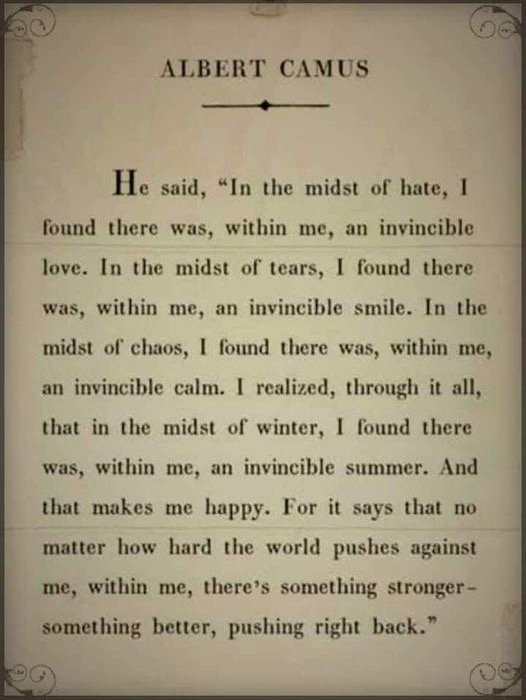
Pushing Right Back!

Posted in Quotations | Tagged | Leave a comment

Book Review – Humankind: A Hopeful History by Rutger Bregman

Humankind: A Hopeful HistoryHumankind: A Hopeful Historyby Rutger Bregman
My rating: 5 of 5 stars

This book provides an alternative but highly optimistic take on human history and covers a number of research studies to hypotheseize that humans are inherently good by nature. The book is a rebuttal of Hobbesian theory that humans are by nature nasty, brutish and short and in turn supports the Rousseau’s view of human nature as intrinsically good. The hypothesis is explained through a number of stories covering reseacrh studies and some of these are really good.

I, in particular liked the story where author refuted the imaginary story from William Golding in Lord of the Flies and in fact traced a similar real life story of a group of school boys who were marooned on a remote island near New Zealand. I also liked the the story where 1959 interview of Bernard Russel made an impact on author’s beliefs. The quote from Bernard Russell is self illuminating… “When you are studying any matter or considering any philosophy, ask yourself only what are the facts and what is the truth that the facts bear out. Never let yourself be diverted either by what you wish to believe or by what you think would have beneficent social effects if it were believed, but look only and solely at what are the facts.”

The author’s take on human settlement, advent of human conflicts and inherent inequality in society is pretty convincing but he might be cherry picking some of the things to suits his own narrative. This is definitely not a realist view of the world and with so much blood still being spilled in the name of religion, ideologies and race issues, it is hard to believe that humans are friendly and good natured. The book is pretty well written and does make you think differently about the commonly held societal beliefs but arguments are not convincing enough. In fact the studies covered in the book are conflicting in nature, there are researchers who themselves acted selfishly while conducting their experiments which were designed to prove the unselfish nature of humans. One thing that definitely came out from the book is the sorry state of research in social and psychological fields where shady results have been accepted in academia just because it would suit their own agenda which actually disapproves the moot point of this book. Instead of this optimistic view, it would be better to be a realist and believe that though humans might be good natured but social norms and peer pressure can turn an ordinary person into a demon. And this in human history has been widely evident in so many horrific events like invasions of Huns & Mongols, loot and plunder by Vikings, blood spilled during Islamic invasions, horrific exploitation of natives by Conquistadors, brutality of crusades and in recent time during Holocaust or Partition of Subcontinent.

But still it would be worthwhile to read this book as it shows that there is hope for humankind and I’m sure we as humans will get to that Utopia one day in a distant future.

View all my reviews

Posted in Book Reviews | Tagged , , | Leave a comment