
In What ways India has contributed to the World ?
1.Hinduism
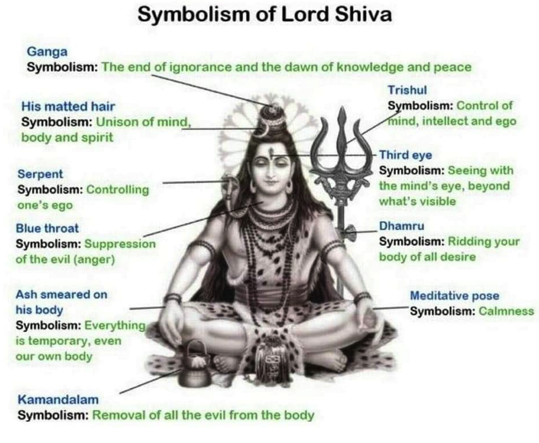
World’s oldest and 3rd largest religion., founded during the period of Indus Valley civilization (3300 B.C. – 1700 B.C.).
2.Buddhism
4th largest religion, founded by Gautama Buddha, in 6th century B.C.
3.Jainism
A religion founded by Vardhamāna Mahavira, in 2nd century B.C.
4.Sikhsim
one of the world’s youngest religion, founded by Guru Nanak Dev, around 1520.
5.Buttons
They were first used in the Indus Valley Civilization by 2000 B.C.E.
- Artificial Dockyard
Indus people were the first one to Build And Use Artificial Dockyard.
7.Rulers
Rulers made of Ivory were in use by the Indus Valley Civilization period prior to 1500 BC.Excavations at Lothal (2400 BC) have yielded one such ruler calibrated to about 1⁄16 inch (1.6 mm).
- Stepwell
Again Indus people had invented the earliest known evidence of Stepwell.
- Flush toilets
Flush toilets using water are found in several houses of the cities of Mohenjodaro and Harappa from the 3rd millennium B.C.
- Cotton cultivation
Mehrgarh civilization (7000 B.C.E – 2600 B.C.E) introduced the idea of cotton cultivation.
11.Dentistry
The Indus people were the first one to practise the dentistry.
- Sanskrit
A language considered as the source of many European languages.
13.Chess
Known as Chaturanga in ancient India, it was a great strategy game in the Gupta Empire.
14.Zero
Aryabhata, Indian mathematician who lived during the Golden age of India, invented the symbol in our number system.
Zero and Aryabhata
- Takshila University
World’s first university, Takshila University, was established in 700 B.C.
- Ayurveda
one of the oldest school of medicines was invented in India.
17.Binary number system
Binary number system used in computers and digital devices was invented in India and propagated and improved by Arabs.
18.Pi
The value of ‘pi’ was first discovered in India by Baudhayana, long before the European Mathematicians.
Baudhayana
- Plastic Surgery
Indians were pioneers in Plastic Surgery. It was carried out in India as early as 2000 B.C.E. by an ancient Indian physician Sushruta.
Early form of plastic surgery and Sushruta
- Yoga
OK, there is no need to explain, everyone knows that.
- Crescograph
a device to measure growth in plants, was invented by Professor Jagdish Chandra Bose in the early 20th century.
Crescograph and Jagdish Chandra Bose (1858–1957)
- Ink
Many ancient cultures and civilizations independently discovered and prepared ink for writing purposes. The source of carbon pigment used in Indian Ink (called Musi) used in ancient India. Since 4th century BC, the practice of writing with ink with a sharp pointed needle was common in South India.
23.Shampoo
The word ‘Shampoo’ is derived from the Sanskrit word chāmpo . It was initially used as a head massage oil for the Nawabs of Bengal during the Mughal Empire around 1762. It evolved into shampoo over the years.
24.Snakes and Ladders
The game, Snakes & Ladders, was invented in India as a game of morals. Later it spread to England and eventually introduced in the USA by game pioneer Milton Bradley in 1943.
25.Fibonacci Numbers
The Fibonacci numbers were first described by Virahanka , Gopala and Hemachandra as an outgrowth of earlier writings by Pingala.
26.Cataract surgery
Shushruta, the same physician who invented plastic surgery was also responsible for the invention of earliest form of Cataract Surgery.
- Diamond Mining
India was the only source of diamonds until the discovery of mines in Brazil in the 18th century. Almost 5000 years ago, diamonds were first recognized and mined in central India.
- Wireless communication
2 years before Marconi demonstrated his radio in 1895, in England. Sir Jagdish Chandra Bose (the guy who invented Crescograph) had also demonstrated his own wireless communication/ Radio.
Sir Bose was posthumously credited (more than a century later) for his achievement.
- Wootz steel
Ultra-high carbon steel and the first form of crucible steel manufactured by the applications and use of nanomaterials in its microstructure and is characterised by its ultra-high carbon content exhibiting properties such as superplasticity,high impact hardness. several ancient Tamil, Greek, Chinese and Roman literary references to high carbon Indian steel since the time of Alexander’s Indian campaign. 18th century ruler of Mysore,who fought against the British East India Company,Tipu Sultan had a sword made up of Wootz steel.
- Charkha
Charkha is one of the oldest known spinning wheels, invented around 500 A.D.
31.Cashmere wool
Cashmere wool was a fibre obtained from Cashmere goat, native to the Kashmir region of India.the founder of the cashmere wool industry is traditionally held to be the 15th-century ruler of Kashmir, Zayn-ul-Abidin, who employed weavers from Central Asia.
32.Gravity
Modern European thinkers are credited with development of gravitational theory, there were pre-existing ideas which had identified the force of gravity. Some of the earliest descriptions came from early Indian mathematician-astronomers, such as Aryabhatta (yes, the same guy who invented zero), who had identified the force of gravity to explain why objects do not fall out when the Earth rotates.Later, the works of Brahmagupta referred to the presence of this force, described it as an attractive force and used the term “gruhtvaakarshan” for gravity.
33.Bose–Einstein condensate
An Indian professor Satyendra Nath Bose, mailed a short manuscript to Albert Einstein entitled Planck’s Law and the Light Quantum Hypothesis. seeking Einstein’s influence to get it published after it was rejected by the prestigious journal Philosophical Magazine.The paper introduced what is today called Bose statistics, which showed how it could be used to derive the Planck blackbody spectrum from the assumption that light was made of photons. Einstein, recognizing the importance of the paper translated it into German himself and submitted it on Bose’s behalf to the prestigious Zeitschrift für Physik .Einstein later applied Bose’s principles on particles with mass and quickly predicted the Bose-Einstein condensate.
Bose-Einstein Condensate and Satyendra Nath Bose (1894–1974)
- Raman effect
Raman effect, change in the wavelength exhibited by some electromagnetic radiation while travelling through a transparent medium and getting deflected by the molecules present in the medium. This effect is involved in producing the appearance of the blue sky. It was discovered by an Indian physicist,C.V.Raman.
C.V.Raman (1888–1970)
- Chandrasekhar limit
It the maximum mass of a stable white dwarf star, which is approximately 1.4 times the mass of the sun, it was first discovered by Indian astrophysict, Subrahmanyan Chandrasekhar. He was the nephew of C.V.Raman.
Subrahmanyan Chandrasekhar (1910–1995)
36.Water on the moon
ISRO’s Chandrayaan-1 made the startling discovery that our moon is not a dry ball of rocks. The discovery of lunar water is attributed to the Chandrayaan mission.
37.Fiber Optics
Dr. Narinder Singh Kapany, is widely recognized as the ‘Father of Fiber Optics’ for his pioneering work in Fiber Optics technology. Fortune Magazine had named him as one of the 7 ‘Unsung Heroes’.
- Democracy
Sounds a little-bit crazy, but it’s true, Ancient India had an earlier form of non-tribal, organised democracy in the world, known as Gana-Sangha (equal assembly), or Gana-Rajya (equal government),long before the Athenian republic had established. One of the famous example is Vaishali,the birthplace of Mahavira,the founder of Jainism, which was one of the earliest example of Gana-Rajyas. Another completely distinct and more widely known ancient form of Indian democracy is the localised ‘panchayat’ system, which literally means an ‘assembly of five’ wise and respected elders. Unlike ancient Indian city and state-level republics, panchayats started as a form of localised grassroots democracy more than three thousand years ago, have survived the rise and fall of repeated conquests and empires, and are still a central feature of India’s modern democratic apparatus. American writer and Historian,Will Durant (1885–1991) once said that, “India was the mother of..village communities of self-government and democracy.”
- Military Rockets
In the year 1780 the Mysorean dynasty under the rule of Hyder Ali and his son Tipu Sultan (the one i mentioned above) made the first successful use of iron-cased military rockets in the history of the world to fight against the British East India Company in the Battle of Guntur .The British were exposed to this technology after defeating the Mysore Dynasty. Their research in the Mysorean rockets lead to the development of the famous Congreve rocket and the rest is history.
- Martial Arts
4th century B.C.E Indian epic poetry and the Vedas give the earliest written mention of South Asian martial arts. Boxing, wrestling, swordsmanship, archery, and the use of numerous weapons are all described in detail.
41.Indian classical dance
Indian classical dance styles are intimately connected with the art of storytelling and involve subtle movement of the lips and eyes to express emotions. It had also inspired the dance forms of Thailand, Indonesia, and Myanmar. Western dance has also taken inspiration from the Indian folk dance through Gypsies (They are the descendants of Indian nomads who left around 500 A.D.) .
- Pentium Chip
An Indian Engineer,entrepreneur and venture capitalist Vinod Dham, is popularly known as ‘Father of the Pentium Chip’ for his contribution to the development of the highly successful Pentium processor of Intel Co.
- Indian Cinema
Indian Cinema is the largest film producer in the world, as it produces more than 1000 films every year and has been on par with the other major film industries in the world, such as, Hollywood and Chinese film industries, in terms of becoming a global enterprise, several Indian films have frequently appeared in international fora and film festivals. Indian filmmaker, Satyajit Ray (1921–1992),is widely regarded as one of the greatest filmmakers of the 20th century, have been an inspiration for the filmmakers beyond India, such as,Martin Scorsese,Francis Ford Coppola,Danny Boyle,James Ivory,Abbas Kiarostami,Wes Anderson,Steven Spielberg, and so on. Even the famous Japanese filmmaker, Akira Kurosawa, had praised his works. Indian Cinema has also been popular with international audiences, especially, in Middle East,North Africa,Southeast Asia,China and Russia.
- India and United Nations
India is the largest troop contributor to UN missions since its inception.So far India has taken part in 43 Peacekeeping missions with a total contribution exceeding 180,000 troops and a significant number of police personnel having been deployed. Even the first Female Formed Police Unit has Indian troops in it.
- World Wars
Indian Army (which also includes the people from the present-day Pakistan and Bangladesh) was the largest Volunteer army in both the World Wars and they mostly fought for the Allied forces. During WWI, they fought against the German Empire in German East Africa and on the Western Front. They also fought against the forces of Ottoman Empire. Total number of soldiers served in the army were 1,780,000, of whom 62,000 died and another 67,000 were wounded. In total at least 74,187 Indian soldiers died during the war. Many of them even got Victoria crosses. Then in WWII, they fought against the Italian and German armies, but they mostly fought against the Imperial Japanese forces, in east. number of soldiers who served were 2.5 million men, of whom 87,000 were died,while another 34,354 were wounded, and 67,340 became POWs. Commander-in-Chief of the Indian Army, Claude Auchinleck (1884–1981) said that the British couldn’t have come through both wars if they hadn’t had the Indian Army. British Prime minister, Winston Churchill (1874–1975), also paid tribute to “The unsurpassed bravery of Indian soldiers and officers.” Sadly, our history textbooks never mentioned about these brave warriors. There are hardly anyone, who is aware of the Indian contribution in World Wars.

 Tarun's Blog