The 101 Most Important Painters of all time


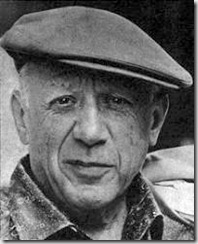
1. PABLO PICASSO (1881-1973) – Picasso is to Art History a giant earthquake with eternal aftermaths. With the possible exception of Michelangelo (who focused his greatest efforts in sculpture and architecture), no other artist had such ambitions at the time of placing his oeuvre in the history of art. Picasso created the avant-garde. Then Picasso destroyed the avant-garde. He looked back at the masters and surpassed them all. He faced the whole history of art and single-handed redefined the tortuous relationship between work and spectator

picasso

Pablo Picasso in 1962

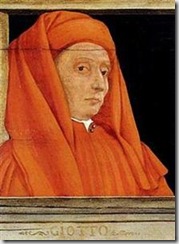
2. GIOTTO DI BONDONE (c.1267-1337) – It has been said that Giotto was the first real painter, like Adam was the first man. We agree with the first part. Giotto continued the Byzantine style of Cimabue and other predecessors, but he earned the right to be included in gold letters in the history of painting when he added to it a quality unknown to date: the emotion

giotto-portrait

Portrait of Giotto, by Paolo Uccello

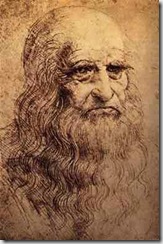
3. LEONARDO DA VINCI (1452-1519) – For better or for worse, Leonardo will be forever known as the author of the most famous painting of all time, the "Gioconda" or "Mona Lisa". But he is more, much more. His humanist, almost scientific gaze, entered the art of the quattrocento and revoluted it with his sfumetto that nobody was ever able to imitate

Self-Portrait_Leonardo_da_Vinci

Self-portrait of Leonardo da Vinci

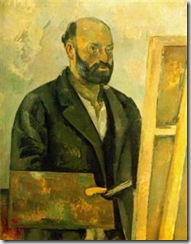
4. PAUL CÉZANNE (1839-1906) – "Cezanne is the father of us all." This lapidary phrase has been attributed to both Picasso and Matisse, and certainly it doesn’t matter who actually said it, because in either case is true. While he exhibited with the Impressionist painters, Cézanne left behind the whole group to develop a style of painting never seen so far, which opened the door for the arrival of Cubism and the rest of the vanguards of the twentieth century

cezanne_self-palette

Self-portrait of Paul Cézanne

5. REMBRANDT VAN RIJN (1606-1669) – The fascinating use of the light and shadows of his works seem to reflect his own life, moving from fame into oblivion. Rembrandt is the great master of the Dutch painting, and along with Velázquez the main figure of the 17 th century Painting. He is, in addition, the great master of the self-portrait of all times, an artist that had never show mercy at the time of depicting himself

self-portrait-rembrandt

Self-portrait of Rembrandt van Rijn

6. DIEGO VELÁZQUEZ (1599-1660) – Along with Rembrandt, one of the summits of the Baroque painting. But unlike the Dutch artist, the Sevillan painter spent most of his life in the comfortable, but rigid courtesan society. Nevertheless, Velázquez was an innovator, a "painter of atmospheres" two centuries before Turner and the Impressionists, and it is shown either in the colossal royal paintings ("Meninas", "The Forge of Vulcan") or in the small and memorable sketches of the Villa Medici.

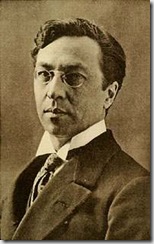
7. WASSILY KANDINSKY (1866-1944) – Although the title of "father of abstraction" has been assigned to several artists, from Picasso to Turner, few painters could claim it with as much justice as Kandinsky. Many artists have achieved the emotion, but very few have changed the way we understand art. Wassily Kandinsky belongs to the latter

Vassily-Kandinsky

Wassily Kandinsky

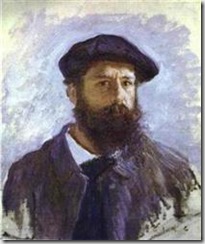
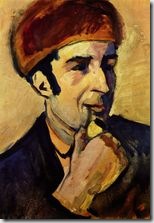
8. CLAUDE MONET (1840-1926) – The importance of Monet in the history of art is sometimes "forgotten" by the fact that Art lovers tend to see only the overwhelming beauty that emanates from the canvas, ignoring the complex technique and composition of the work ( a "defect" somehow caused by Monet himself, when he declared "I do not understand why people want to understand my paintings, when it is enough to enjoy them). However, Monet’s experiments, including studies on the changes caused by the daylight on an object at different hours of the day, and the almost abstract quality of their "water lilies" are clearly a prologue to the art of the twentieth century.
monet-self-portrait

Self-portrait of Claude Monet

9. CARAVAGGIO (1571-1610) – The tough and violent Caravaggio is considered the father of Baroque painting, with his spectacular use of lights and shadows and "tenebrist" scenes using complex perspectives

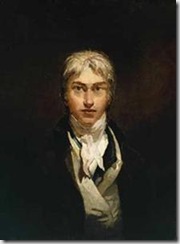
10. JOSEPH MALLORD WILLIAM TURNER (1775-1881) – Turner is the best landscape painter of the Western painting. Academic painter in his beginnings, Turner was slowly but unstoppably evolving towards a free, atmospheric style, sometimes even outlining the abstraction, which was misunderstood and rejected by critics who had admired him for decades

turner-self-portrait

Self-portrait of William Turner

11. JAN VAN EYCK (1390-1441) – Van Eyck is the colossal pillar on which rests the whole Flemish paintings from the later centuries, the genius of accuracy, thoroughness and perspective, well above any other artist of his time either Flemish or Italian.

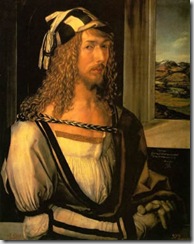
12. ALBERT DÜRER (1471-1528) – The real Leonardo da Vinci of the Northern European Rennaisance was Dürer, a restless and innovative genious, master of the drawing and the color. He is one of the first artists to represent nature without artifice, either in his landscapes or his drawings of plants and animals
durer-self-portrait

Self-portrait of Alberto Durero

13. JACKSON POLLOCK (1912-1956) – The major figure of the Abstract Expressionism and the painter who divides the twentieth century between avant-garde and post-avant-gardes. His "drips" from the period 1947-1952 are one of the milestones of contemporary art

14. MICHELANGELO BUONARROTI (1475-1564) – Some readers will be quite surprised to see the man who is, along with Picasso, the greatest artistic genius of all time out of the "top ten" of this list, but the fact is that even Michelangelo defined himself as "sculptor", and even his painted masterpiece (the frescoes in the Sistine Chapel) looks like a painted sculpture. Nevertheless, a masterpiece of this calibre is sufficient to guarantee him a place of honour in the history of painting

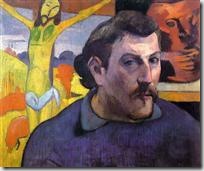
15. PAUL GAUGUIN (1848-1903) – One of the most fascinating figures in the history of painting, his works moved from Impressionism (soon abandoned) to the symbolism, colourful and vigorous, shown is his paintings in Polynesia. Matisse and Fauvism can not be understood without the works of Paul Gauguin

gauguin-self-portrait

Self-portrait of Paul Gauguin

16. FRANCISCO DE GOYA (1746-1828) – Goya is an enigma. In the whole History of Art few figures are as complex for the study as the artist born in Fuendetodos, Spain. Enterprising and indefinable, a painter with no rival in all his life, Goya was the painter of the Court and the painter of the people. He was a religious painter and a mystical painter. He was the author of the beauty and eroticism of the Maja desnuda and the creator of the explicit horror of The executions of May 3rd. He was an oil painter, a fresco painter, a sketcher and an engraver. And he never stopped his metamorphosis

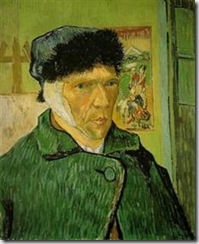
17. VINCENT VAN GOGH (1853-1890) – Few names in the history of painting are now as famous as Van Gogh, despite the complete neglect he suffered in life. His works, strong and personal, are one of the greatest influences in the painting of the twentieth century, especially in the German Expressionism

van-gogh-self-portrait-small

Self-portrait of Vincent van Gogh

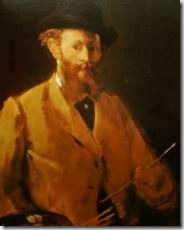
18. ÉDOUARD MANET (1832-1883) – Manet was the origin of Impressionism, a revolutionary in a time of great artistic revolutions. The "Olympia" or "Déjeuner sur l’Herbe" opened the way for the great figures of the Impressionism

manet-self-portrait

Self-portrait of Édouard Manet

19. MARK ROTHKO (1903-1970) – The influence of Rothko in the history of painting is yet to quantify, because the truth is that almost 40 years after his death the influence of the large masses of color and the emotion of Rothko’s large canvases continues to increase in many painters of the 21st century

20. HENRI MATISSE (1869-1954) – Art critics tend to regard Matisse as the greatest exponent of the twentieth century painting, only surpassed by Picasso. This is an exaggeration, although the almost pure use of color in some of his works strongly influenced many of the following avant-gardes

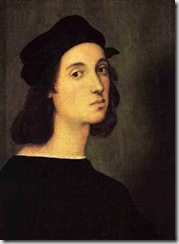
21. RAFAEL (1483-1520) – Equally loved and hated in different eras, no one can doubt that Rafael is one of the greatest geniuses of the Renaissance, with an excellent technique in terms of drawing and color

Raphael_Self_Portrait

Self-portrait of Rafael

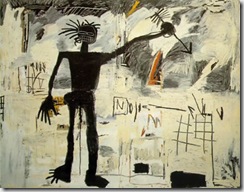
22. JEAN-MICHEL BASQUIAT (1960-1988) – Basquiat is undoubtedly the most important and famous member of the "graffiti movement" that appeared in the New York scene in the early’80s, an artistic movement whose enormous influence in later painting is still to be measured

self-portrait-basquiat-1982

Self-portrait of Jean-Michel Basquiat ©Estate of Jean Michel Basquiat

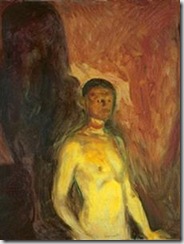
23. EDVARD MUNCH (1863-1944) – Modernist in his context, Munch could be also considered the first expressionist painter in history. Works like "The Scream" are vital to understanding the painting of the twentieth century

munch-self-portrait-hell

"Self-portrait in hell", by Edvard Munch

24. PIET MONDRIAN (1872 -1944) – Along with Kandinsky and Malevich, Mondrian is the leading figure of the first abstract painting. After emigrating to New York, Mondrian filled his abstract paintings with a fascinating emotional quality, as we can se in his series of "boogie-woogies" created in the mid-40s

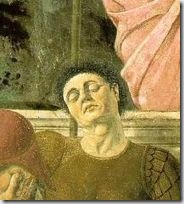
25. PIERO DELLA FRANCESCA (1416-1492) – Being one of the key figures of quattrocento , the Art of Piero della Francesca has been described like “cold”, “hieratic” or even “impersonal”. But with the apparition of Berenson and the great historians of his time as Michel Hérubel -who defended the “metaphysical dimension” of the paintings by Piero- his precise and contained Art finally occupied the place that it deserves in the Art history

piero-della-francesca-self-portrait

Posible self-portrait by Piero della Francesca

26. PETER PAUL RUBENS (1577-1640) – Rubens was one of the most prolific painters of all history, thanks in part to the collaboration of his study. Very famous in life, he traveled around Europe to meet orders from very wealthy and important clients. His female nudes are still amazing in our days

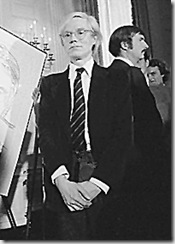
27. ANDY WARHOL (1928-1987) – Controversial and brilliant, Warhol is the leading figure of the pop-art and one of the icons of contemporary art. Her silkscreen series depicting icons of the mass-media (as a reinterpretation of Monet’s series) are one of the milestones of contemporary Art, with a huge influence in the Art of our days

Andy_Warhol_1977

Andy Warhol in 1977

28. JOAN MIRÓ (1893-1983) – Like most geniuses, Miro is an unclassificable artist. His interest in the world of the unconscious, those hidden in the depths of the mind, link him with Surrealism, but with a personal style, sometimes closer to Fauvism and Expressionism. His most important works are those from the series of "Constellations", created in the early 40s

29. TOMASSO MASACCIO (1401-1428) – Masaccio is one of the first old masters who used un his works the laws of the scientific perspective. One of the greatest innovative painters of the Early Renaissance

masaccio-self-portrait

Posible self-portrait by Tomasso Masaccio

30. MARC CHAGALL (1887-1985) – Artist of dreams and fantasies, Chagall was for all his life an immigrant fascinated by the lights and colors of the places he visited. Few names from the School of Paris of the early twentieth century have contributed so much and with such variety to change the twentieth century Art as this man "impressed by the light," as he defined himself

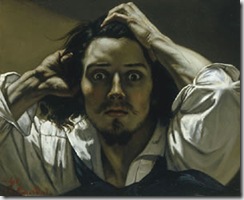
31. GUSTAVE COURBET (1819-1877) – Leading figure of realism, and a clear precedent for the Impressionists, Courbet was one of the greatest revolutionaries, both as an artist and as a social-activist, of the history of painting. Like Rembrandt and other predecessors, Courbet did not seek to create beauty, but believed that beauty was achieved when and artist represented the purest reality without artifice

courbet-desperate-man

"The desperate man", self-portrait by Gustave Courbet

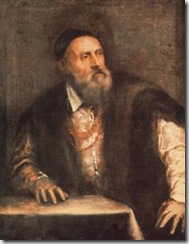
32. TITIAN (c.1476-1576) – After the premature death of Giorgione, Titian became the leading figure of the Venetian painting of his time. His use of color and the taste for mythological themes defined the main features of the Venetian Art of the 16th century. His influence on later artists -Rubens, Velázquez- is extremely important

Titian_Self_Portrait

Self-portrait by Titian

33. NICOLAS POUSSIN (1594-1665) – The greatest among the French Baroque painters, Poussin had a vital influence on French painting for many centuries. His use of color is unique among all the painters of his era

34. WILLEM DE KOONING (1904-1997) – After Pollock, the leading figure of abstract expressionism, though one of his greatest contributions was not to feel limited by the abstraction, and often resort to a heartbreaking figurative painting (his series of "Women," for example) with a major influence on later artists such as Francis Bacon or Lucian Freud

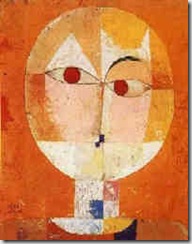
35. PAUL KLEE (1879-1940) – In a period of artistic revolutions and innovations, few artists were as crucial as Paul Klee. His studies on color, widely taught at the Bauhaus, are unique among all the artists of his time

klee-self-portrait

Self-portrait by Paul Klee

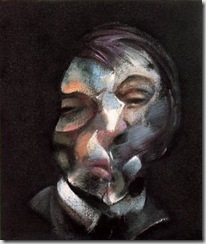
36. FRANCIS BACON (1909-1992) – Maximum exponent, along with Lucian Freud, of the so-called "School of London", Bacon’s paintings rise against all the canons of painting, not only in those terms related to beauty, but also against the dominance of the Abstract Expressionism of its time

self-portrait-bacon-1971-pompidou

Self-portrait by Francis Bacon ©Estate of Francis Bacon

37. GUSTAV KLIMT (1862-1918) – Half way between modernism and symbolism appears the figure of Gustav Klimt, who was also devoted to the industrial arts. His nearly abstract landscapes also make him a forerunner of geometric abstraction

38. EUGÈNE DELACROIX (1798-1863) – Eugène Delacroix is the French romanticism painter par excellence and one of the most important names in the European painting of the first half of the 19 th century. “Liberty leading the People” also demonstrates the capacity of the Painting to become the symbol of an age

39. PAOLO UCCELLO (1397-1475) – “Solitary, eccentric, melancholic and poor”. Giorgio Vasari described with these four words one of the most audacious geniuses of the early Florentine Renaissance, arguably the first master of the perspective in Western painting

40. WILLIAM BLAKE (1757-1827) – Revolutionary and mystic, painter and poet, Blake is one of the most fascinating artists of any era. Her watercolors, prints and a temperas are filled with a wild imagination (almost crazyness) unique among the artists of his era

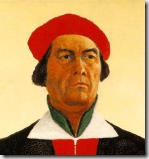
41. KAZIMIR MALEVICH (1878-1935) – Creator of Suprematism, Malevich will forever be one of the most controversial figures in the history of art among the general public, divided between those who consider him an essential renewal and those who consider that his works based on polygons of pure colors do not deserve be considered Art

Malevich-self-portrait

Self-portrait by Kazimir Malevich

42. ANDREA MANTEGNA (1431-1506) – One of the greatest exponents of the Quattrocento, interested in the human figure, which he often represented under extreme perspectives ( "The Dead Christ")

43. JAN VERMEER (1632-1675) – Vermeer is the leading figure of the Delft School, and for sure one of the greatest landscape painters of all time. Works such as "View of Delft" are considered almost as "impressionist" due to the liveliness of his brushwork. He was also a skilled portraitist

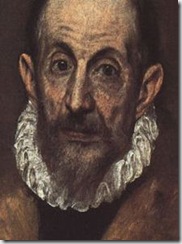
44. EL GRECO (1541-1614) – One of the most original and fascinating artists of his era, with a very personal technique that would be admired, three centuries later, by the impressionist painters

El_Greco_self-portrait

Possible Self-portrait by El Greco

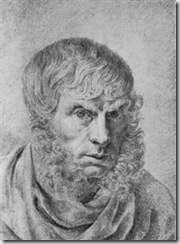
45. CASPAR DAVID FRIEDRICH (1774-1840) – Leading figure of German Romantic painting, Friedrich is still identified as the painter of landscapes of loneliness and distress, with human figures facing the terrible magnificence of nature

Friedrich_self_portrait

Self-portrait by Caspar David Friedrich

46. WINSLOW HOMER (1836-1910) – The main figure in American painting of his era, Homer was a breath of fresh air for the American scene, which was "stuck" in the academic painting and the more romantic Hudson River School. Homer’s loose and lively brushstroke is almost Impressionist

47. MARCEL DUCHAMP (1887-1968) – One of the major figures of Dadaism and a prototype of a "total artist", Duchamp is one of the most important and controversial figures of his era. His contribution to painting is just a small part of his huge contribution to the art world

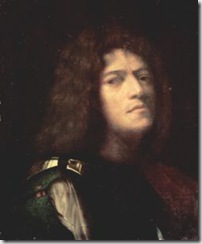
48. GIORGIONE (1478-1510) – As so many other painters who died so young -he passed away at only 32- Giorgione has left us the doubt of what place would his exquisite painting occupy in the history of Art if he had enjoyed a long existence, just as his direct artistic heir – Titian

giorgione-self-portrait

Possible Self-portrait by Giorgione

49. HANS HOLBEIN EL JOVEN (1497-1543) – After Dürer, the greatest of the German painters of his time. The fascinating portrait of the "ambassadors" is still considered one of the most enigmatic paintings of art history

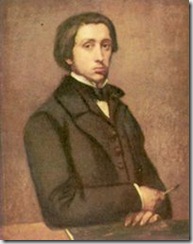
50. EDGAR DEGAS (1834-1917) – Though Degas was not a "pure" impressionist painter, his works shared the ideals of that artistic movement. Degas paintings of young dancers or ballerinas are icons in the painting of the late 19th century

edgar-degas-self-portrait

Self-portrait by Edgar Degas

51. FRA ANGELICO (1387-1455) – One of the great colorists from the early Renaissance, and perhaps the first to develop the progresses achieved by Giotto di Bondone

52. GEORGES SEURAT (1859-1891) – Georges Seurat is one of the most important post-impressionist painters, and is considered the creator of the "pointillism", a style of painting in which small distinct points of primary colors create the impression of a wide selection of secondary and intermediate colors

53. JEAN-ANTOINE WATTEAU (1684-1721) – Watteau is considered today as one of the pioneers of the rococo. Unfortunately, he died at the height of his powers, as is evidenced in the great portrait of "Gilles" painted in the year of his death

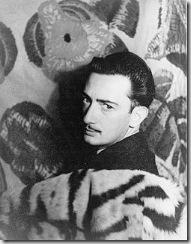
54. SALVADOR DALÍ (1904-1989) – "You can not expel me because I am Surrealism," shouted Dalí when André Breton expelled him from the surrealist movement due to Dalí’s fascist ideals. Although the phrase sounds presumptuous (which was never unusual in Dalí), the fact is that Dalí’s paintings are now the most famous images of all the surrealist movement

salvador-dali

Salvador Dalí

55. MAX ERNST (1891-1976) – Halfway between Surrealism and Dadaism appears Max Ernst, important in both movements. Ernst was a brave artistic explorer with the support of his wife and patron, Peggy Guggenheim

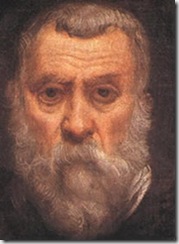
56. TINTORETTO (1518-1594) – Tintoretto is the most flamboyant of the Venetian masters (not the best, such honour can only be reclaimed by Titian or Giorgione) and his magna opera closes not only the Venetian splendour till the apparition of the Canaletto era, but also makes him the last of the Cinquecento masters

tintoretto_selfportrait

Self-portrait by Tintoretto

57. JASPER JOHNS (born 1930) – The last living legend of the early Pop Art, although he has never considered himself a "pop artist". His most famous works are the series of "Flags" and "Targets"

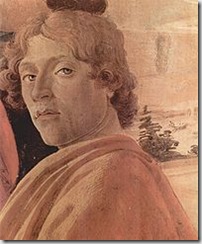
58. SANDRO BOTTICELLI (1445-1510) – "If Botticelli were alive now he would be working for Vogue", actor Peter Ustinov once remarked. Botticelli shares with Raphael the fact of being loved or forgotten at different eras, but his use of color is one of the most fascinating among all old masters

Botticelli_self-portrait

Self-portrait by Sandro Botticelli

59. DAVID HOCKNEY (born 1937) – David Hockney is one of the living myths of the Pop Art . Born in Great Britain, he moves to California , where he feels immediately identified with the light, the culture and the urban landscape of the State

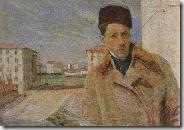
60. UMBERTO BOCCIONI (1882-1916) – The maximum figure of Italian Futurism, fascinated by the world of the machine, on the movement, as a symbol of the contemporary times

boccioni-self-portrait

Self-portrait by Umberto Boccioni

61. JOACHIM PATINIR (1480-1524) – Much less technically gifted than other Flemish painters like Memling and van der Weyden, his contribution to the history of art is vital for the incorporation of landscape as a major element in the painting

62. DUCCIO DA BUONISEGNA (c.1255/60 – 1318/19) – While in Florence Giotto di Bondone was changing the history of painting, Duccio of Buonisegna also provided a breath of fresh air to the important Sienese school

63. ROGER VAN DER WEYDEN (1399-1464) – After Van Eyck, the leading exponent of the Flemish paintings of the fifteenth century, a master of perspective and composition

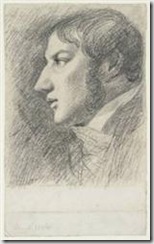
64. JOHN CONSTABLE (1776-1837) – The great figure of the English landscape painting, along with Turner. The limitations he imposed to himself (he never left England) prevents this techincally gifted artist to occupy a higher position in this list

constable_selfportrait

Self-portrait by John Constable

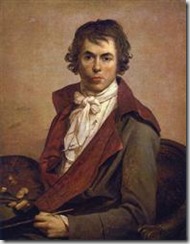
65. JACQUES-LOUIS DAVID (1748-1825) – David is the summit of neoclassicism, whose compositions seem a great reflection of his hectic and revolutionary life

David_Self_Portrait

Self-portrait by Jacques-Louis David

66. ARSHILLE GORKY (1905-1948) – Painter of Armenian origins, he was a surrealist painter who was also one of the leaders of abstract expressionism. He was called "the Ingres of the unconscious"

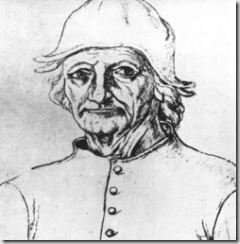
67. HIERONYMUS BOSCH (1450-1516) – An extremely religious man, the work by Bosch is basically moralizing, didactic. The artist sees in the society of his time the triumph of the sin, the depravation, and all the things that have caused the fall of the human being from its angelical character, and wants to warn his contemporaries of the terrible consequences of his impure acts

bosch-self-portrait

Self-portrait by El Bosco

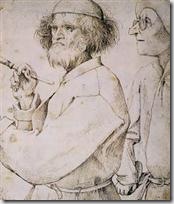
68. PIETER BRUEGEL THE ELDER (1528-1569) – Parallelisms are commonly established between the works by Hyeronimus Bosch and those by Brueghel, but the differences between both of them are abysmal. Whereas Bosch’s fantasies are born of a deep deception and preoccupation for the human being, with a clearly moralizing message, works by Bruegel are full of irony and love for the rural life that seems to anticipate the Dutch landscape painting of the next century

brueghel-self-portrait

Possible Self-portrait by Pieter Brueghel

69. SIMONE MARTINI (1284-1344) – One of the great painters of the Italian Trecento, who was a step further by helping to expand its progress, leading to the "International Style"

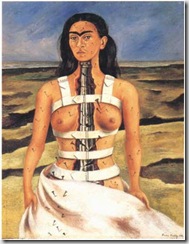
70. FRIDA KAHLO (1907-1954) – The fame that has reached her tragic figure in recent years seems to obscure the importance that Frida had on Latin American art. Kahlo suffered when she was just 17 a bus accident with terrible sequels, breaking her spinal column, pelvis, and her right leg. After this incident, Kahlo’s self-portraits can be considered as quiet but terrible moans

self-portrait-kahlo-olmedo-1944

"The broken column", terrible self-portrait by Frida Kahlo

71. FREDERICK EDWIN CHURCH (1826-1900) – Church represents the culmination of the Hudson River School : he possesses the love for the landscape of Cole, the romantic lyricism of Durand, and the grandiloquence of Bierstadt, but being braver and technically more gifted than anyone with them. Church is without any doubt one of the best landscape painters of all time, perhaps only surpassed by Turner and some impressionists and postimpressionists like Monet or Cézanne

72. EDWARD HOPPER (1882-1967) – Hopper is widely known as the painter of urban loneliness. His most famous work, the famous "Nighthawks" (1942) has become the symbol of the solitude of the contemporary metropolis, and it is one of the icons of the 20th century Art.

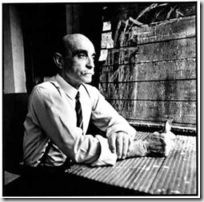
73. LUCIO FONTANA (1899-1968) – Father of the "White Manifesto", where he states that "Matter, colour and sound in motion are the phenomena whose simultaneous development makes up the new art". His “Concepts Spatiales” are already icons of the art of the second half of the twentieth century

Lucio_Fontana_by_Lothar_Wolleh

Lucio Fontana by Lothar Wolleh

74. FRANZ MARC (1880-1916) – After Kandinsky, the great figure of the Expressionist group "The Blue Rider" and one of the most important expressionist painters ever. He died at the height of his artistic powers, when his use of color anticipated the later abstraction

franz-marc-macke

Portrait of Franz Marc, by August Macke

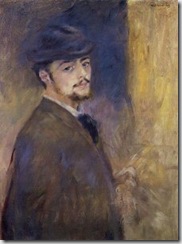
75. PIERRE-AUGUSTE RENOIR (1841-1919) – One of the key figures of the Impressionism, he soon left the movement to pursue a more personal, academic painting

renoir-self-portrait

Self-portrait by Pierre Auguste Renoir

76. JAMES MCNEILL WHISTLER (1856-1921) – Along with Winslow Homer the great figure of American painting of his time. Whistler was an excellent portraitist, which is shown in the fabulous portrait of her mother, considered one of the great masterpieces of American painting of all time

77. THEODORE GÉRICAULT (1791-1824) – Key figure in the romanticism, revolutionary in his life and works despite his bourgeois origins. In his masterpiece, "The raft of the Medusa", Gericault creates a painting that we can define as "politically incorrect", as it depicts the miseries of a large group of castaways abandoned after the a shipwreck

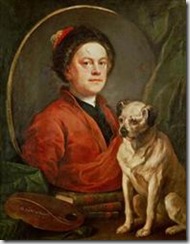
78. WILLIAM HOGARTH (1697-1764) – A list of the great portrait painters of all time should never miss the figure of Hogarth, whose studies and sketches could even qualify as "pre-impressionist"

hogarth-self_portrait

Self-portrait by William Hogarth

79. CAMILLE COROT (1796-1875) – One of the great figures of French realism of the 19th century and certainly one of the major influences for the impressionists like Monet or Renoir, thanks to his love for "plen-air" painting, emphasizing the use of light

80. GEORGES BRAQUE (1882-1963) – Along with Picasso and Juan Gris, the main figure of Cubism, the most important of the avant-gardes of the 20th century Art

81. HANS MEMLING (1435-1494) – Perhaps the most complete and "well-balanced" of the fifteenth-century Flemish painters, although not as innovative as Van Eyck or van der Weyden

82. GERHARD RICHTER (born 1932) – One of the most important artists of recent decades, Richter is known either for his fierce and colorful abstractions or his serene landscapes and scenes with candles

Gerhard_richter

Gerhard Richter in 2005

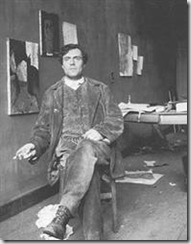
83. AMEDEO MODIGLIANI (1884-1920) – One of the most original portraitists of the history of painting, considered as a "cursed" painter because of his wild life and early death

Amedeo_Modigliani

Amedeo Modigliani

84. GEORGES DE LA TOUR (1593-1652) – The influence of Caravaggio is evident in De la Tour, whose use of light and shadows is unique among the painters of the Baroque era

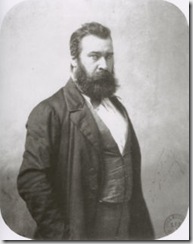
85. JEAN FRANÇOIS MILLET (1814-1875) – One of the main figures of the Barbizon School, author of one of the most emotive paintings of the 19th century: The "Angelus"

Jean-Francois-Millet

Jean-François Millet

86. FRANCISCO DE ZURBARÁN (1598-1664) – The closest to Caravaggio of all Baroque Spanish painters, his latest works show a mastery of chiaroscuro without parallel among the painters of his time

87. CIMABUE (c.1240-1302) – Although in some works Cimabue already represents an evolution of the rigid Byzantine art, his greatest contribution to painting was to discover (the legend says that painting sheeps with a chalk on a rock) a young talent named Giotto (see number 2), who changed forever the Western painting

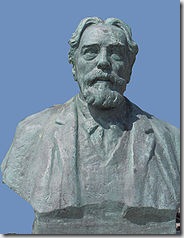
88. JAMES ENSOR (1860-1949) – Violent painter whose strong, almost "unfinished", works make him a precursor of Expressionism

James_Ensor_buste

Bust of James Ensor, by Edmond de Valériola

89. RENÉ MAGRITTE (1898-1967) – One of the leading figures of surrealism, his apparently simple works are the result of a complex reflection about reality and the world of dreams

90. AMBROGIO LORENZETTI (c.1295-1348) – His cityscapes are the first urban perspectives of the history of Western painting

91. EL LISSITZKY (1890-1941) – One of the main exponents of Russian avant-garde painting, influenced by Malevich, also excelled in graphic design

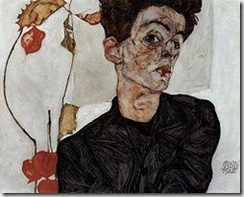
92. EGON SCHIELE (1890-1918) – Another "died too young" artist, his strong and ruthless portraits influenced the works of later artists, like Lucian freud or Francis Bacon

Egon_Schiele_self-portrait

Self-portrait by Egon Schiele

93. DANTE GABRIEL ROSSETTI (1828-1882) – Perhaps the key figure in the pre-Raphaelite movement, Rossetti left the poetry to devote himself a classic painting that influenced the symbolism

94. TAKASHI MURAKAMI (born 1963) – In the exciting and sometimes treacherous world of contemporary art, few artists are so interesting as Murakami. His "superflat" paintings are already an icon of the Art of the 21st century

95. CLAUDIO DE LORENA (1600-1682) – His works were a vital influence on the landscape painters for centuries, both in Europe (Corot, Courbet) and America (Hudson River School)

96. ROY LICHTENSTEIN (1923-1977) – Along with Andy Warhol the most famous figure of the American Pop-Art. His works are often related to the style of the comics, though Lichtenstein rejected that idea

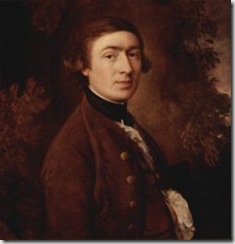
97. THOMAS GAINSBOROUGH (1727-1788) – English painting of later decades (Turner, Constable…) is influenced by this artist, best known for his landscapes, but also a great portrait

Thomas_Gainsborough_slef-portrait

Self-portrait by Thomas Gainsborough

98. GUSTAVE MOREAU (1826-1898) – One of the key figures of symbolism, introverted and mysterious in life, but very free and colorful in his works

99. GIORGIO DE CHIRICO (1888-1978) – Considered the father of metaphysical painting and a major influence on the Surrealist movement

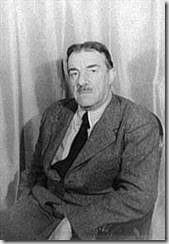
100. FERNAND LÉGER (1881-1955) – Starting in the Cubism, Leger was increasingly attracted to the world of machinery and movement, which results in works such as "The Discs" (1918)

fernand-leger

Fernand Léger, photo by Carl Van Vechten, 1936

101. JEAN-AUGUSTE-DOMINIQUE INGRES (1780-1867) – Ingres was the most prominent disciple of the David’s neoclassicism, so he can not be considered an innovator. He was, however, a master of classic portrait

Posted in Art & Beauty | 1 Comment

An example of the importance of effective communication!


10531398 (2)

10531398 (4)

Posted in Jokes | Leave a comment

Cricket In Heaven


Sachin Tendulkar and Sourav Ganguly, now pretty old guys, 75 and 76 years old, are sitting on a  ark bench feeding pigeons and talking about cricket, like they do every day.

Sachin turns to Sourav and says, "Do you think there’s cricket in heaven?"

Ganguly thinks about it for a minute and replies, "I dunno. But let’s make a deal: if I die first, I’ll come back and tell you if there’s cricket in heaven, and if you die first, you do the same."

They shake on it and sadly, a few months later, poor Sachin passes on.

One day soon afterward, Ganguly is sitting there feeding the pigeons by himself when he hears a voice whisper,

"Sourav… Sourav!"

Ganguly responds, "Sachin! Is that you?"

"Yes it is, Sourav," whispers Sachin’s ghost.

Ganguly, still amazed, asks, "So, is there cricket in heaven?"

"Well," says Sachin, "I’ve got good news and bad news." "Gimme the good news first," says Ganguly.

Sachin says, "Well… there is cricket in heaven."

Ganguly says, "That’s great! What news could be bad enough to ruin that!?"

Sachin sighs and whispers,.

"You’re going to be the opening batsmen on Friday".

Howzaaaaat???

Posted in Jokes | Leave a comment

Quotations on Intelligent Life and Universe


1) “Even if there is only one possible unified theory, it is just a set of rules and equations. What is it that breathes fire into the equations and makes a universe for them to describe?” – Stephen Hawking

2) “God not only plays dice, He also sometimes throws the dice where they cannot be seen.” -Stephen Hawking

3) “If we do discover a complete theory, it should be in time understandable in broad principle by everyone. Then we shall all, philosophers, scientists, and just ordinary people be able to take part in the discussion of why we and the universe exist.” – Stephen Hawking

4) “Intelligence is the ability to adapt to change.” – Stephen Hawking

5) “It is no good getting furious if you get stuck. What I do is keep thinking about the problem but work on something else. Sometimes it is years before I see the way forward. In the case of information loss and black holes, it was 29 years.” – Stephen Hawking

6) “It is not clear that intelligence has any long-term survival value.” – Stephen Hawking

7) “My goal is simple. It is a complete understanding of the universe, why it is as it is and why it exists at all.” – Stephen Hawking

8) “The usual approach of science of constructing a mathematical model cannot answer the questions of why there should be a universe for the model to describe. Why does the universe go to all the bother of existing?” – Stephen Hawking

9) “To confine our attention to terrestrial matters would be to limit the human spirit.” – Stephen Hawking

10) “We are just an advanced breed of monkeys on a minor planet of a very average star. But we can understand the Universe. That makes us something very special.” – Stephen Hawking

Posted in Quotations | Leave a comment

Quotations on Women, Beauty and Love


1) “Women know what men have long forgotten. The ultimate economic and spiritual unit of any civilization is still the family.” – Luce, Clare Boothe ; 1903-1987, American Diplomat, Writer

2) “Nature has given women so much power that the law has very wisely given them little.” –  Johnson, Samuel ; 1709-1784, British Author

3) “Woman is the Nigger of the World.” – Lennon, John ; 1940-1980, British Rock Musician

4) “You don’t know a woman until you have received a letter from her.” – Leverson, Ada

5) "Woman! The peg on which the wit hangs his jest, the preacher his text, the cynic his grouch, and the sinner his justification! “ – Rowland, Helen ; 1875-1950, American Journalist

6) “It requires nothing less than a chivalric feeling to sustain a conversation with a lady.” – Thoreau, Henry David ; 1817-1862, American Essayist, Poet, Naturalist

7) “A woman must be a genius to create a good husband.” – Honore De Balzac – 1799-1850, French Novelist

8) “Beauty for some provides escape, who gain a happiness in eyeing the gorgeous buttocks of the ape or Autumn sunsets exquisitely dying. “ – Huxley, Aldous ; 1894-1963, British Author

9) “Beauty is truth, truth beauty — that is all ye know on earth, and all ye need to know.” – Keats, John ; 1795-1821, British Poet

10) “The perfect form lies in the block of stone; all that is needed to chip away until it is revealed.” – Michelangelo

11) “The plainer the dress, the greater lustre does beauty appear.” – Halifax, Edward F. ; 1881-1959, British Conservative Statesman

12) “Beauty is a harmonious relation between something in our nature and the quality of the object which delights us.” – Pascal, Blaise ; 1623-1662, French Scientist, Religious

13) “But if God had wanted us to think just with our wombs, why did He give us a brain?” – Luce, Clare Boothe ; 1903-1987, American Diplomat, Writer

14) “Anyone who keeps the ability to see beauty never grows old” – Franz Kafka

15) “A woman may very well form a friendship with a man, but for this to endure, it must be assisted by a little physical antipathy." – Nietzsche

16) “Between men and women there is no friendship possible. There is passion, enmity, worship, love, but no friendship.” – Oscar Wilde

Posted in Quotations | Leave a comment

Death Of Boss


A guy phones up his Boss, but gets the bosses’ wife instead. "I’m afraid he died last week." she explains. The next day the man calls again and asks for the boss. "I told you" the wife replies, "he died last week."

The next day he calls again and once more asks to speak to his boss.

By this time the wife is getting upset and shouts, "I’VE ALREADY TOLD YOU TWICE, MY HUSBAND, YOUR BOSS, DIED LAST WEEK! WHY DO YOU KEEP CALLING?"

"Coz," he replied laughing, "I just love hearing it…"

Posted in Jokes | Leave a comment

Quotations on India


1) "I have travelled across the length and breadth of India and I have not seen one person who is a beggar or who is a thief. Such wealth I have seen in this country, such high moral values & people of such calibre, that I do not think we would ever conquer this country, unless we break the very backbone of this nation, which is her spiritual and cultural heritage." – Lord McCauley in his speech of Feb 2, 1835, British Parliament

2) “Whatever statement you make about India, the opposite is also true.” – Joan Robinson (Amarteya Sen’s tutor at Cambridge)

3) "We came to India for the costs, we stayed for the quality, and we’re now investing for the innovation" – Cisco’s Scheinman

Posted in Quotations | Leave a comment

Palakshi’s 6th Birthday


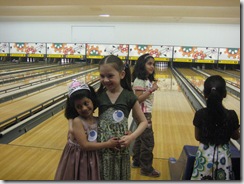
Palakshi celebrated her 6th birthday at Leisureplex Stillorgan. All her friends enjoyed her birthday party a lot.

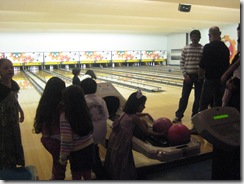
Party started with bowling which was a great fun.

20090321_Palakshi6thBirthDay_0001 20090321_Palakshi6thBirthDay_0018

20090321_Palakshi6thBirthDay_0021 20090321_Palakshi6thBirthDay_0023

20090321_Palakshi6thBirthDay_0024 20090321_Palakshi6thBirthDay_0027

Then everybody went for disco and karaoke. Everybody danced and sang lot of songs.

20090321_Palakshi6thBirthDay_0070 20090321_Palakshi6thBirthDay_0077

20090321_Palakshi6thBirthDay_0093 20090321_Palakshi6thBirthDay_0094

 20090321_Palakshi6thBirthDay_011020090321_Palakshi6thBirthDay_0109

Even the parents enjoyed dancing…

 20090321_Palakshi6thBirthDay_0147 20090321_Palakshi6thBirthDay_0148

After so much dancing and singing, everybody was hungry and so so tired,

and it was time to eat something

20090321_Palakshi6thBirthDay_0161 20090321_Palakshi6thBirthDay_0164

20090321_Palakshi6thBirthDay_0172 20090321_Palakshi6thBirthDay_0173

And finally it was the cake time

20090321_Palakshi6thBirthDay_0174a 20090321_Palakshi6thBirthDay_0174b

20090321_Palakshi6thBirthDay_0174d 20090321_Palakshi6thBirthDay_0174e

Everybody enjoyed a lot and wished Palakshi a very happy birthday…

20090321_Palakshi6thBirthDay_0152 20090321_Palakshi6thBirthDay_0159

More Snaps Of Palakshi’s 6th Birthday


Posted in Family | Tagged , | Leave a comment

The 10 Stupidest Tech Company Blunders

1. Yahoo Loses Facebook

In 2006, Facebook was a two-year-old social network that most people thought of as a digital playground for Ivy League brats. In the world of social networks, MySpace’s 100 million members totally swamped Facebook’s 8 million. So when Yahoo offered to buy Mark Zuckerberg’s baby for a cool $1 billion–nearly twice what Rupert Murdoch had spent for MySpace in 2005–people said, “Take the money and run, Mark.” In fact, the then-23-year-old and Yahoo shook hands on a deal in June 2006.

Then Yahoo posted some bad financials, and its stock dropped 22 percent overnight. Yahoo’s CEO at the time, Terry Semel, reacted by cutting the purchase offer to $800 million. Zuckerberg balked. Two months later Semel re-upped the offer to $1 billion, but by then it was too late.

Today, Facebook boasts some 250 million registered users and is worth roughly $5 to $10 billion, depending on who’s counting. Three years and two CEOs later, Yahoo is still struggling to survive.

2. Real Networks Punts on the iPod

Tony Fadell, inventor of the iPodPeople think Steve Jobs invented the iPod. He didn’t, of course. Jobs merely said yes to engineer Tony Fadell after the folks at Real Networks rejected Fadell’s idea for a new kind of music player in the fall of 2000. (Fadell’s former employer Philips also turned him down.)

By then MP3 players had been around for years, butFadell’s concept was slightly different: smaller, sleeker, and focused on a content-delivery system that would give music lovers an easy way to fill up their “pods.” (Jobs is famous for driving the design of the iPod.)

Today that content-delivery system is known as iTunes, and Apple controls some 80 percent of the digital music market. Fadell worked at, and eventually ran, Apple’s iPod division until November 2008. Real Networks is still a player in the streaming-media world, but its revenues are a fraction of what Apple makes from iTunes alone. (Photo: Courtesy of Apple)

3. Sony and Toshiba Agree to Disagree Over HD

HD DVD versus Blu-rayFew format wars have been as costly to their participants as the fight over a new high-definition disc standard. In one corner stood Blu-ray, championed by Sony. In the other corner was HD DVD, led largely by Toshiba.

From 2002 onward the two sides wrangled, each signing up allies to support its own competing, incompatible format. In 2008 Sony slipped the knife into Toshiba by paying one of its biggest backers, Warner Brothers Studios, a reported $400 million to drop HD DVD in favor of Blu-ray.

Interestingly the same parties had battled in the mid-1990s over a new high-res format for movies. Back then they settled their differences, combining the best of both specs into something called Digital Versatile Disc, better known as DVD.

The missed opportunity to come out with a single HD format sacrificed years’ worth of sales for every company involved. Had the two sides joined forces in 2002, high-def discs would be the dominant delivery medium for movies and shows now. Instead, today DVDs still outsell Blu-ray titles by ten to one, and the future belongs to streaming media and video on demand.

4. Digital Research: The Other Microsoft

Gary Kildall, Digital ResearchThis one is a classic. In 1980, when IBM was looking for somebody to build a disc operating software for its brand-new IBM PC, Microsoft was not its first choice. In fact, none other than Bill Gates suggested that Big Blue approach Gary Kildall of Digital Research, author of the CP/M operating system.

The legend is that Kildall blew IBM off to go fly his plane. The real story is that Kildall was flying to deliver a product to another customer, leaving his wife to negotiate with IBM. Dorothy Kildall didn’t like parts of the deal IBM was proposing and sent the executives packing.

Big Blue went back to Gates, who with his partner Paul Allen whipped out MS-DOS, based on Tim Paterson’s QDOS (the Quick and Dirty Operating System), which was itself based on CP/M. IBM ended up offering both Microsoft’s DOS (for $60) and a version of CP/M ($240) to buyers of the original IBM PC. The cheaper product won.

Before DOS, Microsoft’s biggest products were versions of the BASIC programming tool. After DOS, well…you know the rest. Would Microsoft have grown into the monolith it is today without the IBM contract? We’ll never know.

5. Xerox Goes in an Alto Direction

The Xerox Alto (Courtesy of Wikimedia)Here’s another classic tale. More than a decade before the Macintosh and Windows PCs, before even the MITS Altair, there was the Alto, the world’s first computer with a window-based graphical user interface. Invented atXerox PARC, the Alto had a mouse, ethernet networking, and a what-you-see-is-what-you-get (WYSIWYG) text processor.

A young Steve JobsBut in 1973 the personal-computer market didn’t exist, so Xerox didn’t really know what to do with the Alto. The company manufactured a few thousand units and distributed them to universities. As legend has it, in 1979 Steve Jobs visited Xerox PARC, saw the Alto, and incorporatedmany of the Alto’s featuresinto Apple’s Lisa and Mac computers. Shortly thereafter Xerox finally realized its mistake and began marketing the Xerox Star, a graphical workstation based on technology developed for the Alto. But it was too little, too late.

6. Recording Industry Plays the Same Old Tune

Napster logoPerhaps no other industry has missed more tech opportunities than the music business.

In 1999, Shawn Fanning’s Napster made it incredibly easy for people to share music online. The record companies reacted by suing Napster for contributing to copyright infringement. Then-Napster CEO Hank Barry called for the music industry to adopt a radio-style licensing agreement that paid royalties to artists for music distributed via the Net. His calls fell on deaf ears.

Napster fans quickly moved on to other peer-to-peer file-sharing networks such as Gnutella and Grokster, and music “pirates” became the RIAA’s public enemy number one.

In 2000 MP3.com launched a service that allowed members to upload songs from their own private CD collection and stream them to any PC. The recording industry sued MP3.com for copyright infringement and eventually won. MP3.com was sold and changed business models.

Add to all that the RIAA’s suits against Grokster, Morpheus, Kazaa, and some 30,000-odd music “pirates.” Talk about your broken records.

Today, of course, music-subscription businesses and streaming services such as Pandora dominate digital music. Had the record companies partnered with Napster, MP3.com, or any of the other file sharing networks instead of suing them, they might control digital music sales today–without nearly as many problems with piracy.

7. Compuserve Blows Its Chance to Dominate the Net

CompuServe logoLook at today’s interactive, social-media-obsessed, user-content-driven Web, and what do you see? A spiffier version of CompuServe circa 1994. But instead of dominating the online world, CompuServe got its butt kicked by AOL and that company’s 50 billion “free” CDs.

In the early 1990s the Compuserve Information Service had “an unbelievable set of advantages that most companies would kill for: a committed customer base, incredible data about those customers’ usage patterns, a difficult-to-replicate storehouse of knowledge, and little competition,” says Kip Gregory, a management consultant and author of Winning Clients in a Wired World. “What it lacked was probably … the will to invest in converting those advantages into a sustainable lead.”

Then AOL came along, offering flat-rate “unlimited” pricing (versus CompuServe’s hourly charges), a simpler interface, and a massive, carpet-bombing CD marketing campaign. Organizations that had an early presence on CompuServe forums moved over to the Web, which CompuServe’s forums were slow to support. In 1997 AOL acquired CompuServe, and “CompuServe classic” was finally laid to rest last June.

CompuServe’s failure wasn’t due to a single missed opportunity so much as a collection of them, says Gregory. “I really believe [CompuServe is] an important example that reinforces a critical lesson–never stand on your heels in business.”

8. Newspapers Fail to Read the Writing on the Wall–Craigslist

Craigslist.orgNewspapers are dying, and by nearly all accounts (certainly, all newspaper accounts), Craigslist’s fingerprints can be found all over the crime scene. People have blamed the mostly free online ad service for cutting the legs out from under classified advertising, one of the newspaper industry’s cash cows.

As recently as 2005, classified ads brought more than $17.3 billion into U.S. newspapers’ coffers. Since then, the use of classified ad sites like Craigslist (as well as Amazon, eBay, and Google) has more than doubled, according to the Pew Research Center, while classified ad revenues have been halved.

If a consortium of newspapers had bought out Craigslist back in 2005, when classified ad revenues were flying high, things could be quite different today. But first they would have had to persuade Craigslist creator Craig Newmark to sell.

In a January 2008 interview with InfoWorld, Newmark said that his company’s role in the collapse of the newspaper industry has been greatly exaggerated–mostly by newspapers. “I figure the biggest problems newspapers have these days have to do with fact-checking,” he remarked.

9. The Google Before Google

Open Text, an early search engineIn the mid-1990s the hottest search engine technology wasn’t the work of Yahoo, Alta Vista, Lycos, or Hot Wired; it was the Open Text Web Index. Much like Google today, Open Text was lauded for its speed, accuracy, and comprehensiveness; by 1995 Open Text Corp. claimed that it had indexed every word on the roughly 5 million documents that constituted the Web at that time. That year, Yahoo incorporated Open Text’s search technology into its directory.

But two years after partnering with Yahoo, Open Text abandoned search and moved into enterprise content management. A year later Google made its debut. The missed opportunity? Not realizing how big search was going to be.

“If anything made Open Text special, it was that they came closer to having Google-like technology than anyone else in their time,” says Steve Parker, a communications consultant who helped publicize Yahoo’s launch of Open Text’s search technology. “With a three-year lead on Google, you have to consider whether Google would have been forced to burn cash at a much faster pace, and if they might have run out of time to overtake the market leader. If things had gone differently, that might have been good enough to get [Open Text] to king of the hill.”

10. Microsoft Saves a Rotting Apple

Early Apple logoTen years ago Apple was in serious trouble. Mac sales were being eroded by cheaper clones from Power Computing and Radius. The company was running low on cash, its stock was trading for around $5 a share, and it was hunting for a new CEO to replace Gil Amelio.

Then Apple received a much-needed infusion of cash–$150 million–from a seemingly unlikely source: Microsoft, which also promised to continue developing its Mac Office suite. The deal was negotiated by then-Apple adviser Steve Jobs, whom the Macworld Expo faithful booed at the deal’s announcement. Shortly afterward, Jobs took over as Apple’s “interim” CEO. We all know what happened after that.

If Microsoft hadn’t missed its opportunity to let Apple wither? We’d be struggling to play WinTunes on our WinPhones. The online music and video markets would be stagnant–or worse, controlled by Hollywood. And we’d be longing desperately for better alternatives to Windows.

Dan Tynan, PC World

Aug 18, 2009

Posted in Management, Technology | Tagged , | Leave a comment

The Black Stone

Images of the Stone

stone.jpg
Chador-clad women in black touching the black stone. In 930, the stone was removed and shattered by an Iraqi sect of Qarmatians, but the pieces were later returned. The pieces, sealed in pitch and held in place by silver wire.
.
kaba-interior-wp-pd.jpg
Cross section of the Ka’aba (Wikipedia)
.

The History of the Stone, the Hajj and the Deities

According to Islamic belief, God ordained a place of worship on Earth to reflect a house in heaven. Muslims believe that Adam, the first man, was the first to build such a place of worship. According to the Qur’an, the Ka’ba that stands today was built by the prophet Ibrahim (Abraham) and his son Ismail (Ishmael). It’s said that when Abraham and Ishmael were building the Ka’aba, the stone was delivered to them by an angel from heaven. That story would suggest that the Black Stone is a meteorite.

Ochiogrosso1 echoing the description in al-Kalbi’s “The Book of Idols”2 comments:

“Before Muhammad, the Ka’aba was surrounded by 360 idols, and every Arab house had its god. Arabs also believed in djinn (subtle beings), with many offspring. Among the major deities of the pre-Islamic era were al-Lat (“the goddess”), worshiped in the shape of a square stone; al-Uzzah (“the mighty”), a goddess identified with the morning star and worshiped as a thigh-bone-shaped slab of granite between al Taif and Mecca; Manat, the goddess of destiny, worshiped as a black stone on the road between Mecca and Medina; and the moon god, Hubal, whose worship was connected with the Black Stone of the Ka’aba’. The stones were said to have fallen from the sun, moon, stars, and planets and to represent cosmic forces. The so-called Black Stone (actually the color of burnt umber) that Muslims revere today is the same one that their forebears had worshiped well before Muhammad and that they believed had come from the moon.”

All forms of violence were forbidden in Mecca for four months during the hajj. The Ka’aba was holy ground and a measure of the holiness was its religious tolerance. All the faithful could assemble to honour a time-immemorial tradition. Worshippers of al-Llah, al-Lat, al-Uzza, Manat, Hubal and even the Christian Arabs, could all come together there. The basis of the worship was astral, the 360 idols relating to a year and involving the Moon, Sun, Venus and the Zodiac, as evidenced in Nabatean and Sabian archeology, in the star and crescent symbol of Islam, and the many references in the Qur’an to Muhammad swearing by the Sun, Moon and Stars.

When Muhammad entered Mecca in victory and smashed the idols, it is said retaining a picture of Jesus and Mary, the black stone, which he had kissed on his previous pilgrimage on the lesser Hajj during the Treaty of Hudaybiyah, remained.

Robert Briffault3 comments:

“When he abolished the idols, of the old religion, Muhammad, whose dominating ideal was to unite all Arabian tribes into a single political body bound by a common cult, felt it to be undesirable or impracticable to do away with the most sacrosanct object or symbol of the old religion”

Briffault claims that the stone is a baetyl of the Goddess:

“Al-Kindy says that Al-Uzza was the moon, her chief shrine being the Ka’aba at Mecca, where she was worshipped in the form of a sacred stone, … the very stone which the pilgrims to this day visit Mecca to kiss. In doing so the pilgrims recite Caliph Omar’s warning declaration: ‘I know well that you are a stone that can neither do good nor evil, and unless I had seen the prophet, on whom be prayer and the blessings of god kiss you, I would not kiss you’.”

Karen Armstrong4 rather says their shrines, such as those at Taif were beloved of the people of Mecca:

“Al-Lat had a shrine at Taif, which was in a cooler and more fertile part of the Hijaz, and al-Uzza had one Naklah to the south east of Mecca and that Manat, the fateful one had her shrine at Qudayd on the Red Sea coast”.

“When the Arabs venerated these stones they were not worshippping them in any crude simplistic way but were seeing in them a focus of divinity. … The Arabs may not have worshipped al-Lat, al-Uzza and Manat in a personalized way, but we shall see that they felt very passionate about them. … Their cultus was confined to ther shrines …, but they were an essential part of the spiritual landscape of the Bedouin of the Hijaz, who saw Nakhlah, Taif and Qudad as holy places and sanctuaries where Arabs could find their centre. The antiquity of the Goddesses was another reason for their cult. When they worshipped them in their shrines, the Arabs felt in touch with their forefathers, who had venerated the banat-al-Llah there, and this provided a healing sense of continuity.”

She also notes that the Hajj was an ancient rite which had long preceded Islam.

“The hajj was originally an Autumn rite apparently persecuting the dying sun to bring on the winter rains. Pilgrims would rush in a body to the hollow of Muzdalifa, the abode of the Thunder God, make an all-night vigil on the plain by Mt. Arafat, hurl pebbles at the three sacred pillars of Mina and offer an animal sacrifice”5 .

Hurling the pebbles at the pillar of the Shaitan is still one of the most dangerous phases of the hajj. In 2004 at the time of writing, 244 people died in a stampede. A tradition of sexual freedom on the hajj predates Islam in more anceint fertility rites.

The Hajj’s retention was in fact a compromise with the people of Mecca, that Mecca would retain the ancient hajira pilgrimage, a centre of its energy, but would embrace Islam.

Briffault6 notes:

“When Muhammad overthrew the old religion of Arabia, he was not strong enough to defy and offend the immemorial sentiment of the Arab people. The divine mission of the prophet was reconciled with the old religion by Islam receiving the sanction of the immemorial deity”.


Briffault7 states:

“At the immemorial shrine of al-Uzza at Mecca, it is a practice for women to offer themselves to the holy pilgrims. With Shi’ites it is the custom to form temporary unions during the period of the holy pilgrimage. It is stipulated at a fixed date all relations must cease, and the parties of such unions do not give signs of recognition if they subsequently meet. Any children of such unions are regarded as a blessing in the family and are looked upon as divine children or saints.”

Nabatean inscriptions in Sinai and other places display widespread references to names including Allah, El (god) and Allat (goddess), with regional references to al-Uzza, Ba’al and Manat8. Allat is also found in Sinai in South Arabian language. Allah occurs particularly as Garm- ‘allahi – ‘god decided’ and Aush-allahi – ‘gods covenant’. We find both Shalm-lahi ‘Allah is peace’ and Shalm-allat, ‘the peace of the goddess’.

‘`The guardians of the Ka’aba are still called the Beni Shaybah, or sons of the old woman. Popular tradition relates how Abraham, when he founded the Ka’aba brought the ground from an old woman to which it belonged. She however consented to part with it only on the condition that she and her descendents should have the key of the place in their keeping”9. It is also related that they are descendents of the Queen of Sheba or Sa’aba. Saba relating to the Sabbath, the number seven, and the seven circumambulations of the Ka’aba.

The Hajira or ‘sudden departure’, although applied to Muhammad’s sudden exit, bears the name of Hajira (Hagar), who discovered the spring of Zam Zam flowing by Ishmael’s foot searching for water for him after the ‘sudden departure’ of Ibrahim10, again a symbol of the sacred feminine.

Hajj and Ka’aba Links

Nawal el Sadaawi’s Trial over the Hajj

Nawal El Saadawi is the first woman in Egyptian history to be threatened with a forced divorce for expressing her views. She was accused of apostasy – renouncing one’s religion – for allegedly insulting Islam11.

Nawal’s outspokenness has caused her many problems. As the first Arab woman to speak out against female circumcision 30 years ago Nawal was sacked from her ministerial job of Director of Public Health.

In 1981 after criticising Sadat’s regime she was imprisoned. Nawal’s name appeared on a fundamentalist death list and both she and her husband Sherif were forced into exile.

During the course of an interview, Nawal had referred to the historically accepted fact that elements of the Hajj, such as kissing the black stone had pre-Islamic, pagan roots.
The journalist couldn’t believe his ears. All he heard was Nawal calling the Hajj pagan. “You’re opening fire,” he said to Nawal. “Yes” she replied, “but people should know”.

Ra’fat returned to his editor, Mohamed Hassan Alafy, who saw immediately that the story would run and run. He led the front page that week with “Dr Nawal El Saadawi says Hajj is a remnant of paganism.”

Readers of the newspaper were led to excerpts of Nawal’s interview with the line: “She has exploded bombs by her inflammatory opinions.” “We want her to be beheaded”. Reader’s letter to Al Maydan.

Next, the paper upped the stakes by taking the interview to the Grand Mufti, eager to get a fatwa. Now anyone who wanted to be seen as defender of the faith had legitimacy from the highest Islamic authority in the land. The Mufti had been clear – if Nawal had said what the paper claimed she had said, there was no doubt, she had rejected Islam.

One man, a lawyer named Nabih el Wahsh, decided to seize the moment, knowing that the situation was ripe for a public battle between the conservative interpretation of Islam and the more liberal attitudes towards freedom of speech. What was it that had infuriated him so much? “Firstly, her denial of the Hajj, which is one pillar of Islam. She categorically said that Hajj and the kissing of the black stone are remnants of paganism. She also denied a verse in the Koran which says that men are entitled to twice the inheritance of women. Who is she to demand equality? Is she greater than God?”

Finally, after some prevarication, the court declared on 30th July 2001 that there was no case to answer. She will not go to prison and she and Sherif will not be forcibly divorced.

Images of the Ka’aba

.
kaaba.jpg
The Kaaba
.
mecca2.jpg
The Mosque at Mecca
.
mecca3.jpg
The Kaaba and al-Masjid al-Haram

.

zamzam_water.jpg
The Spring of Zam-Zam

Footnotes

1. Occhiogrosso, Peter 1996 The Joy of Sects, Doubleday, NY.

2. Faris, Nabih 1952 (trans) al-Kalbi “The Book of Idols” pp 12-29

3. Briffault, Robert 1927 “The Mothers” George Allen Unwin, London.’ v3 79

4. Armstrong Karen 1993 “Muhammad” Victor Gollancz Ltd. p 64

5. Armstrong Karen 1993 “Muhammad” Victor Gollancz Ltd. p 62

6. Briffault, Robert 1927 “The Mothers” George Allen Unwin, London.’ v3 78

7. Briffault, Robert 1927 “The Mothers” George Allen Unwin, London.’ v3 221

8. Negev, Abraham 1986 Nabatean Archeology Today NY Univ. Pr. NY.

9. Briffault, Robert 1927 “The Mothers” George Allen Unwin, London.’ v3 80

10. Shad, Abdul 1986 From Adam to Muhammad, Noor Publishing, Delhi. p 48

11. http://news.bbc.co.uk/1/hi/programmes/correspondent/1619902.stm

Taken from http://sakina.wikidot.com/the-black-stone

Posted in History | Tagged , | Leave a comment