If a mountain seems too big today then climb a hill instead. If the morning brings you sadness it’s ok to stay in bed. If the day ahead weighs heavy and your plans feel like a curse, there’s no shame in rearranging, don’t make yourself feel worse. If a shower stings like needles and a bath feels like you’ll drown, If you’ve not washed your hair for days, don’t throw away your crown. A day is not a lifetime a rest is not a defeat, don’t think of it as failure, just a quiet, kind retreat. It’s ok to take a moment from an anxious, fractured mind, the world will not stop turning while you get realigned. The mountain will still be there when you wan to try again, you can climb it in your own time, just love yourself til then.
This book by Rajiv Malhotra brings out into the open, the existential threats facing Vedic civilisation today. This battle for Sanskrit has to be fought tooth and nail by every Hindu, better would be to wage an outright war against these divisive forces who’re hell bent on destroying our civilizational values and heritage. These destructive forces lay bare their own impotence by attacking Vedic ethos and beliefs as these are far superior than anything they can claim as their own. The first few pages provides the background that alerted the author to write this book. In August 2014 the author became aware of a sinister attempt by American Indologist, Sheldon Pollock that could have compromised the integrity of Sringeri Sharda Peetham, one of the most sacred institution for Hindus. A group of wealthy NRI’s were being beguiled by Pollock to team up with the top administrators of Sringeri Peetham in India to setup a Columbia university chair in the name of Adi Shankara, an 8th century Hindu sage widely attributed to the revival of Advaita Vedanta. The sanctity of Sringeri Peetham has been carefully safeguarded for more than a thousand years. The adhikara (authority) to represent the Peetham and speak on its behalf has always rested solely with the acharyas, who are groomed from childhood and lead an austere life to assume this responsibility. This was alarming for author to see this university chair created in name of Peetham as it would’ve amounted to giving up control of the teachings and brand name of Sringeri Peetham to outside interests. The author concedes that the issue was not whether Hinduism or the teachings of Adi Shankara can sustain critique by outside authorities. In-deed he accepts that such critiques are necessary and healthy. Rather the issue was that, in this case, the critique would be put forth with the imprimatur of Sringeri Peetham. In author’s view the Peetham should shoulder the responsibility for answering the critics, not sponsoring them!
This book is a commendable attempt dedicated to the exemplary Dharmic debating tradition of purva-paksha (examining the opponent’s position) and uttara-paksha (developing a response). The author views his attempt, rather poetically as an intellectual yajna with mutual respect, but likelihood is that after reading this book readers would question if these divisive forces deserve any such respect. It would’ve been far more heroic for someone like Sheldon Pollock to really imbibe the spiritual tenets of Vedas and then work on the reformation of the staid Abrahamic traditions to plug the huge gap that exists between the two belief systems. Instead Pollock is only interested in making these puerile and conceited attempts to distort the Sanatani beliefs and to unseat Vedic tradition from its high pedestal earned through its superior logic and reasoning. By pursuing these vain attempts Western scholars like Pollock stand the risk of being discredited in the long run even if they might get some half-witted admirers on Indian left and liberal side in the short term.
The first chapter covers hijacking of Sanskrit tradition by Western orientalists who wish to side line its sacred dimension and ‘sanitise’ or ‘detoxify’ it of what they see as its inherent elitism and oppressive cultural and social structures. The author successfully debunks these arguments and provide a pathway to celebrate Sanskrit’s enduring sacredness, aesthetic powers, metaphysical acuity and its ability to generate knowledge in many domains. Scholars wearing the Western lens regard Sanskrit’s sacredness as a smokescreen for elitist and oppressive views. They either don’t understand the dense ‘paramarthika’ (transcendent) aspects of the tradition or wish to beguile the non-scholars. Like in Pollock’s case, he ascribes low cadence to Vedas & Shastras and without providing any logical reasoning tries to reduce these as mere hymnologies. He fails to acknowledge that Vedas are the first recorded statements of human reasoning, a foremost attempt to answers the big questions like who are we? where have we come from? why this world exists? No other world scripture even comes closer to articulating these arguments in such poetic and definitive manner. Pollock ascribes greater priority to the ‘vyavaharika’ (ordinary) texts like ‘kavya’ completely failing to comprehend that in Vedic tradition both ‘shastra’ and ‘kavya’ genres are the opposite sides of the same coin, both deal with metaphysical aspects of the world, one just in a more formal way that the other. Another bogey raised by western scholars deflated in this chapter is that Vedas and Sanskrit are inherently hierarchical and oppressive leading to Brahmanical elitism. The truth which perhaps in beyond the grasp of Western scholars is that Sanskrit is a unique tool in Vedic tradition for liberation available to all humans. This chapter also dissects another far-fetched theory that Sanskrit oral traditions are not important and that written Sanskrit tradition came in force only with the advent of Buddhists that too of Scythian & Turkic origins and successfully discredits it too.
Chapter 2 provides a unique view into origins of Orientalism and how it evolved from its original European roots to currently in vogue strand of American Orientalism. The term ‘Orientalism’ and associated theory as propounded by Edward Said in 1978 discredited Western scholars by proving credibly that the way the western scholars ‘perceive the West and thereby defines East’ is inherently flawed. The author describes the rise of American orientalism and how it appropriated the Indian left and influenced post-colonial studies in India thus giving rise to the bogeys of Aryan invasion, marginalisation of Dalits & Muslims and anti-Brahmanical discourse in politics. This chapter also introduces Sheldon Pollock as the foremost pandit of American Orientalism and describes his collusion with Indian left. The author summarises the primary works of Sheldon Pollock in this chapter, in particular his publication ‘The language of the Gods in the World of Men’ where he tried to label Sanskrit as a dead language and also judged it as a primary tool of social oppressiveness in India. The author has tried to expose these works and has put forward an interesting viewpoint that Pollock can be located to the ancient Vedic Charvaka school of thought in light of his abhorrence to sacred.
Chapter 3 deals in depth with the obsession of Western scholars with ‘secularising’ Sanskrit. Here author provides excepts from Pollock’s works and debunks the fabricated interpretation of Sanskrit as against transcendence, against ritual/yagna, against Shastras and against grammar. Here author proves Pollock as overly influenced with the Italian thinker Giambattista Vito on his interpretation of transcendence and sacredness as representation of a primitive culture.
Chapter 4 is an argument against Sanskrit being a source of oppression as attested by Western scholars. Here author exposes the cunning attempt by Western scholars to come back into contention after a sound beating from Said’s Orientalism. The author first describes the flawed Pollock’s contention that the field of Indology is not something which helped oppressors but instead that ‘Orientalism as such had existed in Sanskrit itself long before the advent of European Orientalism.’ Then author exposes the inherent unsound nature of this argument and shows this as the clever ploy to boomerang the blame for oppression on Sanskrit itself and thereby exculpate the European Indologists. Then Author further disapproves of Pollock’s contention that the study of Sanskrit and its ancient texts hold clues to understanding oppression in Indian society today. Author claims that Pollock by justifying the domination built into Sanskrit and by his ardent wish to ‘liberate’ Indians from their own Shastras is only implying that the crown jewels of our civilisation i.e. Vedas and Shastras are not to be used as a means for producing new knowledge and thus making Indians intellectually dependent on West. The author lays bare this clever ploy by Pollock and his associates to justify his Anti-Shastras stand which runs through most of his works over several decades. The author’s contention is that Pollocks’ proposal would hand over the authority of Sanskrit studies to westernised scholars using his ‘political philology’, this would lead to western scholars like Pollock to call the shots and eventually become the proxies to understand the Indian culture and beliefs.
Chapter 5 deals with Ramayana which Pollock views albeit ludicrously, as a project for propagating Vedic social oppression. Here is the most far-fetched theory ever propounded by a Western scholar that Ramayana is a myth potentially inspired by a Buddhist Jataka tale about a man named Rama. Here Pollock appears to side-line the traditional view that the Ramayana reflects an actual event, conveniently ignoring the issue of historical evidence. According to him Brahmins co-opted the new literary Sanskrit developed by Buddhists in order to write the Ramayana as their first kavya. One of the Pollock’s fundamental views is that all the important sacred figures of the tradition lack individuality and fee will. He sees that the characters in Valmiki’s Ramayana as lacking agency and freedom of choice and therefore no control over their destiny. For him, this is the acceptance of suffering which means there is no justice referring to karma as a form of fatalism. The author deflates this attempt at equating Karma with the Western concept of mechanistic fate and argues that this is based on a profound misunderstanding. Author says it is better to see Karma as a system of causation in which a portion of the effect is time-delayed. Author also exposes Pollock’s intellectual dishonesty by proving that he has an agenda of political intervention while interpreting these ‘dangers’ of Ramayana. Pollock’s political bias was apparent in his work ‘Ramayana and political Imagination in India’ written very soon after the demolition of Babri Masjid in 1992.
Chapter 6 deals with the sinister attempt to politicise Indian literature. Here author exposes Pollock’s approach to consider all the important historical developments strictly from the point of view of politics and social domination. He ignores that any legitimate quest for spiritual wisdom could have driven these cultural developments. This chapter summarises Pollock’s seminal theory of kavya which ascribes the primary purpose of kavya being a tool used by kings to reinforce and perpetuate their power with no emphasis on the spiritual dimensions to avoid showing a non-political motive at work. Either Pollock thinks that Indians are dim-witted or innocent enough to be beguiled but this chapter shows the depravity of overall thought process in all Pollock’s works.
Chapter 7 continues with this dialogue but this time in the historical context. Here Pollock’s view of the rise of vernaculars and how power shaped these vernaculars is deflated. Pollock’s novel stipulation of Sanskrit cosmopolis model which insists that Sanskrit was driven top down by kings and Brahmins is discredited. The flaws in Pollock’s view, that Sanskrit was monopolised by Brahmins and that there was no writing before Buddhists came around 200 BC are uncovered. The author shows convincingly that Pollock rather naively superimposed the theory of aestheticization of power in most his works and this results in ill-conceived formalisation that Sanskrit grammar and kavya depend solely on the hold of royal power. Author does say rather harshly that it is dumb-founded to propagate this alleged link between grammar and social order and that Pollock compounds the confusion by saying that the king’s ‘philological judgement’ was an index of ‘correct political judgement’. According to author, Pollock does not seem to fully grasp the gist of Sanskrit grammar when he says that political was thoroughly pervaded by the poetical and the philological and above all the by grammatical. His example of word ‘varna’ used both in grammar (to mean a range of language sound) and as a social term (referring to individuals and groups with certain qualities) does not mean that it can be conflated to claim that politics and grammar of Sanskrit are causally linked. The author says that it is nothing but an example of ‘homographs’ which are words with more than one meaning and abound in all languages.
Chapter 8 provides an alternative to Pollock’s view on the rise of Sanskrit and its relationship with vernaculars. The author’s hypothesis is that there has been an organic process that respects the sacred dimension in people’s lives and their agency in bringing historical changes. Hence one cannot presume top-down politics as the sole cause for change and that it would be more accurate to assume that Sanskrit spread organically throughout India.
Chapter 9 refutes the Pollock’s paper ‘The Death of Sanskrit’ (2001) where Pollock lays bare his divisive agenda and condemn India’s latest attempts to re-popularise Sanskrit as ‘political revisionism’ in the service on nationalism. The author convincingly debunks the paper as latest in Pollock’s attempts to exploit dichotomies like Sanskrit versus the Vernaculars, Buddhists versus Hindus, Hindus versus Muslims and Dalit versus Brahmins. He says that this paper is nothing but adding a new dichotomy of Hindu nationalist attempts at reviving Sanskrit versus his own liberation philology approach that would detoxify it. The author points out that Pollock is using Hindu identity politics as an effigy to make a sweeping case against the efforts to promote Sanskrit’s viability as a spoken language.
Chapter 10 provides some more inputs on Pollock’s methodology and his use of ‘political philology’ and ‘liberation philology’. The author shows that Political philology is a largely a Marxist initiative to use philology for the specific purpose of posting at politics (i.e. power and exploitation) as the driver of culture. Liberation philology is Pollock’s recent term which he uses to describe his particular ideological lens. It emphasises on social activism to bring change with social engineering. Author raises red flags on this approach and points to an alternative approach to the study of Sanskrit.
Chapter 11 is the last chapter and in which author comes out with his own alternative approach of ‘sacred philology’, a philosophy rooted in the conviction that Sanskrit cannot be divorced from its matrix in the Vedas and Shastras, or from its orientation towards the transcendent realm. Author believes that a wholehearted embrace of sacred philology would require not just that traditional Sanskrit scholars wake up from their hibernation and that a whole new and well-funded set of programmes be launched to support it and to develop a cadre of younger scholars.
In conclusion, this is a seminal book by Rajiv Malhotra and would go long way in initiating a genuine public debate and dialogue about the defence of Sanskrit. This battle for Sanskrit would be a long & hard one but it would be well worth to expend our energies to save our core civilizational values. Without these values the world would be such a poorer place. The author warns us that only a few are strong enough to go through an intense study of Western thought without irrevocably drifting away from Indian thought. We need institutional environment to exist to support such a context and still provide the learning and breadth and engagement necessary to understand our Sanskriti.
Measure the walls. Count the ribs. Notch the long days. Look up for blue sky through the spout. Make small fires with the broken hulls of fishing boats. Practice smoke signals. Call old friends, and listen for echoes of distant voices. Organize your calendar. Dream of the beach. Look each away for the dim glow of light. Work on your reports. Review each of your life’s ten million choices. Endure moments of self-loathing. Find the evidence of those before you. Destroy it. Try to be very quiet, and listen for the sound of gears and moving water. Kisten for the sound of your heart. Be thankful that you are here, swallowed with all hope, where you can rest and wait. Be nostalgic. Think of all the things you did and could have done. Remember treading water in the center of the still night sea, your toes pointing again and again down, down into the black depths.
Sanskrit terms used by the husband for the wife were Pathni (पत्नी), derived from Sanskrit पथ (pathá) i.e. path or course (the one who leads the husband through life), Dharmapathni (the one who guides the husband in dharma) and Sahadharmacharini (one who moves with the husband on the path of dharma; righteousness and duty).
This is how ancient Vedic culture viewed the partnership of husband and wife.
In Rig Veda(10.85), the marriage hymn, states that the daughter-in-law should be treated as a queen, sāmrajni, by all the family members especially the mother-in-law, husband, father-in-law.
Woman is designated as:
Aditi, because she is not dependent (Nirukta, 4/22)
Aghnyā, for she is not to be hurt (Yajur Veda 8/43)
Bŗhatī, for she is large hearted (Yajur Veda 11/64)
Chandrā, because she is happy (Yajur Veda 8/43)
Devakāmā, since she is pious. (Atharvar Veda 14/1/47)
Devī, since she is divine (Atharvar Veda 14/1/45, Yajur Veda 4/23)
Dhruvā, for she is firm (Yajur Veda 11/64) ā
Havyā, because she is worthy of invocation (Yajur Veda 8/43)
Idā, for she is worshippable (Yajur Veda 8/43)
Jyotā, because she is illuminating, bright (Yajur Veda 8/43)
Kāmyā, because she is lovable (Yajur Veda 8/43)
Kshamā, for she is tolerant/indulgent /patient (Atharvar Veda 12/1/29)
Mahī, since she is great (Yajur Veda 8/43)
Menā, because she deserves respect (Nirukta 3/21/2)
Nārī, for she is not inimical to anyone (Atharvar Veda 14/1/59)
Purandhih, for she is munificent, liberal (Yajur Veda 22/22)
Rantā, because she is lovely (Yajur Veda 8/43)
Rtāvarī, Rtachit, for she is the preserver / forester of truth (Rig Veda 2/41/18)
Sanjayā, since she is victorious (Rig Veda 10/159/3)
Sarasvatī, since she is scholarly (Yajur Veda 20/84)
Simhī, since she is courageous (Yajur Veda 5/12)
Sivā, for she is benevolent (Atharvar Veda 14/1/64)
Sivatamā, since she is the noblest (Rig Veda 10/85/37)
Strī, since she is modest (Rig Veda 8/33/9, Nirukta 3/21/2)
Subhagā, because she is fortunate (Yajur Veda 8/43)
Subhdhā, for she is knowledgeable (Atharvar Veda 14/2.75)
Sumangalī, since she is auspicious (Atharvar Veda 14/2/26)
Sushevā, for she is pleasant (Atharvar Veda 14/2/26)
Suvarchā, since she is splendid (Atharvar Veda 14/4/47)
Suyamā, since she is self – disciplined. (Atharvar Veda 14/2/18)
Syonā, for she is noble (Atharvar Veda 14/2/27)
Vīriņī, since she is mother of brave sons (Rig Veda 10/86/9, 10)
Vishrutā, since she is learned (Yajur Veda 8/43)
Yashasvatī, for she is glorious (Rig Veda 1.79.1)
Yoşhā, because she is intermingled with man, she is not separate (Nirukta 3/15/1)
This is a brilliant, well researched book that unravels everything which is the cause of so much turbulence in the world today. Anyone who wants to understand why Islamic societies are in turmoil right now should read this book. It bares out all the critical events and key players behind the chaos within Muslim world.
This in essence, is the story of the rivalry between Saudi Arabia and Iran which betrayed the Ummah and forced Muslim countries one after the another under the Black Wave of intolerance, violence & suppression resulting in the birth of monstrosities like Al-Qaeda, ISIS, Hezbollah, Jaish-E-Mohhamed and numerous others.
To some particularly the young generation, it might come as a surprise but Islamic societies were at pace with the world till 1950s. They were modern, cultured, civilised & secular but then it all changed. The flow of petro-dollars after that enabled Saudi Arabia to export their restricted Wahhabi ideology all over the Muslim world. This narrow strand within Islam spread its tentacles all over the Islamic societies in the subsequent years and made them to shun modernism and culture, instead pushing them under the firm grip of clerics and Jihadis.
The book recounts the tale of this deep dive into Abyss starting from 1979 when it all exploded with the confluence 0f three major events. First one was Iranian revolution which started the Shia-Sunni divide, second was the siege of Holy Mosque that gave the upper hand to clerics to implement their interpretation of Sharia of Muslim world and last was the Soviet invasion of Afghanistan that led to an army of Jihadis who then spread around the world causing all the mayhem.
This Black Wave is now trying to envelope India which has been the bastion of freedom and secularism throughout human history. There are lessons to be learned in this book on how India can avoid the fate of other countries which succumbed to these dark forces. In India, Islam has its last chance to find a fertile ground to reform & regenerate and reach its full potential. India through out ages have assimilated different faiths in its core fabric and nurtured each one towards their betterment. Islam can leverage that wealth of spiritual knowledge that India possesses to transform itself into a forward looking inclusive religion that meets the aspirations of the faithfuls.
At once bold and intimate, Black Wave is a remarkable and engrossing story of the Middle East as it has never been told before.
The war that can be described the mother of all wars in India after Mahabharata was fought between Marathas & Mughals. It started in 1681 with the Mughal emperor Aurangzeb’s invasion of Maratha empire. It ended in 1707 with Aurangzeb’s death. Aurangzeb threw everything he had in this war. He lost it all and Islam’s ascendancy in India was finally halted.
Considering the average life expectancy that time was around 30 years, this war of 27 years lasted almost the lifespan of an entire generation. The total number of battles fought was in hundreds. It occurred over vast geographical expanse spanning four biggest states of modern India- Maharashtra, Gujarat, Madhya Pradesh and Karnataka. For time, expanse and human and material cost, this war has no match in Indian history.
”What some call the Muslim period in Indian history, was in reality a continuous war of occupiers against resisters, in which the Muslim rulers were finally defeated in the 18th century” – Dr Koenraad Elst
Shivaji’s tireless work for most of his life had shown fruits by the last quarter of seventeenth century. He had firmly established Marathas as power in Deccan. He built hundreds of forts in Konkan and Sahyadris and thus created a defense backbone. He also established strong naval presence and controlled most of the Western ports barring few on end of Indian peninsula. Thus tightening the grip on trade routes of Deccan sultanates, he strangled their weapons import from Europe and horses import from Arabian traders. These Sultanates launched several campaigns against Shivaji, but failed to stop him.
”Shivaji was the greatest Hindu king that India had produced within the last thousand years; one who was the very incarnation of lord Siva, about whom prophecies were given out long before he was born; and his advent was eagerly expected by all the great souls and saints of Maharashtra as the deliverer of the Hindus from the hands of the Mlecchas, and as one who succeeded in the reestablishment of Dharma which had been trampled underfoot by the depredations of the devastating hordes of the Moghals” – Swami Vivekananda
“Wonderous mystic, adventurous and intrepid, fortunate, roving prince, with lovely and magnetic eyes, pleasing countenance, winsome and polite,magnanimous to fallen foe like Alexander, keen and a sharp intellect, quick in decision, ambitious conqueror like Julius Caesar, given to action, resolute and strict disciplinarian, expert strategist, far-sighted and constructive statesman, brilliant organizer, who sagaciously countered his political rivals and antagonists like the Mughals, Turks of Bijapur,the Portuguese, the English, the Dutch, and the French. Undaunted by the mighty Mughals, then the greatest power in Asia, Shivaji fought the Bijapuris and carved out a grand Empire.” -A.B. de Braganca Pereira says in “Arquivo Portugues Oriental, Vol III”:
On the Northern front, several Rajput kings had accepted to be the vassals of Mughals. Aurangzeb had succeeded to the throne after brutal killing of his brothers and imprisonment of his father. With Rajput resistance mostly subsided and the Southern Sultanates weakened, it was only matter of time before Marathas were in his cross-hair.
At the time of Shivaji’s death in 1680, Maratha empire spanned an area far more than the current state of Maharashtra and had taken firm roots. But it was surrounded by enemies from all sides. Portuguese on northern Coast and Goa, British in Mumbai, Siddies in Konkan and remaining Deccan Sultanates in Karnataka posed limited challenge each, but none of them was capable of taking down the Marathas alone. Mughal empire with Aurangzeb at its helm was the most formidable foe.
“The death of Shivaji was the mere beginning of Maratha history. He founded a Hindu principality-it had yet to grow into a Hindu Empire. This was all done after the death of Shivaji. The real epic opens as soon as Shivaji, after calling into being the great forces that had to act it up, disappears from the scene.” –Vināyak Dāmodar Sāvarkar
For the most part, Aurangzeb was a religious fanatic. He had distanced Sikhs and Rajputs because of his intolerant policies against Hindus. After his succession to the throne, he had made life living hell for Hindus in his kingdom. Taxes like Jizya tax were imposed on Hindus. No Hindu could ride in Palanquin. Hindu temples were destroyed and abundant forcible conversions took place. Aurangzeb unsuccessfully tried to impose Sharia, the Islamic law. This disillusioned Rajputs and Sikhs resulting in their giving cold shoulder to Aurangzeb in his Deccan campaign.
Thus in September of 1681, after settling his dispute with the royal house of Mewar, Aurangzeb began his journey to Deccan to kill the Maratha confederacy that was not even 50 years old. On his side, the Mughal king had enormous army numbering half a million soldiers, a number more than three times that of the Maratha army. He had plentiful support of artillery, horses, elephants. He also brought huge wealth in royal treasuries. Teaming up with Portuguese, British, Siddis, Golconda and Bijapur Sultanates he planned to encapsulate Marathas from all sides and to form a deadly death trap. To an outsider, it would seem no-brainer to predict the outcome of such vastly one sided war. It seemed like the perfect storm headed towards Maratha confederacy.
Enormous death and destruction followed in Deccan for what seemed like eternity. But what happened at the end would defy all imaginations and prove every logic wrong. Despite lagging in resources on all fronts, it would be the Marathas who triumphed. And at the expense of all his treasure, army, power and life, it would be the invading emperor who learned a very costly lesson, that the will of people to fight for their freedom should never be underestimated.
27 Years War
Timeline – Marathas under King Sambhaji (1680 to 1689):
After the death of Shivaji in 1680, a brief power struggle ensued in the royal family. Finally Sambhaji became the king. By this time Aurangzeb had finished his North missions and was pondering a final push in Deccan to conquer all of the India.
In 1681 Sambhaji attacked Janjira, but his first attempt failed. In the same time one of the Aurangzeb’s generals, Hussein Ali Khan , attacked Northern Konkan. Sambhaji left Janjira and attacked Hussein Ali Khan and pushed him back to Ahmednagar. By this time monsoon of 1682 had started. Both sides halted their major military operations. But Aurangzeb was not sitting idle. He tried to sign a deal with Portuguese to allow Mughal ships to harbor in Goa. This would have allowed him to open another supply route to Deccan via sea. The news reached Sambhaji. He attacked Portuguese territories and pushed deep inside Goa. But Voiceroy Alvor was able to defend Portuguese headquarters.
By this time massive Mughal army had started gathering on the borders of Deccan. It was clear that Southern India was headed for one big conflict. Sambhaji had to leave Portuguese expedition and turn around. In late 1683, Aurangzeb moved to Ahmednagar. He divided his forces in two and put his two princes, Shah Alam and Azam Shah, in charge of each division. Shah alam was to attack South Konkan via Karnataka border while Azam Shah would attack Khandesh and northern Maratha territory. Using pincer strategy, these two divisions planned to circle Marathas from South and North and isolate them.
The beginning went quite well. Shah Alam crossed Krishna river and entered Belgaum. From there he entered Goa and started marching north via Konkan. As he pushed further, he was continuously harassed by Marathas. They ransacked his supply chains and reduced his forces to starvation. Finally Aurangzeb sent Ruhulla Khan for his rescue and brought him back to Ahmednagar. The first pincer attempt failed.
After 1684 monsoon, Aurangzeb’s another general Sahabuddin Khan directly attacked the Maratha capital, fort Raigad. Maratha commanders successfully defended Raigad. Aurangzeb sent Khan Jehan for help, but Hambeerrao Mohite, Commander-in-Chief of Maratha army, defeated him in a fierce battle at Patadi. Second division of Maratha army attacked Sahabuddin Khan at Pachad, inflicting heavy losses on Mughal army.
In early 1685, Shah Alam attacked South again via Gokak- Dharwar route. But Sambhaji’s forces harassed him continuously on the way and finally he had to give up and thus failed to close the loop second time.
In April 1685 Aurangzeb rehashed his strategy. He planned to consolidate his power in the South by taking expeditions to Goalkonda and Bijapur. Both were Shia muslim rulers and Aurangzeb was no fond of them. He broke his treaties with both empires and attacked them. Taking this opportunity Marathas launched offensive on North coast and attacked Bharuch. They were able to evade the Mughal army sent their way and came back with minimum damage.
On Aurangzeb’s new Southern front, things were proceeding rather smoothly. Bijapur fell in September 1686. King Sikandar Shah was captured and imprisoned. Goalkonda agreed to pay huge ransom. But after receiving the money, Aurangzeb attacked them in blatant treachery. Soon Goalkonda fell as well. King Abu Hussein of Goalkonda was captured and met the same fate as Sikandar Shah.
Marathas had tried to win Mysore through diplomacy. Kesopant Pingle, brother of Moropant Pingle was running negotiations, but the fall of Bijapur to Mughals turned the tides and Mysore was reluctant to join Marathas. Still Sambhaji successfully courted several Bijapur Sardars to join Maratha army.
After fall of Bijapur and Goalkonda, Aurangzeb turned his attention again to his main target – Marathas. First few attempts proved unsuccessful to make a major dent. But in Dec 1688 he had his biggest jackpot. Sambhaji was captured due to treachery at Sangmeshwar. Aurangzeb gave him option of converting to Islam, which he refused. Upon refusal, Aurangzeb, blinded by his victories, gave Sambhaji the worst treatment he could ever give to anyone. Sambhaji was paraded on donkey. His tongue was cut, eyes were gorged out. His body was cut into pieces and fed to dogs.
There were many people who did not like Sambhaji and thus were sympathetic to Mughals. But this barbaric treatment made everyone angry. Maratha generals gathered on Raigad. The decision was unanimous. All peace offers were to be withdrawn. Mughals would be repelled at all costs. Rajaram succeeded as the next king. He began his reign by a valiant speech on Raigad. All Maratha generals and councilmen united under the flag of new king, and thus began the second phase of the epic war.
TimeLine – Marathas under King Rajaram (1689 to 1700)
To Aurangzeb, the Marathas seemed all but dead by end of 1689. But this would prove to be almost a fatal blunder. In March 1690, the Maratha commanders, under the leadership of Santaji Ghorpade launched the single most daring attack on Mughal army. They not only attacked the army, but sacked the tent where the Aurangzeb himself slept. Luckily Aurangzeb was elsewhere but his private force and many of his bodyguards were killed.
This positive development was followed by a negative one for Marathas. Raigad fell to treachery of Suryaji Pisal. Sambhaji’s Queen, Yesubai and their son, Shahu, were captured.
Mughal forces, led by Zulfikar Khan, continued this offensive further South. They attacked fort Panhala. The Maratha killedar of Panhala gallantly defended the fort and inflicted heavy losses on Mughal army. Finally Aurangzeb himself had to come. Panhala surrendered.
Maratha ministers had foreseen the next Mughal move on Vishalgad. They made Rajaram leave Vishalgad for Jinji, which would be his home for next seven years. Rajaram travelled South under escort of Khando Ballal and his men. The queen of Bidnur, gave them supplies and free passage. Harji Mahadik’s division met them near Jinji and guarded them to the fort. Rajaram’s queen was escorted out of Maharashtra by Tungare brothers. She was taken to Jinji by different route. Ballal and Mahadik tirelessly worked to gather the scattered diplomats and soldiers. Jinji became new capital of Marathas. This breathed new life in Maratha army.
Aurangzeb was frustrated with Rajaram’s successful escape. His next move was to keep most of his force in Maharashtra and dispatch a small force to keep Rajaram in check. But the two Maratha generals, Santaji ghorpade and Dhanaji Jadhav would prove more than match to him.
They first attacked and destroyed the force sent by Aurangzeb to keep check on Rajaram, thus relieving the immediate danger. Then they joined Ramchandra Bavadekar in Deccan. Bavdekar, Vithoji Bhosale and Raghuji Chavan had reorganized most of the Maratha army after defeats at Panhala and Vishalgad.
In late 1691, Bavdekar, Pralhad Niraji , Santaji, Dhanaji and several Maratha Sardars met in Maval region and reformed the strategy. Aurangzeb had taken four major forts in Sahyadrais and was sending Zulfikar khan to subdue the fort Jinji. So according to new Maratha plan, Santaji and Dhanaji would launch offensives in the East to keep rest of the Mughal forces scattered. Others would focus in Maharashtra and would attack a series of forts around Southern Maharashtra and Northern Karnataka to divide Mughal won territories in two, thereby posing significant challenge to enemy supply chains. Thanks to Shivaji’s vision of building a navy, Marathas could now extend this divide into the sea, checking any supply routes from Surat to South.
The execution began in early 1692, Shankar Narayan and Parshuram Trimbak recaptured Raigad and Panhala. In early 1693 Shankar Narayan and Bhosale captured Rohida. Sidhoji Gujar took Vijaydurg. Soon Parshuram Trimbak took Vishalgad. Kanhoji Angre, a young Maratha Naval officer that time, took fort Kolaba.
While this was in work, Santaji and Dhanaji were launching swift raids on Mughal armies on East front. This came as a bit of surprise to Aurangzeb. In spite of losing one King and having second king driven away, Marathas were undaunted and actually were on offensive. From Khandesh, Ahmednagar to Bijapur to Konkan and Southern Karnataka, Santaji and Dhanaji wrecked havoc. Encouraged by the success, Santaji and Dhanaji hatched new action plan to attack Mughal forces near Jinji. Dhanaji Jadhav attacked Ismail Khan and defeated him near Kokar. Santaji Ghorpade attacked Ali Mardan Khan at the base of Jinji and captured him. With flanks cleared, both joined hands and laid a second siege around the Mughal siege at Jinji.
Julfikar khan, who was orchestrating Jinji siege, left the siege on Aurangzeb’s orders and marched back. Santaji followed him to North, but was defeated by Julfikar Khan. Santaji then diverted his forces to Bijapur. Aurangzeb sent another general Kasim Khan to tackle Santaji. But Santaji attacked him with a brilliant military maneuver near Chitaldurg and forced him take refuge in Dunderi fort. The fort was quickly sieged by Santaji and the siege only ended when most of the Mughal soldiers starved and Kasim Khan committed suicide. Aurangzeb sent Himmat Khan to reinforce Kasim Khan. Himmat Khan carried heavy artillery. So Santaji lured him in a trap in the forest near Dunderi. A sudden, ambush style attack on Mughals was followed by a fierce battle. The battle ended when when Himmat Khan was shot in head and died. All his forces routed and Santaji confiscated a big cache of weapons and ammunition.
By now, Aurangzeb had the grim realization that the war he began was much more serious than he thought. He consolidated his forces and rethought his strategy. He sent an ultimatum to Zulfikar Khan to finish Jinji business or be stripped of the titles. Julfikar Khan tightened the Siege. But Rajaram fled and was safely escorted to Deccan by Dhanaji Jadhav and Shirke brothers. Haraji Mahadik’s son took the charge of Jinji and bravely defended Jinji against Julfikar khan and Daud khan till January of 1698. This gave Rajaram ample of time to reach Vishalgad.
Jinji fell, but it did a big damage to the Mughal empire. The losses incurred in taking Jinji far outweighed the gains. The fort had done its work. For seven years the three hills of Jinji had kept a large contingent of Mughal forces occupied. It had eaten a deep hole into Mughal resources. Not only at Jinji, but the royal treasury was bleeding everywhere and was already under strain.
Marathas would soon witness an unpleasant development, all of their own making. Dhanaji Jadhav and Santaji Ghorpade had a simmering rivalry, which was kept in check by the councilman Pralhad Niraji. But after Niraji’s death, Dhanaji grew bold and attacked Santaji. Nagoji Mane, one of Dhanaji’s men, killed Santaji. The news of Santaji’s death greatly encouraged Aurangzeb and Mughal army.
But by this time Mughals were no longer the army they were feared before. Aurangzeb, against advise of several of his experienced generals, kept the war on. It was much like Alexander on the borders of Taxila.
The Marathas again consolidated and the new Maratha counter offensive began. Rajaram made Dhanaji the next commander in chief. Maratha army was divided in three divisions. Dhanaji would himself lead the first division. Parshuram Timbak lead the second and Shankar Narayan lead the third. Dhanaji Jadhav defeated a large Mughal force near Pandharpur. Shankar Narayan defeated Sarja Khan in Pune. Khanderao Dabhade, who lead a division under Dhanaji, took Baglan and Nashik. Nemaji Shinde, another commander with Shankar Narayan, scored a major victory at Nandurbar.
Enraged at this defeats, Aurangzeb himself took charge and launched another counter offensive. He laid siege to Panhala and attacked the fort of Satara. The seasoned commander, Prayagji Prabhu defended Satara for a good six months, but surrendered in April of 1700, just before onset of Monsoon. This foiled Aurangzeb’s strategy to clear as many forts before monsoon as possible.
TimeLine – Marathas under Queen Tarabai (1700 to 1707)
In March of 1700, another bad news followed Marathas. Rajaram took his last breath. His queen Tarabai, who was also daughter of the gallant Maratha Commander-in-Chief Hambeerrao Mohite, took charge of Maratha army. Daughter of a braveheart, Tarabai proved her true mettle for the next seven years. She carried the struggle on with equal valor. Thus began the phase 3, the last phase of the prolonged war, with Marathas under the leadership of Tarabai.
The signs of strains were showing in Mughal camp in late 1701. Asad Khan, Julfikar Khan’s father, counselled Aurangzeb to end the war and turn around. This expedition had already taken a giant toll, much larger than originally planned, on Mughal empire. And serious signs were emerging that the 200 years old Mughal empire was crumbling and was in the middle of a war that was not winnable.
Mughals were bleeding heavily from treasuries. But Aurangzeb kept pressing the war on. When Tarabai took charge, Aurangzeb had laid siege to the fort of Parli (Sajjangad). Parshuram Trimbak defended the fort until monsoon and retreated quietly at the break of monsoon. The Mughal army was dealt heavy loss by flash floods in the rivers around. These same tactics were followed by Marathas at the next stop of Aurangzeb, Panhala. Similar tactic was followed even for Vishalgad.
By 1704, Aurangzeb had Torana and Rajgad. He had won only a handful forts in this offensive, but he had spent several precious years. It was slowly dawning to him that after 24 years of constant war, he was no closer to defeating Marathas than he was the day he began.
The final Maratha counter offensive gathered momentum in North. Tarabai proved to be a valiant leader once again. One after another Mughal provinces fell in north. They were not in position to defend as the royal treasuries had been sucked dry and no armies were left in tow. In 1705, two Maratha army factions crossed Narmada. One under leadership of Nemaji Shinde hit as deep North as Bhopal. Second under the leadership of Dabhade struck Bharoch and West. Dabhade with his eight thousand men, attacked and defeated Mahomed khan’s forces numbering almost fourteen thousand. This left entire Gujarat coast wide open for Marathas. They immediately tightened their grip on Mughal supply chains.
In Maharashtra, Aurangzeb grew despondent. He started negotiations with Marathas, but cut abruptly and marched on a small kingdom called Wakinara. Naiks at Wakinara traced their lineage to royal family of Vijaynagar empire. They were never fond of Mughals and had sided with Marathas. Dhanaji marched into Sahyadris and won almost all the major forts back in short time. Satara and Parali forts were taken by Parshuram Timbak. Shankar Narayan took Sinhgad. Dhanaji then turned around and took his forces to Wakinara. He helped the Naiks at Wakinara sustain the fight. Naiks fought very bravely. Finally Wakinara fell, but the royal family of Naiks successfully escaped with least damage.
Aurangzeb had now given up all hopes and was now planning retreat to Burhanpur. Dhanaji Jadhav again fell on him and in swift and ferocious attack and dismantled the rear guard of his imperial army. Zulfikar Khan rescued the emperor and they successfully reached Burhanpur.
Aurangzeb witnessed bitter fights among his sons in his last days. Alone, lost, depressed, bankrupt, far away from home, he died sad death on 3rd March 1707. “I hope god will forgive me one day for my disastrous sins”, were his last words.
Thus ended a prolonged and grueling period in history of India. The Mughal kingdom fragmented and disintegrated soon after. And Deccan saw rise of a new sun,the Maratha empire.
Conclusion
In this war, Aurangzeb’s army totaled more than 500,000 in number (compared to total Maratha army in the ballpark of 150,000). With him he carried huge artillery, cavalry, muskettes, ammunition and giant wealth from royal treasuries to support this quest. This war by no means a fair game when numbers are considered.
The main features of Aurangzeb’s strategy were :-
Use of overwhelming force to demoralize the enemy –
This tactic had proved successful in Aurangzeb’s other missions. Thus he used this even in Maharashtra. On several occasions giant Mughal contigents were used to lay siege to a fort or capture a town.
Meticulously planned sieges to the forts –
Aurangzeb knew that the forts in Sahyadri formed backbone of Maratha defense. His calculation was to simply lay tight siege to the fort, demoralizing and starving the people inside and finally making them surrender the fort.
Fork or pincer movements using large columns of infantry and cavalry –
With large number of infantry and cavalry, pincer could have proved effective and almost fatal against Marathas
Marathas had one advantage on their side, geography. They milked this advantage to the last bit. Their military activities were planned considering the terrain and the weather.
The main features of Maratha strategy were :-
Combined offensive-defensive strategy –
Throughout the war, Marathas never stopped their offensive. This served two purposes. The facts that Maratha army was carrying out offensive attacks in Mughal land suddenly made them psychologically equals to Mughals launching attack in Maratha land, even though Mughals were a much bigger force. This took negative toll on Mughal morale and boosted morale of their own men. Secondly, these offensive attacks in terms of quick raids often heavily damaged enemy supply chains taking toll on Mughal army. The forts formed backbone of Maratha defense. Thanks to Shivaji, the every fort had provision of fresh water. The total forts numbered almost 300 and this large number proved major headache to Aurangzeb.
Marathas had one big advantage on their side. They were the expert in fort warfare. The game of defense using forts had two components.
First component was the right play of the strategic forts . In modern warfare, you have some strategic assets like aircraft carrier, presence of which needs a substantial change of plans on your enemy side. And then there are tactical assets, like tanks and large guns, which matter from battle to battle, but can be effectively countered by your enemy without making big plan changes. Similarly there are strategic forts, like Raigad, Janjira, Panhala and Jinji. Then there are number of tactical forts like Vishalgad, Sinhgad etc.
Raigad, by its very nature, is large daunting fort. Built in 11th century by decedents of Mauryan Empire, it served as anchor to various kingdoms. Its cliffs sore high more than 1200 feet from base. It has abundant fresh water supply. Raigad, like Jinji could be defended for years at a stretch. No one could claim Sahyadri and Konkan as theirs without winning Raigad.
Aurangzeb knew difficulties in winning Raigad by war. So he managed to win it by using insider traitor, Suryaji Pisal. Had Marathas kept Raigad, Aurangzeb’s task would have been much tougher. Marathas lost Raigad early and could not win in back till much later. But they played the remaining two forts, Panhala and Jinji very well. Panhala is strategic because of its location on the confluence of multiple supply chains. Thus Marathas defended Panhala as long as they could and tried to win it back the earliest when they didn’t have it.
The second component of defensive fort warfare was matching the movements with weather. Forts are an asset in rest of the year, but are a liability in monsoon as it costs a lot to carry food and supplies up. Also the monsoon in coasts and ghats is severe in nature and no major military movement is possible. Thus Marathas often fought till Monsoon and surrendered the fort just before Monsoon. Before surrendering they burned all the food inside. Thus making it a proposition of loss in every way. Often times Marathas surrendered the fort empty, but later soon won it back filled with food and water. These events demoralized the enemy.
Marathas launched offensive attacks in the region when Mughal army was away. They rarely engaged Mughal army in open fields till later part of the war. If situation seemed dire, they would retreat and disperse and thus conserve most of their men and arms for another day. The rivers Bhima, Krishna , Godavari and the mountains of Sahyadri, divide entire Maharashtra region is in several North- South corridors. When Mughal army traveled South through one corridor, Marathas would travel North through another and launch attacks there. This went on changing gradually and in the end, Maratha forces started engaging Mughals head on.
“Aurangzeb won battle after battles, but in the end he lost the war. As the war prolonged, it transformed from war of weapons to war of spirits, and Aurangzeb was never able to break Maratha spirit.” – Jadunath Sarkar
What Marathas did was an classic example of asymmetric defensive warfare. The statement above by Mr. Sarkar hides one interesting fact about this asymmetric defense. Is it really possible to lose most of the battles and still win the war? The answer is yes, and explanation is a statistical phenomena called “Simpson’s paradox.”. According to Simpsons paradox, several micro-trends can lead to one conclusion, however a mega-trend combining all the micro-trends can lead to an exact opposite conclusion.
For centuries, the mountains and valleys, towns and villages of Deccan had gotten used to being a pawn in the game of power. They changed hands as kingdoms warred with each other. They paid taxes whoever was in a position to extract them. For the most part they remained in a sleepy slumber, just turning and twisting in their bed. Once in a while they sent their sons to fight in battles without ever asking why exactly the war is being launched. Other times they fought amongst themselves. They were divided, confused and did not have high hopes about their future. This was the condition of Deccan when Shivaji launched his first expedition of fort Torana in 1645. By the time of his death mere 35 years later, he had transformed Deccan from a sleepy terrain to a thundering volcano.
Finally, here was a man whose vision of future was shared by a large general audience. An unmistakable characteristic of a modern concept of “nation-state”. Perhaps the most important factor that distinguishes Shivaji’s vision is that it was “unifying”. His vision went beyond building an army of proud warriors from warrior castes. It included people from all rungs of society sharing a common political idea and ready to defend it at any cost.
His vision went far beyond creating an empire for himself in Maharashtra. It included a building confederacy of states against what he thought were foreign invaders. He was trying to build an Alliance of Hindu kingdoms. He went out of his way to convince Mirza-Raje Jaisingh to leave Aurangzeb. He established relations with the dethroned royal family of Vijaynagar for whom he had tremendous respect. He attempted to unify the sparring Hindu power centers.
And they responded. Rajputs in Rajasthan, Nayaks in Karnataka, rulers of Mysore, the royal family of Vijaynagar were of valuable help to Shivaji and later to Marathas. It was certainly a step towards a nation getting its soul back.
While he was creating a political voice for Hindus, Muslims never faced persecution in his rule. Several Muslims served at high posts in his court and army. His personal body guard on his Agra visit was Muslim. His Naval officer, Siddi Hilal was Muslim. Thus Shivaji’s rule was not meant to challenge Islam as a personal religion, but it was a response to Political Islam.
Last but not the least, we must give due respect to one more thing. The seeds of every political revolution can be traced back to a spiritual one and this was no exception. The “Bhakti” movement in Maharashtra that began with 12th Century saint Dnyaneshwar and spearheaded by saint Tukaram (who was contemporary of Shivaji), played a role of social catalyst of immense effect. It created a forum, a pool in society where everyone was welcome.
It’s tempting for a Maharashtrian to claim the root of success of Marathas solely be in Maharashtra. But at the height of it’s peak, only 20% of Shivaji’s kingdom was part of Maharashtra. When Marathas launched northern campaigns in 18th century, it was even more less.
Soldiers in Maratha army came from diverse social and geographical backgrounds including from areas as far away as Kandahar to West and Bengal to East. Shivaji received a lot of support from various rulers and common people from all over India.
It must be noted that the roots of Maharashtra culture can be traced to both ancient Karnataka and Northern India. Shivaji himself traced his lineage to Shisodia family of Rajputs. In fact we should feel proud that land of Maharashtra is truly a melting pot where Southern and Northern Indian cultures melted to give birth to a new vision of a nation. Shivaji was a truly Indian king in the same vein as the Maurayan, Gupta or Chola kings of the glorious past.
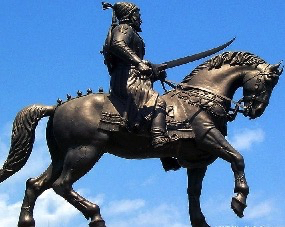
Shivaji Maharaj is a symbol of Maratha and Indian pride, valour and highest standards of kingship. Shivaji’s clarion call for ‘Swarajya‘ has held sway on Hindu minds for over four centuries and continues to inspire Hindus.
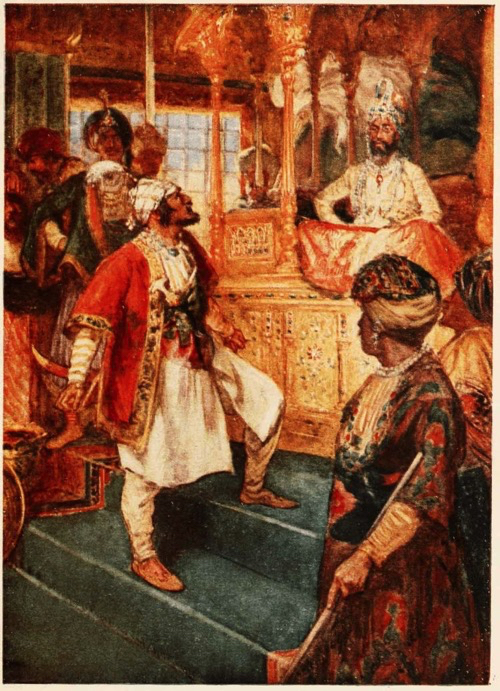
A prolific communicator, one of his oft quoted works is the letter of protest that he wrote to the Mughal emperor Aurangzeb on the imposition of ‘jaziya‘. This well-reasoned letter drafted by Lila Prabhu in eloquent Persian is a must read for multiple reasons. Not only is it a lesson in magnanimity and religious tolerance but also is a lesson in the lofty principles of kingship and governance that he believed in.
It has been taken (with minor edits) from Sir Jadunath Sarkar’s monumental work on the History of Aurangzeb.
Text of Shivaji Maharaj’s letter to the Mughal Emperor Aurangzeb
To the Emperor Alamgir:
This firm and constant well-wisher Shivaji, after rendering thanks for the grace of God and the favours of the Emperor, which are clearer than the Sun, begs to inform your Majesty that, although this well-wisher was led by his adverse Fate to come away from your august presence without taking leave, yet he is ever ready to perform, to the fullest extent possible and proper, everything that duty as a servant and gratitude demand of him… It has recently come to my ears that on the ground of the war with me having exhausted your wealth and emptied your treasury, your Majesty has ordered that money under the name of jaziya should be collected from the Hindus and the imperial needs supplied with it. May it please your Majesty!
That architect of the fabric of empire , [Jalal-ud-din] Akbar Padishah, reigned with full power for 52 (lunar) years. He adopted the admirable policy of universal harmony (sulh-i-kul) in relation to all the various sects, such as Christians, Jews, Muslims, Dadu’s followers, sky-worshippers (falakia), malakia, heathens (ansaria), atheists (daharia), Brahmans and Jain priests. The aim of his liberal heart was to cherish and protect all the people. So, he became famous under the title of Jagat Guru, ‘the World’s spiritual guide.’
Next, the Emperor Nur-ud-din Jahangir for 22 years spread his gracious shade on the head of the world and its dwellers, gave his heart to his friends and his hand to his work, and gained his desires. The Emperor Shāh Jahān for 32 years cast his blessed shadow on the head of the world and gathered the fruit of eternal life, which is only a synonym for goodness and fair fame, as the result of his happy time on earth.
He who lives with a good name gains everlasting wealth,
Because after his death, the recital of his good deeds keeps his name alive. (Verse form)
Through the auspicious effect of this sublime disposition, wherever he (Akbar) bent the glance of his august wish, victory and success advanced to welcome him on the way. In his reign many kingdoms and forts were conquered [by him]. The state and power of these Emperors can be easily understood from the fact that Alamgir Padishāh has failed and become distracted in the attempt to merely follow their political system. They, too, had the power of levying the jaziya ; but they did not give place to bigotry in their hearts, as they considered all men, high and low, created by God to be [living] examples of the nature of diverse creeds and temperaments. Their kindness and benevolence endure on the pages of time as their memorial, and so prayer and praise for these three pure souls will dwell forever in the hearts and tongues of mankind, among both great and small. Prosperity is the fruit of one’s intentions. Therefore, their wealth and good fortune continued to increase, as God’s creatures reposed in the cradle of peace and safety (under their rule), and their undertakings succeeded.
But in your Majesty’s reign, many of the forts and provinces have gone out of your possession, and the rest will soon do so too, because there will be no slackness on my part in ruining and devastating them. Your peasants are downtrodden; the yield of every village has declined, in the place of one lakh [of Rupees] only one thousand, and in the place of a thousand only ten are collected, and that too with difficulty. When poverty and beggary have made their homes in the palaces of the Emperor and the Princes, the condition of the grandees and officers can be easily imagined. It is a reign in which the army is in a ferment, the merchants complain, the Muslims cry, the Hindus are grilled, most men lack bread at night and in the day inflame their own cheeks by slapping them in anguish.
How can the royal spirit permit you to add the hardship of the jaziya to this grievous state of things? The infamy will quickly spread from west to east and become recorded in books of history that the Emperor of Hindustan, covering the beggars’ bowls, takes jaziya from Brahmans and Jain monks, yogis, sannyāsis, bairāgis, paupers, mendicants, ruined wretches, and the famine-stricken,–that his valour is shown by attacks on the wallets of beggars,-that he dashes down to the ground the name and honour of the Timurids!
May it please your Majesty! If you believe in the true Divine Book and Word of God (i.e., the Quran), you will find there that God is styled Rabb-ul-ālamin, the Lord of all men, and not Rabb-ul-musalmin, the Lord of the Muhammadans only. Verily, Islām and Hinduism are terms of contrast. They are (diverse pigments) used by the true Divine Painter for blending the colours and filling in the outlines of His picture of the entire human species. If it be a mosque, the call to prayer is chanted in remembrance of Him. If it be a temple, the bell is rung in yearning for Him only. To show bigotry for any man’s own creed and practices is equivalent to altering the words of the Holy Book. To draw new lines on a picture is equivalent to finding fault with the painter.
In strict justice the jaziya is not at all lawful. From the political point of view, it can be allowable only if a beautiful woman wearing gold ornaments can pass from one province to another without fear or molestation. [But] in these days even the cities are being plundered, what shall I say of the open country? Apart from its injustice, this imposition of the jaziya is an innovation in India and inexpedient.
If you imagine piety to consist in oppressing the people and terrorising the Hindus, you ought first to levy the jaziya from Ränā Rāj Singh, who is the head of the Hindus. Then it will not be so very difficult to collect it from me, as I am at your service. But to oppress ants and flies is far from displaying valour and spirit.
I wonder at the strange fidelity of your officers that they neglect to tell you of the true state of things but cover a blazing fire with straw! May the Sun of your royalty continue to shine above the horizon of greatness!
References
Sarkar, Jadunath (1920), History of Aurangzib: Based on Original Sources. Longmans, Green and Company.
I got this book last year at Dalkey Book Festival where Jared
Diamond gave a stirring keynote address on the crisis facing world today including climate change, population explosion and other myriad ailments. I got lucky to shake hands with the great polymath and also got my copy personally signed by him. I picked up my signed copy last week, was hooked and finished the book in three days.
This is a seminal account of the crisis faced by six countries, what they did to overcome that crisis and what lessons can be learned from that crisis management by these countries.
This is the third instalment of his trilogy on nations and societies, Guns Germs & Steel is one of my personal favourites. That book provided a new perspective on why world is divided into First World and Third World. He provided a logical reasoning that it is not a fault of human societies of those regions but is just an accident of geography. His next nook Collapse gave an account of what makes human societies fail and move to oblivion. That was a real pessimistic account of some already collapsed human societies but in this latest book Jared Diamond provides the hope that crisis does not mean collapse but some societies are able to cope with the crisis better and overcome those challenges to come out either unscathed or even better than before.
The book provides a framework for crisis management for the nations in crisis and helps provide a template for future leaders to help their nations move on to a better course of peace and prosperity. The book is also a revision of the contemporary history
of these nations and provides an insight into why those countries took those suicidal crisis ridden paths and how then they changed course for better. The book is not as good as the previous books in this series but is still a great read.

 If a mountain seems too big today
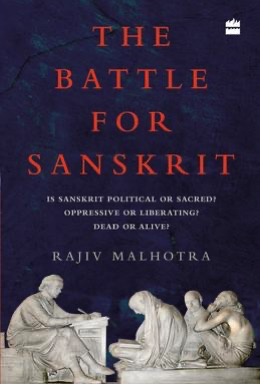 This book by Rajiv Malhotra brings out into the open, the existential threats facing Vedic civilisation today. This battle for Sanskrit has to be fought tooth and nail by every Hindu, better would be to wage an outright war against these divisive forces who’re hell bent on destroying our civilizational values and heritage. These destructive forces lay bare their own impotence by attacking Vedic ethos and beliefs as these are far superior than anything they can claim as their own. The first few pages provides the background that alerted the author to write this book. In August 2014 the author became aware of a sinister attempt by American Indologist, Sheldon Pollock that could have compromised the integrity of Sringeri Sharda Peetham, one of the most sacred institution for Hindus. A group of wealthy NRI’s were being beguiled by Pollock to team up with the top administrators of Sringeri Peetham in India to setup a Columbia university chair in the name of Adi Shankara, an 8th century Hindu sage widely attributed to the revival of Advaita Vedanta. The sanctity of Sringeri Peetham has been carefully safeguarded for more than a thousand years. The adhikara (authority) to represent the Peetham and speak on its behalf has always rested solely with the acharyas, who are groomed from childhood and lead an austere life to assume this responsibility. This was alarming for author to see this university chair created in name of Peetham as it would’ve amounted to giving up control of the teachings and brand name of Sringeri Peetham to outside interests. The author concedes that the issue was not whether Hinduism or the teachings of Adi Shankara can sustain critique by outside authorities. In-deed he accepts that such critiques are necessary and healthy. Rather the issue was that, in this case, the critique would be put forth with the imprimatur of Sringeri Peetham. In author’s view the Peetham should shoulder the responsibility for answering the critics, not sponsoring them!
 Sanskrit terms used by the husband for the wife were Pathni (पत्नी), derived from Sanskrit पथ (pathá) i.e. path or course (the one who leads the husband through life), Dharmapathni (the one who guides the husband in dharma) and Sahadharmacharini (one who moves with the husband on the path of dharma; righteousness and duty).

 Tarun's Blog